


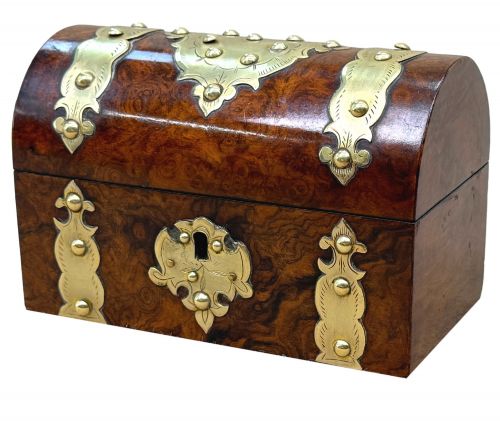


Brass Mounted Desk Box
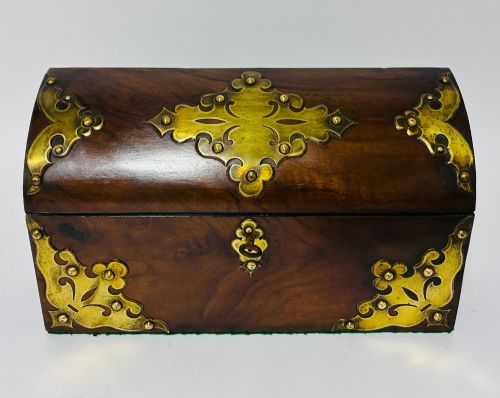
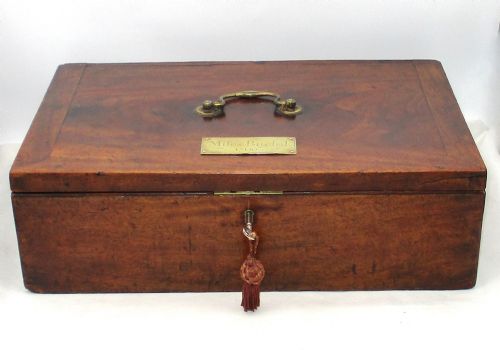
A brass mounted desk box brings heavy timber and polished metal together to keep correspondence and small valuables in order on a writing surface.
Brass Mounted Desk Box
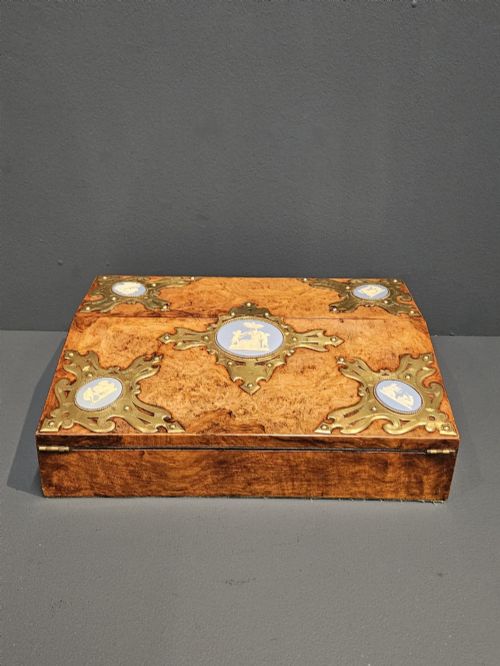
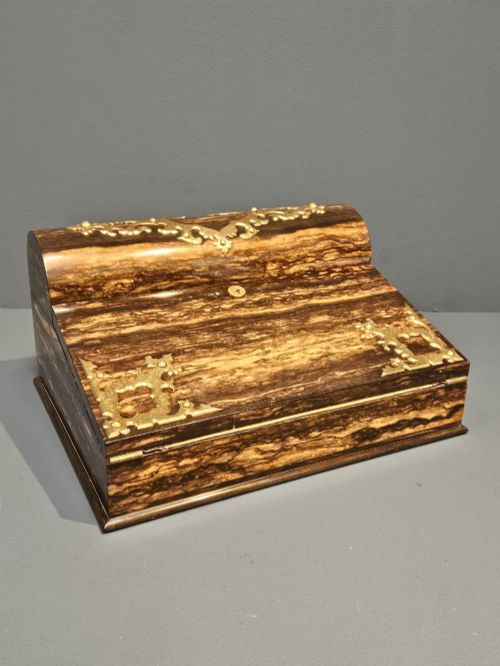
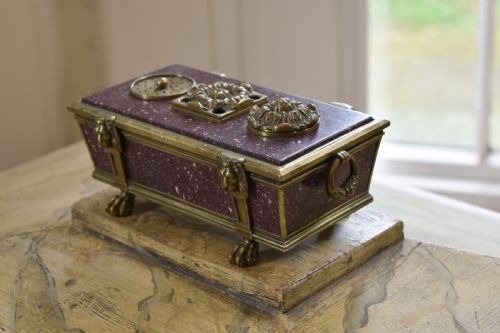
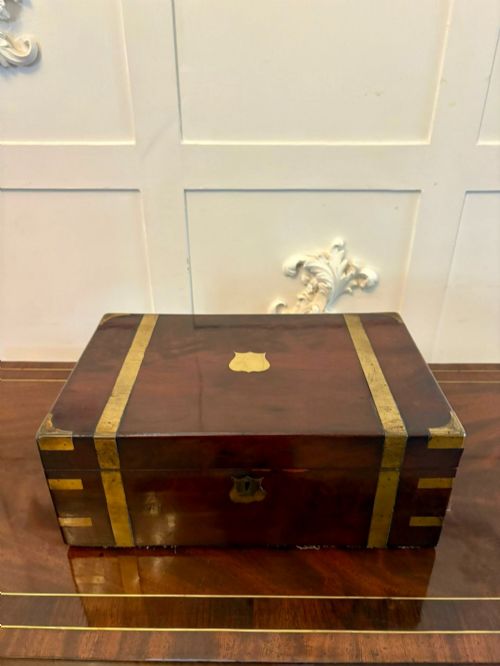
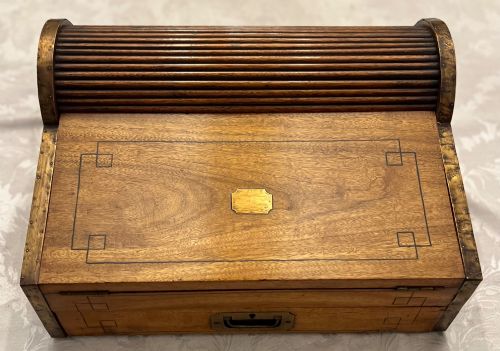
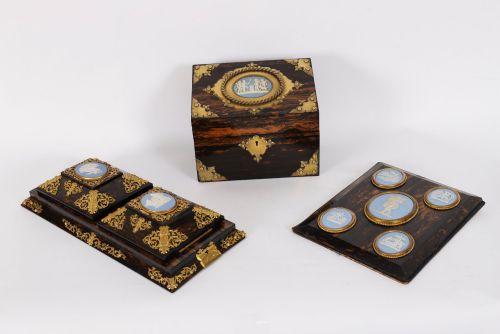
A brass mounted desk box gathers stationery cabinets, letter boxes, writing slopes and caskets designed for the desk. These pieces originate across the eighteenth, nineteenth and early twentieth centuries, spanning Georgian, Regency, Victorian and Arts and Crafts periods. The selection here leans heavily towards Victorian examples in walnut, oak and coromandel.
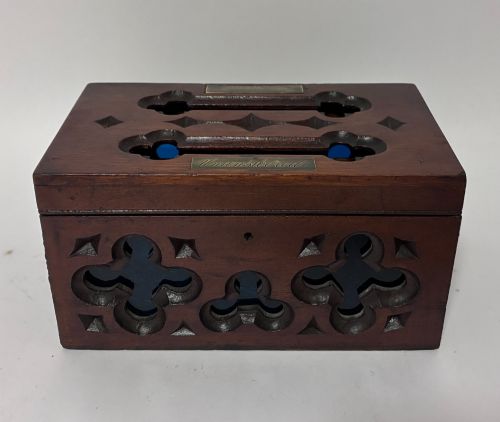
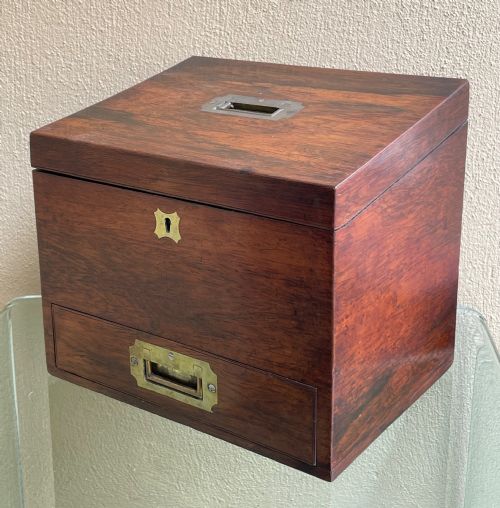
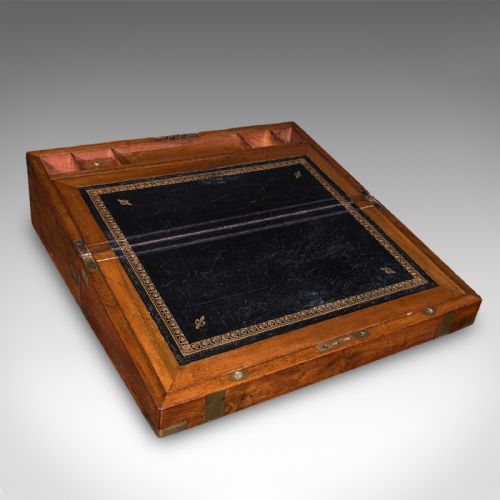
Buyers encounter everything from simple mahogany document boxes to elaborate fall front stationery cabinets and campaign writing slopes. Many incorporate brass banding, corners and mounts originally intended to protect the timber during travel or heavy daily use. The variety extends to specific forms like cigar humidors, tea caddies and dedicated letter boxes for country houses.
Materials and Construction
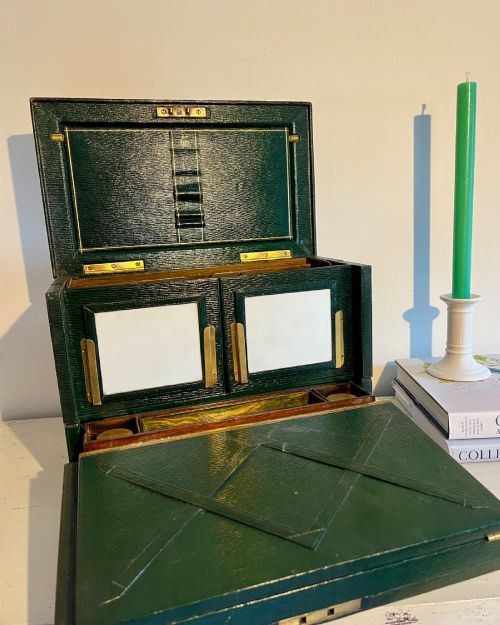
Internal fittings often combine secondary timbers with velvet, leather or silk linings, alongside glass inkwells and stationery dividers. Dovetail joints frequently anchor the primary box construction, while applied mouldings and carved details define styles like Victorian Gothic Revival.
Brass Mounted Desk Box Retail Price Guide 2026
Typical asking prices for brass mounted desk box among the pieces listed under this phrase on Sellingantiques today, from the lower quarter to the upper quarter. They describe what is for sale here now, not the wider market.
The archive and current stock show that brass mounts transitioned from structural campaign reinforcement on nineteenth century travel pieces to purely decorative embellishment.
Quality and Execution
The distinction between standard pieces and the finest work lies in the choice of veneer and the precision of the brass work. Dense, highly figured burr walnut or exotic coromandel paired with heavy, well-cast brass mounts indicates superior workshop output.
Internal complexity also separates the tiers, with modular stationery dividers, working locks with original keys, and secret drawers demonstrating higher craftsmanship. Crisp joinery that remains square and true over centuries distinguishes professional cabinet making from utilitarian production.
Briggs 27 Piccadilly London
The Brass Mounted Desk Box Glossary
- Campaign
- Describing portable furniture made for travel, typically fitted with flush brass handles and corner brackets to withstand movement. These pieces were built for military officers and travellers.
- Coromandel
- A dense, heavily figured exotic timber from Asia with dark brown and black graining. Makers utilised it for high status Victorian boxes and writing slopes.
- Escutcheon
- A protective plate surrounding a keyhole, usually cast or engraved from brass on these boxes. It prevents the timber from splitting around the lock.
- Writing Slope
- A desk accessory with a hinged sloping lid that opens to reveal a writing surface and compartments for paper and pens. Many include hidden compartments beneath the stationery wells.
- Burr Walnut
- Timber taken from the abnormal growth of a walnut tree, yielding swirling, knotty grain patterns prized by nineteenth century cabinet makers. It provides a highly decorative surface for box lids.
Brass Mounted Desk Box: Frequently Asked Questions
What is a brass mounted desk box used for?
These boxes served as portable or desktop repositories for writing paper, envelopes, correspondence and small valuables. Gentlemen and ladies utilised them to keep their desks tidy before the era of mass produced stationery.
Today they function as decorative storage on modern desks or sideboards, holding letters, modern stationery or keepsakes while displaying period timber and metalwork.
How do I date a Victorian desk box?
Dating relies on combining the timber choice, hardware style, lock mechanisms and any retailer marks found inside. Coromandel and heavy brass banding point firmly to the middle and late nineteenth century.
Georgian and Regency examples tend to feature simpler mahogany or rosewood construction with lighter brass stringing. Aesthetic movements like Arts and Crafts introduce plain golden oak with minimal strapwork towards the end of the period.
Are keys usually included with antique boxes?
Original working keys are uncommon because locks were small and easily lost over generations of use. Many boxes survive with unlocked mechanisms or replacement keys fitted later.
A missing key does not detract from the decorative function of the brass mounts or the quality of the internal walnut and coromandel fittings.