



Brass Meal Gong
A brass meal gong summons the household to dinner with a deep, resonant tone, blending utility with decorative presence.
Brass Meal Gong
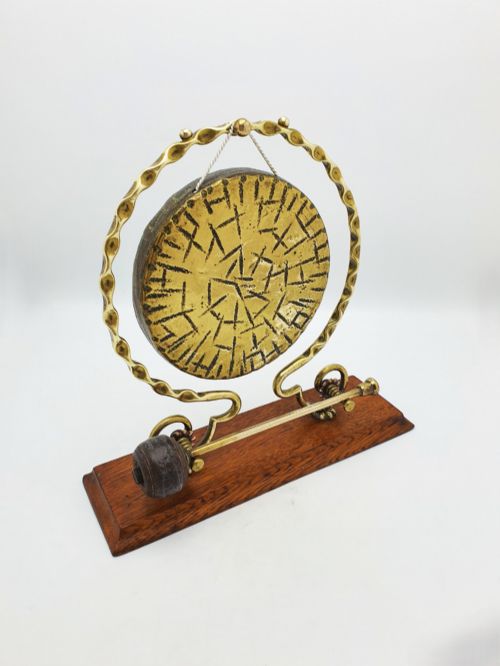
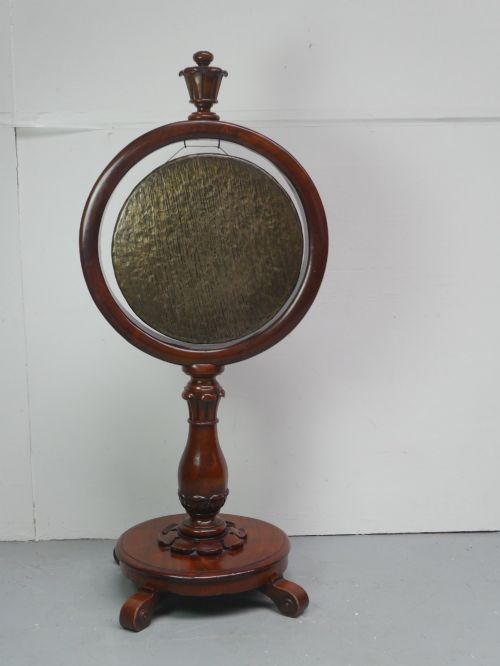
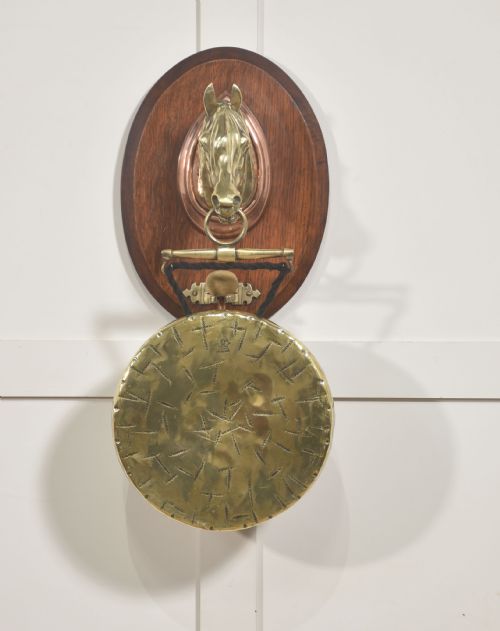
A brass meal gong is a resonant percussion instrument mounted within a supportive wooden or metal frame, designed to announce the evening meal in grand houses and domestic settings alike. Buyers exploring this category will encounter various domestic forms, from compact table models to substantial wall-hanging arrangements designed to project sound across large rooms.
The versions most frequently met on this page span the Victorian era into the early twentieth century, reflecting periods when domestic rituals were marked by formal dining habits. These pieces commonly pair a polished metal disc with sturdy timber mountings, capturing the utilitarian yet decorative interior tastes of the nineteenth century and the subsequent Arts and Crafts movement.
Materials and construction methods
The primary materials recorded in these listings combine cast or beaten metal discs with robust timbers such as oak, mahogany, and walnut used for the supporting frames. Artisans utilised hanging cords to suspend the metal plate freely, ensuring maximum vibration and acoustic resonance when struck with a handheld mallet.
Stylistic influences range from austere Gothic Revival designs to Japonisme and Aesthetic Movement motifs, incorporating specialist details like wrought iron supports, cattle horn accents, and bamboo framing. The combination of dense hardwoods and resonant bronze or brass alloys created durable objects built to endure generations of daily use.
Listings span the Victorian era, 1880, 1900, 1910, and 1920, uniting oak, mahogany, walnut, wrought iron, and bronze.
Quality and craftsmanship distinctions
Quality in a brass meal gong lies in the purity of the metal casting and the acoustic resonance it produces when struck, alongside the structural integrity of the supporting woodwork. Finer examples display careful joinery on the timber frames and harmonious proportions between the hanging disc and its mount.
Artistic ambition also separates standard items from exceptional pieces, with higher-tier examples featuring hand-carved motifs, specialised mounts such as horse heads or bronze figural elements, and distinct stylistic cohesion aligned with Gothic Revival or Arts and Crafts ideals.
The Brass Meal Gong Glossary
- Dinner Gong
- A resonant percussion instrument mounted in a frame, traditionally used in large homes to announce meals. These objects combine utilitarian function with period decorative arts.
- Gothic Revival
- An architectural and decorative style popular during the nineteenth century, characterised by pointed arches, heavy timber, and medieval ecclesiastical motifs. Pieces from this movement often feature substantial carved walnut or oak frames.
- Japonisme
- The influence of Japanese art and design on Western decorative arts during the late nineteenth century. This aesthetic introduces asymmetric forms and naturalistic motifs to domestic metalwork and furniture.
- Aesthetic Movement
- A late nineteenth-century design philosophy emphasising beauty and visual refinement over narrative or moral function. Objects from this tradition often incorporate refined silver plating or carefully balanced geometric lines.
- Striker
- The handheld mallet or beamer used to hit the metal disc and produce the characteristic tone. These handheld accessories are typically fashioned to match the materials of the main gong assembly.
Brass Meal Gong: Frequently Asked Questions
How were dinner gongs used?
Dinner gongs were positioned in hallways or reception rooms to signal that food was served, allowing the sound to travel through the house.
Servants or hosts struck the suspended metal disc with a handheld mallet at the appointed hour to gather family and guests.
What woods are typical for frames?
Oak and walnut appear most frequently in the supporting frames, providing the necessary weight and stability to hold a heavy metal disc.
Mahogany and bamboo also occur, reflecting different periods and stylistic movements from the Victorian era onwards.
How do I date a brass gong?
Dating relies on stylistic clues within the wooden frame, such as Gothic Revival carvings or Arts and Crafts construction methods, alongside the manufacturing characteristics of the metal.
Records from the nineteenth and early twentieth centuries show distinct shifts from ornate Victorian eclecticism toward simpler modern forms.
Where should I place a table gong?
Table gongs suit sideboards, entrance consoles, or desktop surfaces where their compact frames and decorative stands can be appreciated at close quarters.
Ensure the hanging cord allows the metal disc to swing freely without hitting walls or furniture when struck.