





Brass Inlay Rosewood Box
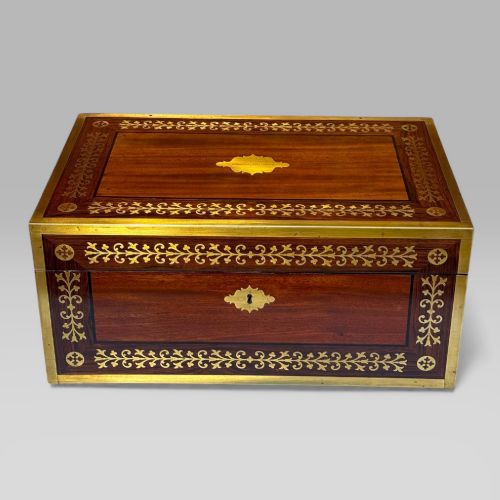
A brass inlay rosewood box combines dense dark timber with bright metal work, spanning writing slopes, tea caddies, and jewellery cabinets from the Regency and Victorian eras.
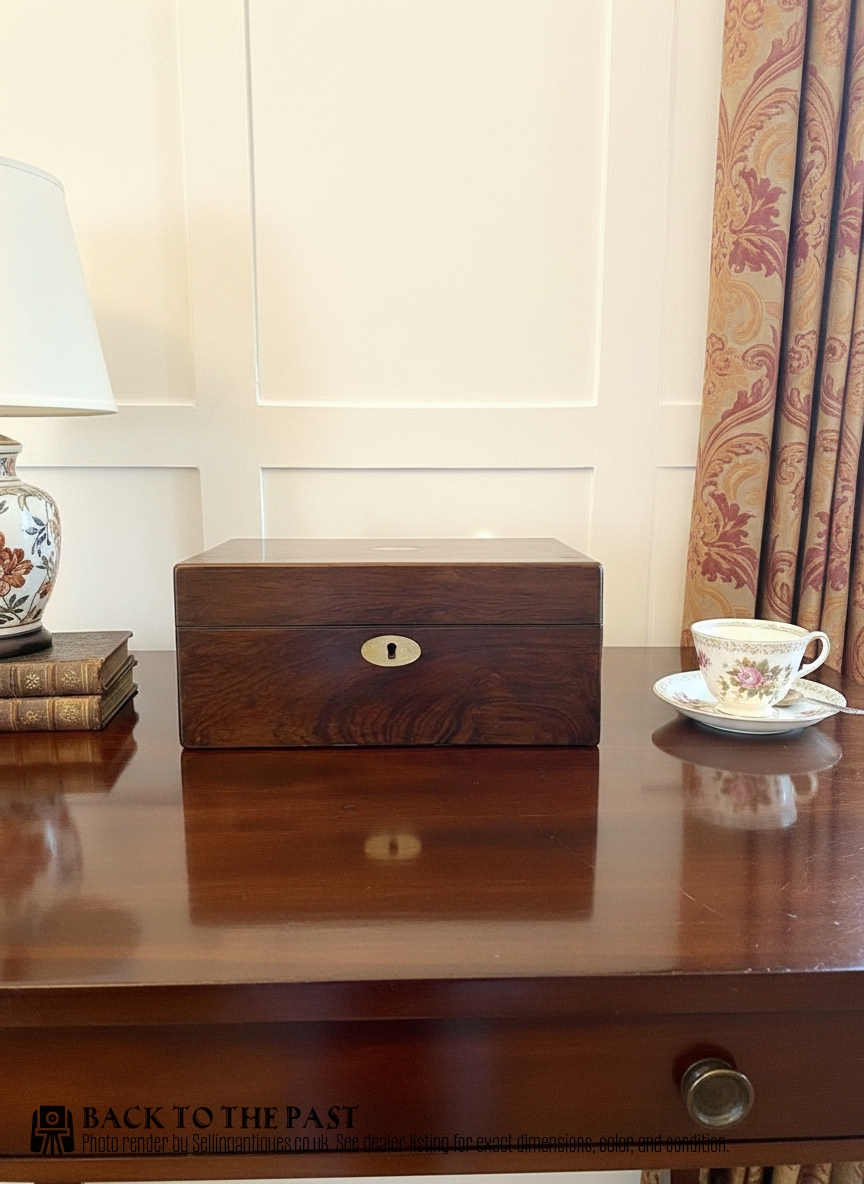
Brass Inlay Rosewood Box
A brass inlay rosewood box encompasses a variety of functional domestic containers produced primarily during the Georgian, Regency, and Victorian periods. Buyers seeking these items encounter writing slopes, tea caddies, document boxes, and jewellery cabinets designed for personal organisation.
The selections span distinct historical styles including Regency, French Restoration, and Jugendstil. Writing slopes and tea caddies form the majority of surviving examples, often fitted with internal compartments, secret drawers, and glass or silver components.
How they were made
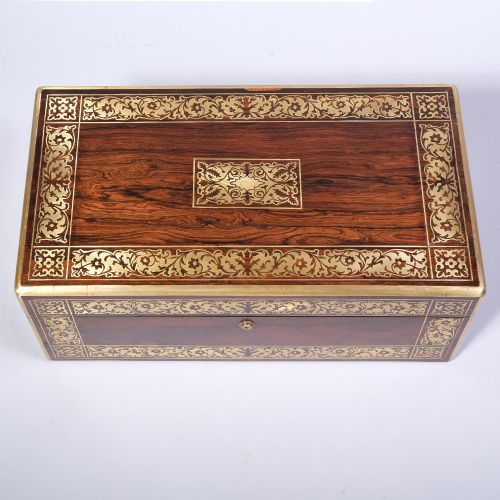
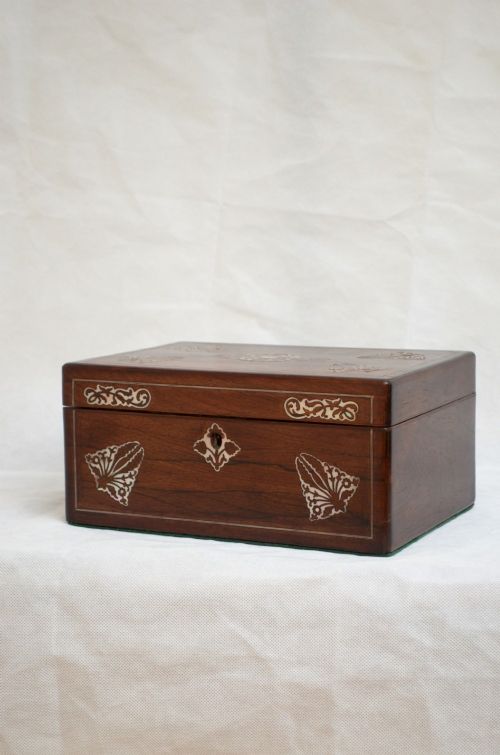
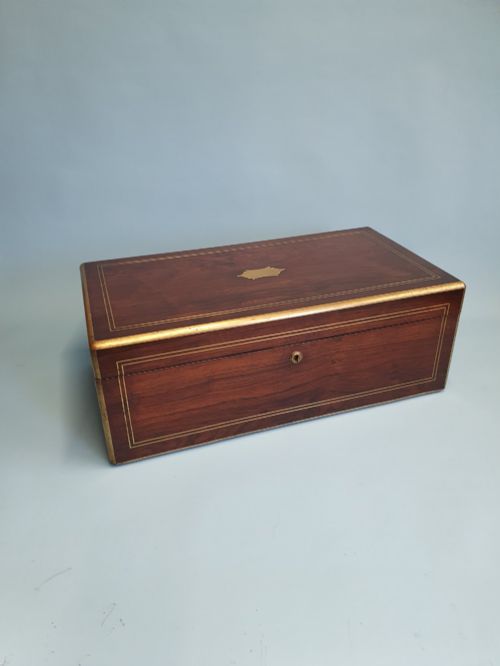
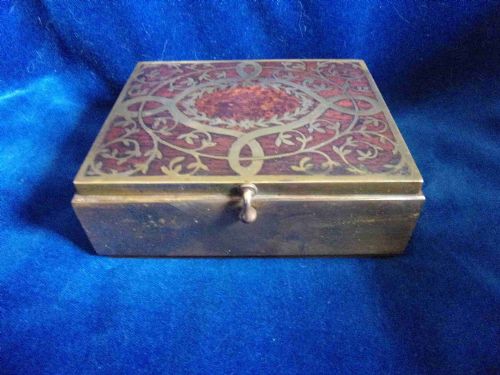
Cabinet makers utilised dense rosewood as the primary structural timber, frequently complemented by secondary woods such as boxwood and mahogany. Brass was meticulously cut and embedded directly into the wood grain, often paired with mother of pearl and delicate stringing.
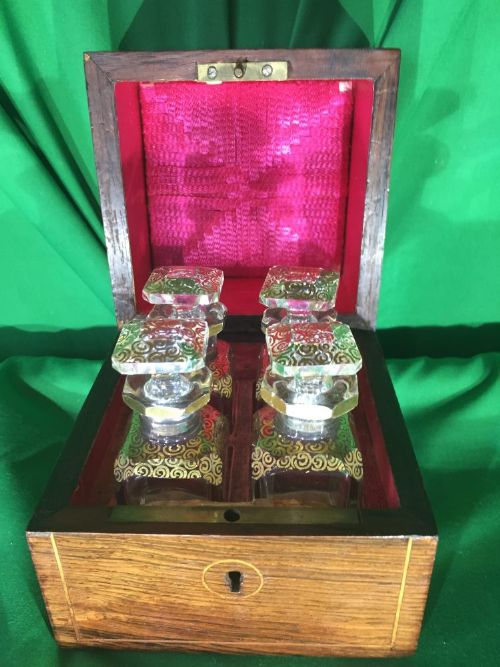
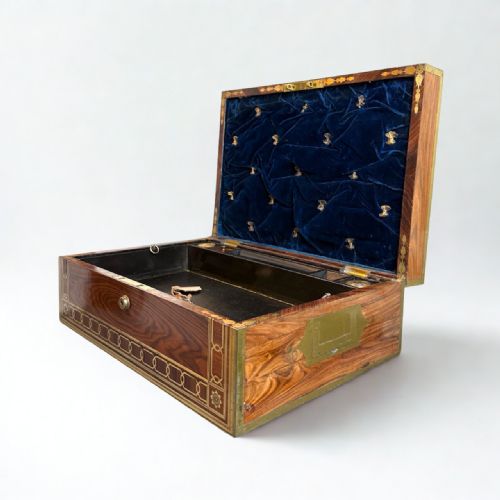
Internal spaces relied on careful joinery to house velvet linings, glass scent bottles, and inkwells. Metal hardware including lion mask handles, campaign mounts, and working brass locks secured the functional compartments of these lidded containers.
Listings feature Georgian, Regency, and Victorian periods alongside materials including rosewood, brass, glass, boxwood, and mother of pearl.
What varies in quality
The refinement of the metalwork separates standard examples from exceptional pieces, particularly where brass is cut into intricate scrollwork rather than simple geometric banding. The crispness of the wood grain and the complexity of internal fittings also dictate the standard of execution.
Completeness alters the character of an individual object, such as retaining original velvet linings, matched scent bottles, working keys, and intact secret drawer mechanisms. The integration of auxiliary materials like mother of pearl highlights superior craftsmanship.
Erhard and Sohne
The Brass Inlay Rosewood Box Glossary
- Writing slope
- A portable slant-topped box that opens to form a desk surface lined with leather or velvet. Inside, compartments hold inkwells, pens, and paper.
- Tea caddy
- A small container designed to store loose tea leaves securely. Many examples feature internal lidded canisters and mixing bowls.
- Campaign box
- A sturdy portable chest or writing desk fitted with brass corners and recessed handles for travel. These items date predominantly to the early nineteenth century.
- Sarcophagus
- A box form featuring a stepped, domed lid resembling a stone coffin. This architectural style appears frequently on Regency tea caddies and work boxes.
- Marquetry
- The art of applying pieces of veneer to a structure to form decorative patterns. Craftsmen utilised contrasting timbers like boxwood to achieve pictorial designs.
Brass Inlay Rosewood Box: Frequently Asked Questions
How were writing slopes used?
A writing slope unfolded to create an inclined writing surface covered in leather or velvet. The interior housed compartments for folded paper, inkwells, and pens.
Secret drawers were often incorporated beneath the stationary dividers to conceal private letters and valuables from prying eyes.
How do I care for rosewood furniture?
Keep these boxes away from direct sunlight and strong heat sources to prevent the rosewood from drying and splitting. Maintaining stable indoor humidity protects both the timber and the inlaid brass.
Dust the surface gently with a dry, soft cloth and avoid using harsh chemical polishes that can damage antique French polish finishes.
How do I tell Regency from Victorian boxes?
Regency pieces often feature bold brass banding, classical proportions, and campaign styling dating from the early nineteenth century. The craftsmanship prioritises architectural restraint and geometric precision.
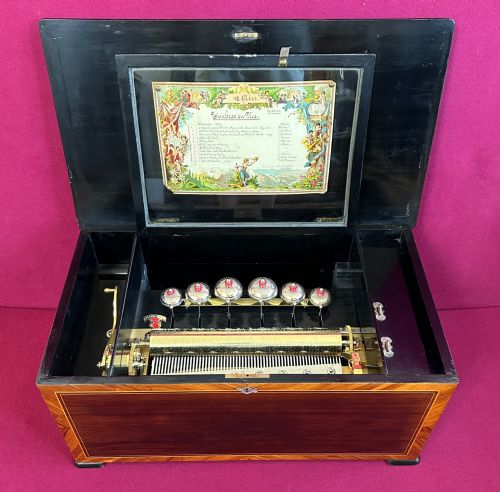
Victorian examples frequently showcase more eclectic ornamentation, including mother of pearl inlay, heavy cast handles, and complex internal trays for jewellery or music mechanisms.