




Rosewood Casket Box
A rosewood casket box offers a tangible link to nineteenth-century craftsmanship, designed to safeguard letters, jewellery, and keepsakes.
Rosewood Casket Box
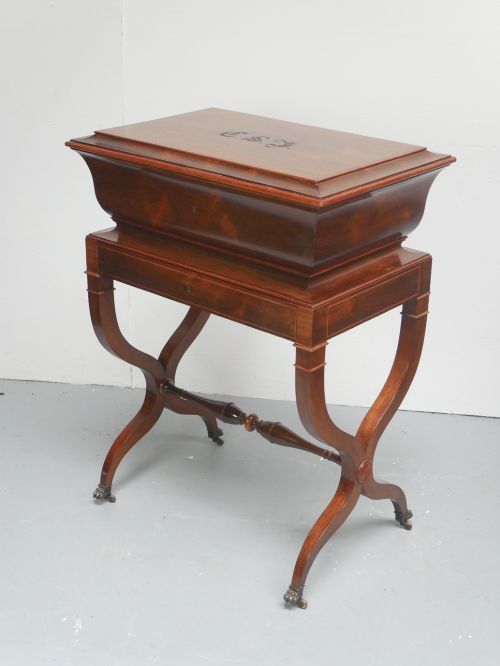
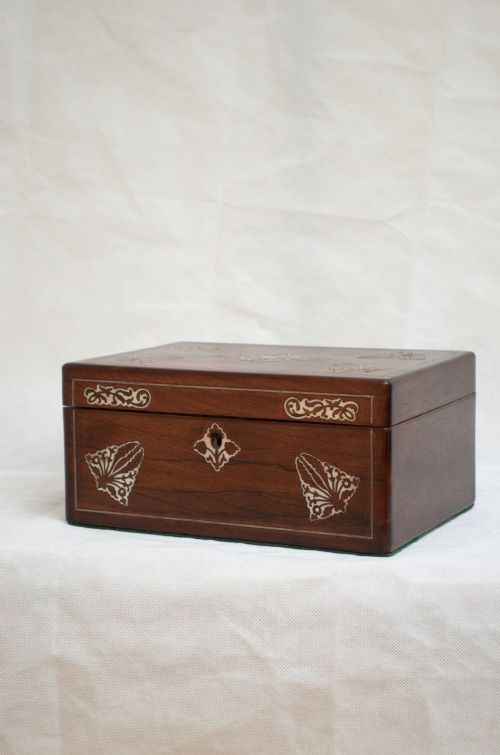
A rosewood casket box encompasses various personal storage forms, primarily emerging from the Regency and Victorian eras alongside Georgian and early twentieth-century examples.
The objects take many shapes, including jewellery boxes, document caskets, tea caddies, sewing and work boxes, glove boxes, and desktop correspondence containers.
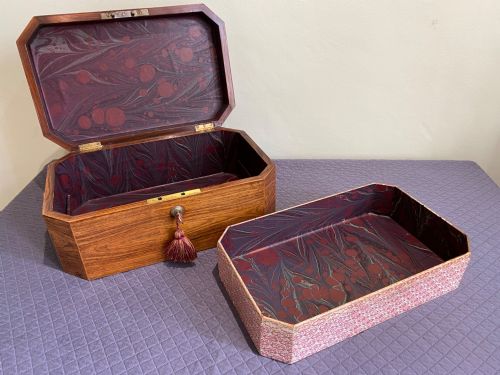
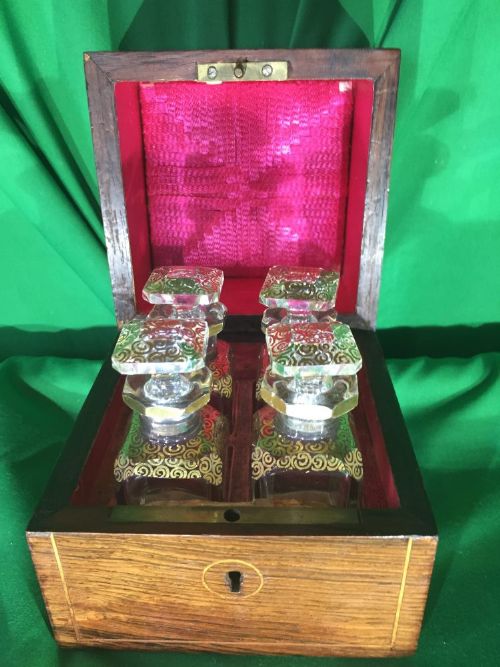
Buyers frequently encounter fitted interiors featuring removable trays, velvet linings, and specialised compartments for scent bottles or cards.
Distinctions in Quality
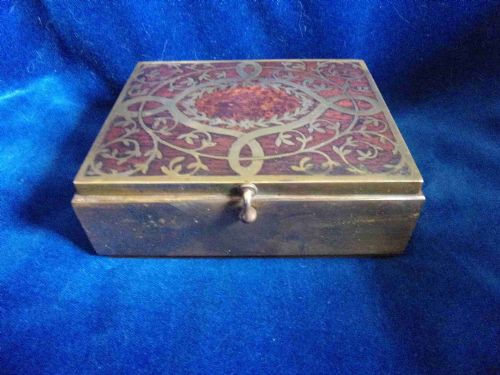
Quality rests in the precision of the joinery and the complexity of the surface ornament, such as finely cut brass inlay versus simpler linear banding.
The integrity of the interior appointments, including original silk linings, fitted mirrors, and intact compartmentalized trays, elevates an example.
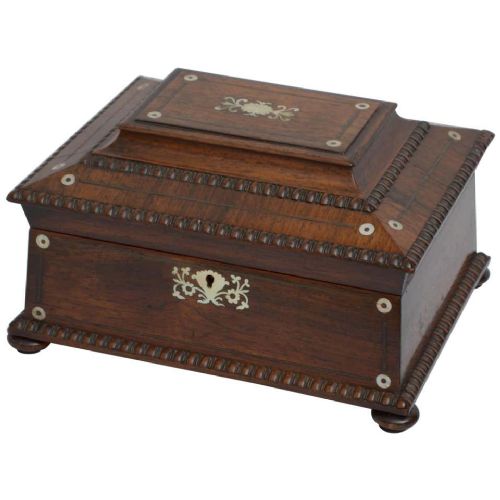
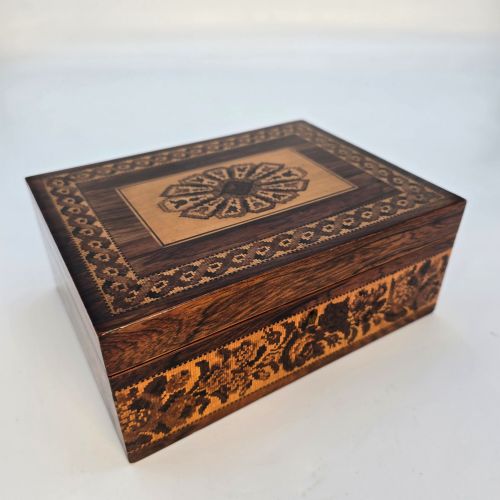
The crispness of execution in pictorial Tunbridge Ware or the delicacy of mother-of-pearl engraving separates standard utilitarian pieces from exceptional ones.
Rosewood Casket Box Retail Price Guide 2026
Typical asking prices for rosewood casket box among the pieces listed under this phrase on Sellingantiques today, from the lower quarter to the upper quarter. They describe what is for sale here now, not the wider market.
Some nineteenth-century boxes included secret drawers triggered by hidden wooden latches, designed to outwit curious houseguests.
Edmund Nye·Erhard and Sohne·Lesage
The Rosewood Casket Box Glossary
- Tunbridge Ware
- A type of British woodwork characterised by mosaic veneer formed from thousands of tiny tinted wood blocks to create pictorial or geometric designs. It originated in Kent during the nineteenth century.
- Marquetry
- The art of applying pieces of veneer to a structure to form decorative patterns and pictures. Makers utilised various contrasting timbers to achieve tonal depth.
- Sarcophagus
- A box shape featuring a domed or steeply sloped lid resting on a rectangular base, popular during the Regency and William IV periods. This silhouette added architectural weight to small caskets.
- Ormolu
- Gilded bronze used for mounts, feet, and decorative fittings on French and English boxes. It provided a bright metallic contrast to dark rosewood.
Rosewood Casket Box: Frequently Asked Questions
What were rosewood boxes used for?
These boxes served as portable receptacles for valuable personal effects, organising correspondence, writing implements, sewing gear, and jewellery.
Larger versions functioned as stationary cabinets or tea caddies kept on tables within the principal rooms of nineteenth-century homes.
How do I date a rosewood box?
Dating relies upon stylistic markers, such as the architectural proportions and brass inlay of the Regency period versus the decorative mother-of-pearl work typical of mid-Victorian pieces.
Interior construction methods, hardware design, and secondary woods also help narrow the decade of manufacture.
How do I care for rosewood?
Keep the wood away from direct sunlight and steady heat sources to prevent the rosewood veneer from drying, fading, or lifting.
Maintain a stable indoor humidity and dust the surface gently with a dry, soft cloth without applying modern silicone polishes.
Are the interiors usually original?
Many surviving examples retain their original velvet or silk linings, papered compartments, and fitted wooden trays, though some have undergone careful relining.
Restored interiors utilise traditional textile choices to respect the historical period of the box.