


Brass Inlaid Jewellery Box
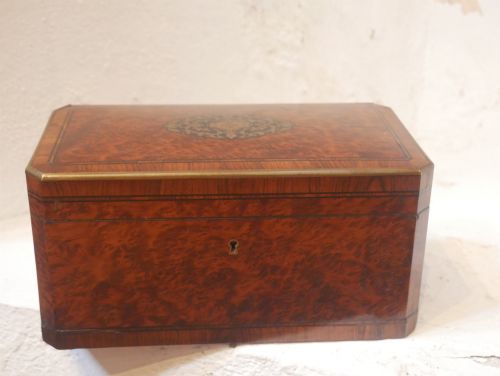
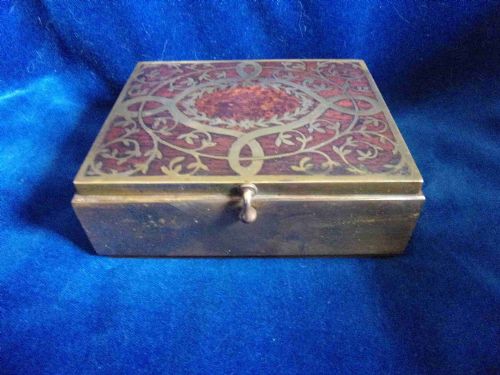
A brass inlaid jewellery box holds small treasures while showing off precise metalwork set into dark timber.
Brass Inlaid Jewellery Box
A brass inlaid jewellery box serves as a secure container for personal valuables, trinkets, and correspondence, often found on dressing tables or desks. These pieces mostly date from the nineteenth century, spanning the Georgian, Regency, and Victorian periods.
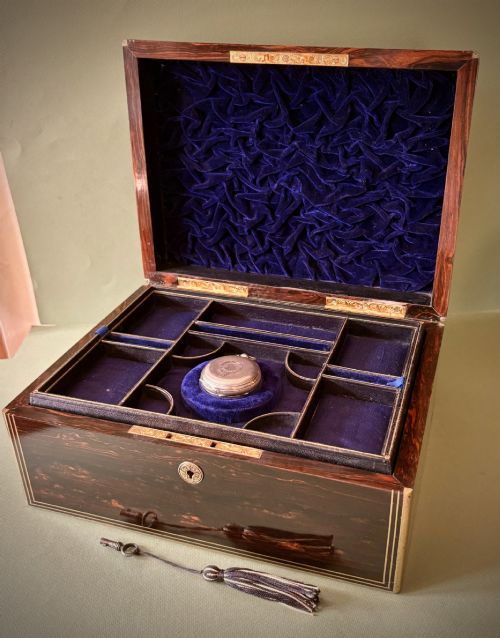
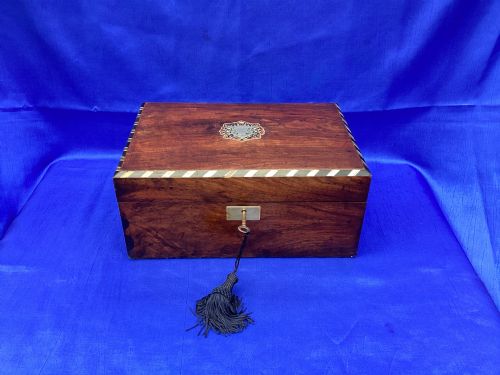
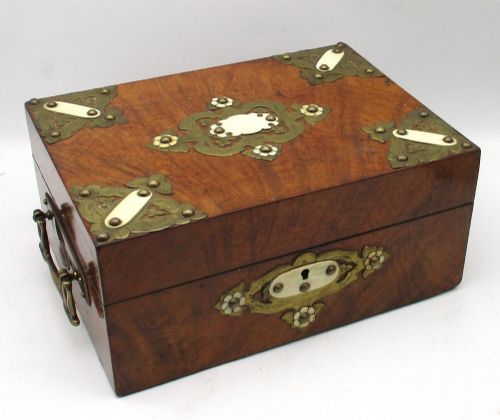
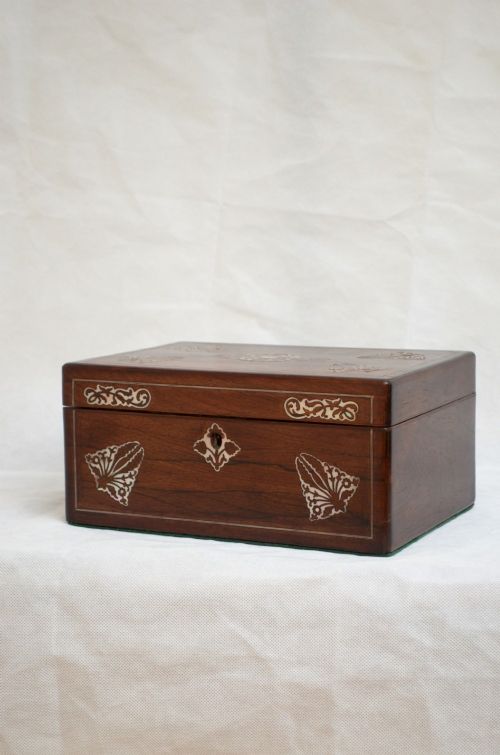
The versions met most frequently on this page utilise rich timbers such as rosewood and coromandel, decorated with cut brass lines, scrolls, or corner brackets. Such objects range from compact trinket containers to large, fully fitted vanity and dressing boxes with internal trays and compartments.
Materials and Construction
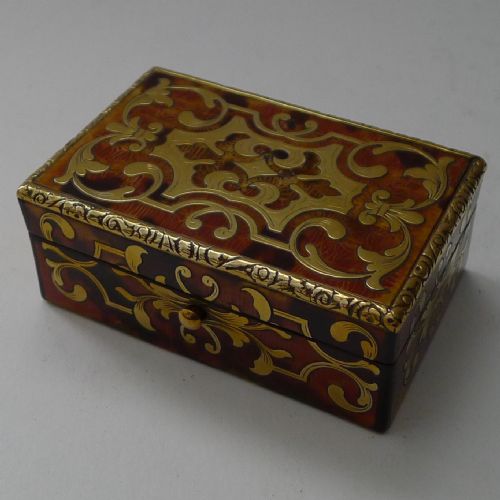
Cabinet makers constructed the foundations from dense hardwoods like mahogany, teak, and rosewood, frequently applying decorative veneers of exotic timbers such as amboyna, burr walnut, and coromandel. They channelled the timber surfaces by hand to recess thin sheets of cut brass, securing the metal with adhesive and small pins.
Interiors often feature fitted wooden trays lined with velvet, silk, or leather, alongside compartments for rings and small items. Many examples incorporate hidden drawers accessed through clever secret release mechanisms within the woodwork.
The archive records French and Anglo-Indian variants alongside standard English Regency and Victorian production.
Judging Quality and Execution
Execution separates standard utility containers from finer pieces, visible in the precision of the brass cutting and the tightness of the timber joints. Sharp corners in the metal inlay and clean, unbroken sightlines indicate skilled workshop production rather than hurried assembly.
The complexity of the interior fittings dictates the standing of a box. Examples possessing original velvet linings, intact compartments, working locks with keys, and secondary decorative materials like mother-of-pearl or tortoiseshell demonstrate superior original manufacture.
Tahan Paris·Erhard and Sohne·H Mitchell·Lund Of Cornhill
The Brass Inlaid Jewellery Box Glossary
- Boulle
- A method of ornate marquetry using brass and tortoiseshell, named after French cabinet maker André-Charles Boulle. It appears on nineteenth-century French boxes and cabinets.
- Campaign box
- Portable furniture made for travel, featuring recessed brass carrying handles and reinforced brass corners to withstand transit. These pieces date across the Georgian and Victorian eras.
- Coromandel
- A dense, heavily grained Asian timber used for luxury nineteenth-century boxes and dressing cases. It shows distinctive dark brown streaks against a lighter background.
- Bijouterie table
- A glass-topped display cabinet on legs used for showing small ornaments and jewellery. These pieces share similar brass decoration and timber construction with table top boxes.
- Escutcheon
- A protective brass plate surrounding a keyhole. On these boxes, the escutcheon often matches the linear brass inlay across the lid.
Brass Inlaid Jewellery Box: Frequently Asked Questions
What are these boxes used for?
These pieces served as secure receptacles for storing rings, brooches, necklaces, and private papers on household dressing tables or desks.
Larger versions accommodated travel needs, holding inkwells, writing surfaces, and mirrors alongside jewellery compartments.
How do I tell Regency boxes from Victorian ones?
Regency examples typically display formal geometric cut brass inlay, often featuring brass stringing and corner brackets on dark rosewood surfaces.
Victorian pieces frequently introduce heavier brass mounts, mother-of-pearl accents, or alternative woods such as coromandel and burr walnut.
How should I care for a rosewood and brass box?
Keep the timber away from direct sunlight and sudden temperature changes to prevent the wood from splitting and the brass inlay from lifting.
Apply a dry cloth for dusting, avoiding harsh chemical polishes that can seep beneath the metalwork.
Why do some boxes have secret drawers?
Cabinet makers built concealed compartments into dressing boxes to provide extra security for high-value items, currency, or private letters.
Accessing these secret spaces usually requires removing an internal tray or sliding a wooden panel to release a hidden spring.