


Victorian Rosewood Dressing Box
A victorian rosewood dressing box brings together rich timber and intricate brass or mother-of-pearl inlay to keep a lady's most precious personal items organised.
Victorian Rosewood Dressing Box
When you search for a victorian rosewood dressing box, you encounter a selection of solid timber caskets designed for the boudoir or travel. These pieces primarily date from the nineteenth century, spanning periods from William IV through to the Edwardian era.
The forms vary from simple jewellery chests to fully fitted travelling vanity boxes and sewing cases. Most examples utilise dense rosewood as the primary carcass, often enhanced by contrasting inlaid motifs or protective brass bands.
Materials and construction
Cabinet makers constructed these boxes from heavy rosewood, frequently incorporating brass banding to reinforce the corners and edges against the rigours of travel. Interiors typically feature tailored compartments lined in velvet or leather.
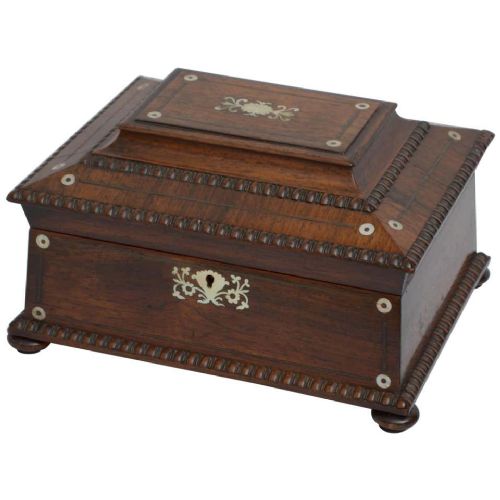
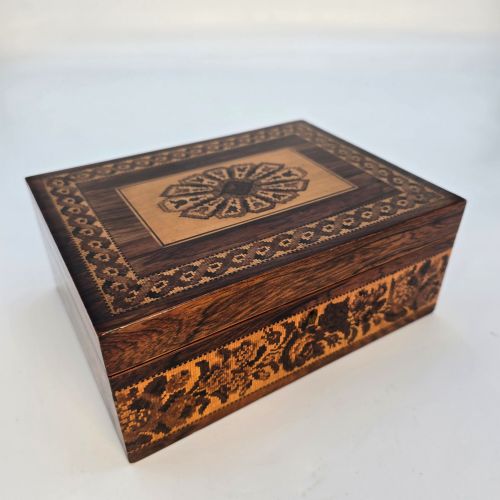
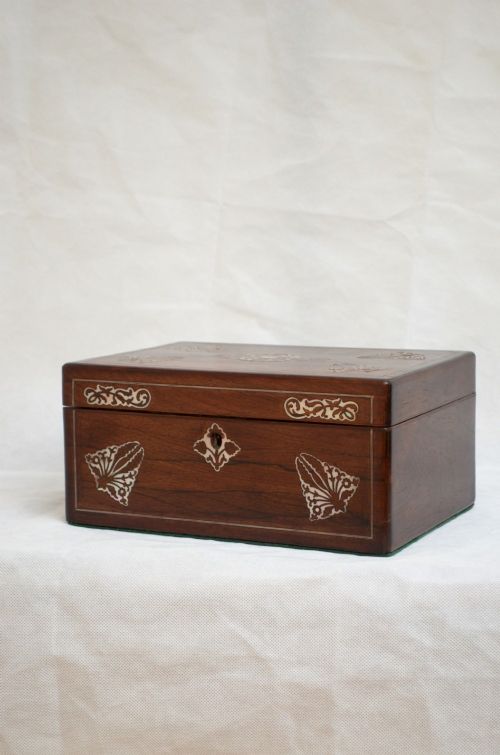
Many examples showcase delicate marquetry or Tunbridge ware inlays alongside contrasting mother-of-pearl escutcheons and cartouches. Glass bottles and jars with plated or metal lids frequently complete the fitted internal layout.
Some boxes hide secret drawers accessible only by releasing a concealed wooden spring catch inside the main compartment.
Judging quality and execution
The distinction between standard boxes and superior pieces lies in the precision of the internal fittings and the complexity of the exterior decoration. Elaborate marquetry work and fully complete internal trays elevate an individual piece.
Boxes that retain their original velvet linings, glass containers and working locks command greater attention. The crispness of the brass inlay and the depth of grain in the rosewood distinguish finer workshops from mass production.
Edmund Nye
The Victorian Rosewood Dressing Box Glossary
- Tunbridge ware
- A form of woodworking involving small mosaic tiles of naturally coloured woods to create pictorial designs. This technique appears on specific nineteenth-century boxes.
- Marquetry
- The art of applying pieces of veneer to a structure to form decorative patterns. Craftsmen utilised contrasting timbers to adorn the lids of these boxes.
- Escutcheon
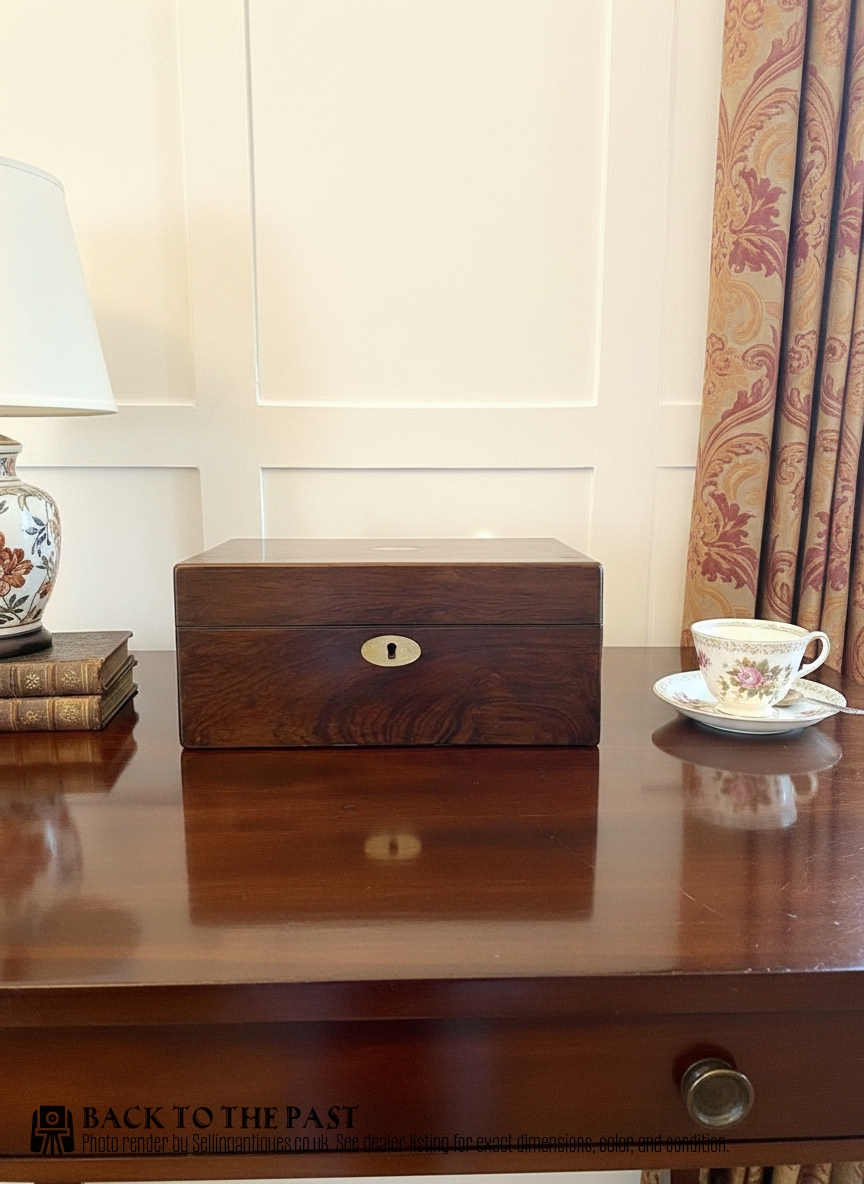
- A flat plate surrounding a keyhole that protects the surrounding wood from wear. These fittings are commonly cast from brass on period boxes.
- Workbox
- A portable container designated for sewing implements, threads and small crafting accessories. These often share similar internal tray arrangements with dressing boxes.
Victorian Rosewood Dressing Box: Frequently Asked Questions
What fits inside a dressing box?
These boxes accommodate small personal items such as rings, necklaces, and trinkets within their primary compartments. Many include specialised sections for glass scent bottles and writing tools.
Travellers utilised the deeper wells beneath removable trays to store larger keepsakes and correspondence securely during journeys.
How do I date a rosewood box?
Dating relies upon observing the construction methods, secondary woods, and decorative styles present on the piece. William IV and early Victorian examples often display heavier brass proportions and bolder grain.
Later Victorian and Edwardian boxes introduce finer veneering techniques and alternative internal fabric choices that signal the shift in manufacturing.
Were these boxes meant for travel?
Many examples served as travelling cases for ladies on extended journeys, protecting cosmetics and jewellery in transit. Robust brass banding and secure locks protected the contents from rough handling.
Other variants remained static on dressing tables as permanent fixtures for daily grooming rituals and storage.
What is Tunbridge ware?
Tunbridge ware is a specialised form of decorative woodwork featuring microscopic wooden tesserae. Craftsmen arranged these tiny pieces to form geometric or floral mosaics on the box lid.
This intricate method originated in Kent and distinguishes specific nineteenth-century pieces from standard veneered boxes.