
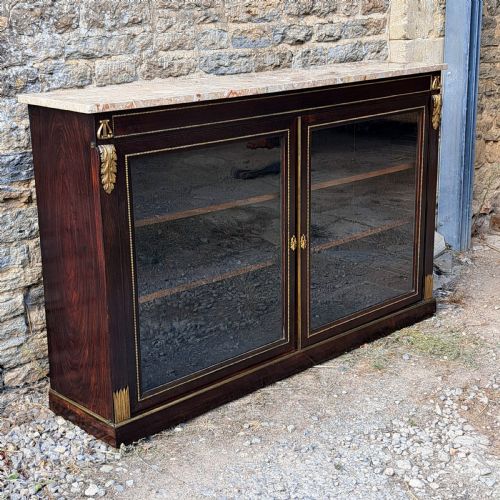


Brass Inlaid Rosewood Cabinet
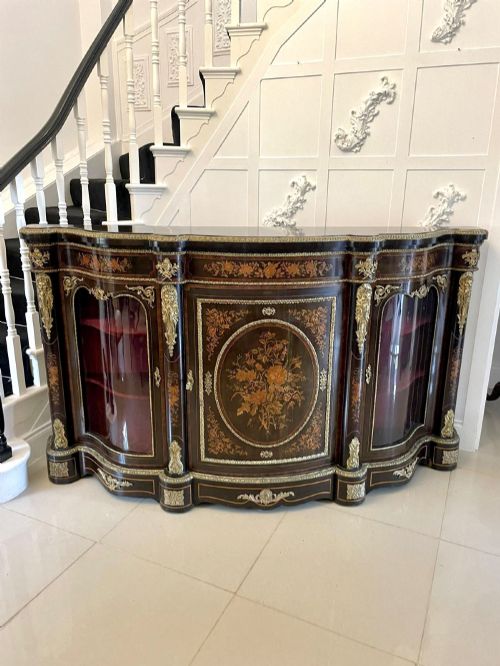
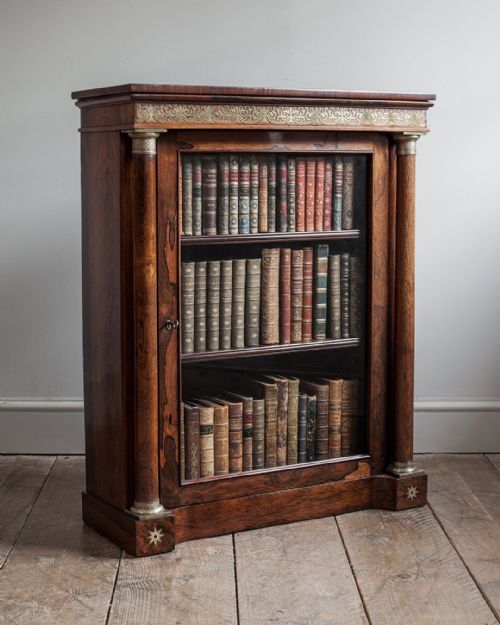
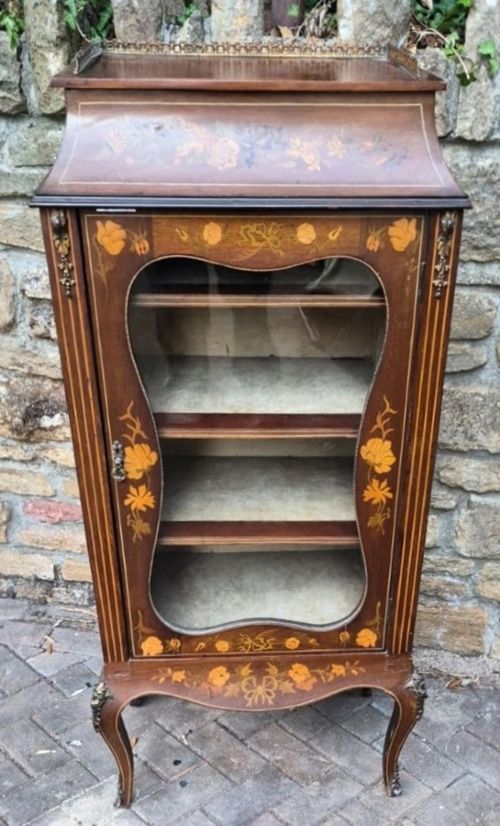
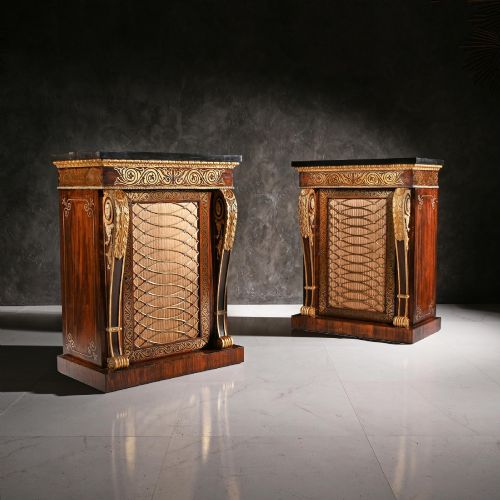
A brass inlaid rosewood cabinet brings together dense tropical timber and bright metal work in a formal piece built for storing books or displaying china.
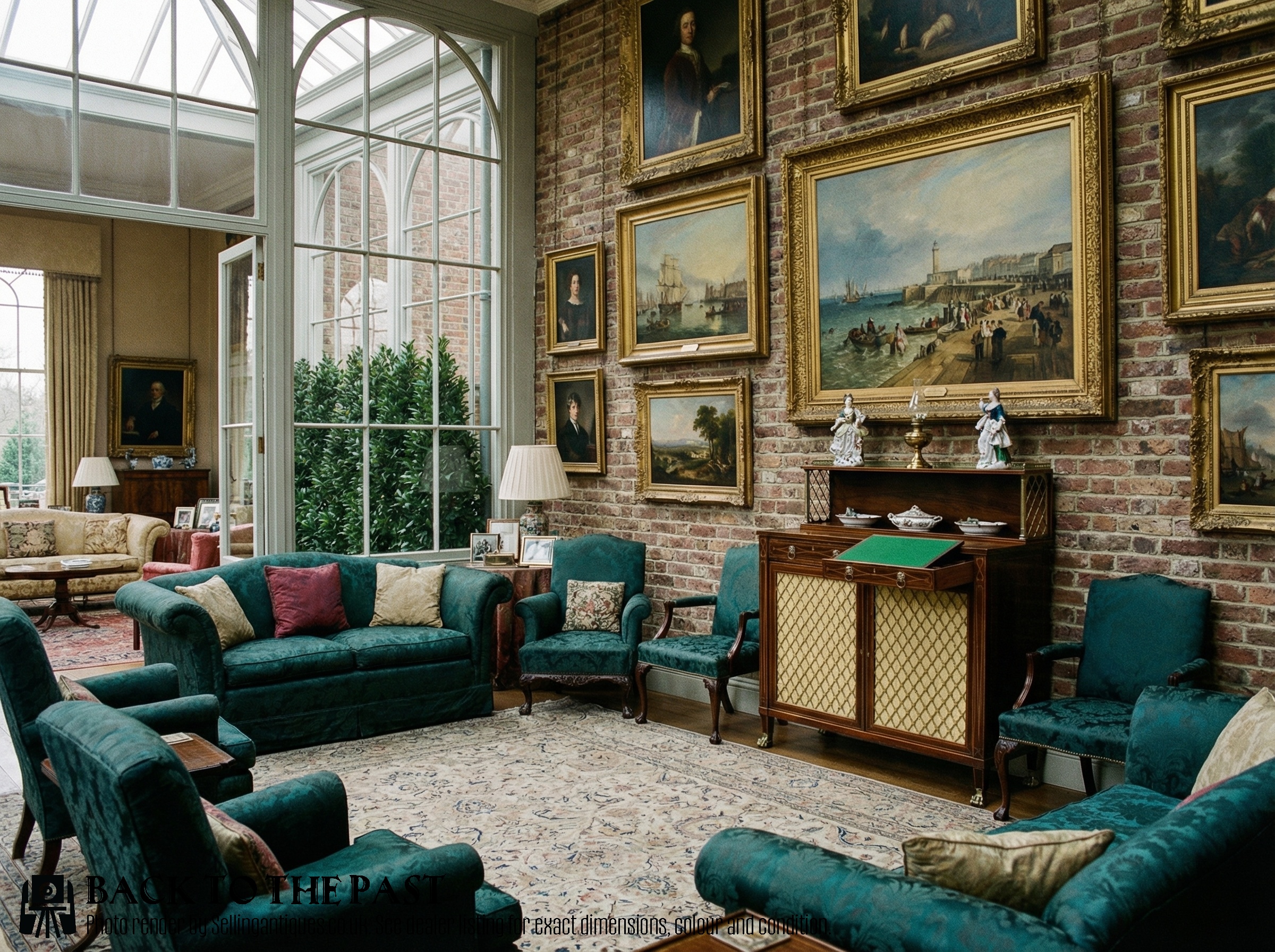
Brass Inlaid Rosewood Cabinet
A brass inlaid rosewood cabinet is a formal storage piece most commonly found from the Regency period and the wider nineteenth century. These items appear as side cabinets, chiffoniers, and low bookcases designed to anchor the principal rooms of a grand home.
The Regency examples dominate the selection, often taking the form of low side cabinets or dwarf bookcases with glazed or brass grill doors. Cabinet makers of the early nineteenth century utilised the rich grain of the timber to provide a dark background for precise brass ornament.
Beyond the standard side cabinets, the selection includes secretaire cabinets, pier cabinets, and larger breakfront configurations. Each variant was built to house specific domestic items, from writing equipment to fine ceramics.
Materials and construction
Makers built these pieces using dense rosewood veneers applied to secondary carcase timbers, exploiting the deep colour and dark figuring of the wood. The surfaces were then routed to receive thin strips and cut-out motifs of brass, which were bedded into the timber and engraved by hand.
Many examples incorporate glazed doors backed by pleated fabric, marble tops, or ormolu mounts alongside the brass inlay. The interior fittings generally comprise adjustable wooden shelves or shallow drawers constructed with traditional joinery.
Some nineteenth-century makers concealed tiny secret compartments behind the brass inlay for storing currency or love letters.
Judging the standard of manufacture
Quality rests primarily in the precision of the brass inlay and the selection of the rosewood veneer. Superior pieces show tightly fitted metalwork without visible gaps in the channels, paired with symmetrical timber grain that flows evenly across the doors and drawers.
The secondary timbers inside the carcase, the weight of the brass mounts, and the crispness of the hand-engraving on the metal further separate standard production from master workshop output. Original brass grilles, working locks, and undamaged glass remain important indicators of an intact heritage.
Louis Constantin Le Gaigneur·John McClean·Pitcher·Collinson and Lock·Gillows of Lancaster
The Brass Inlaid Rosewood Cabinet Glossary
- Chiffonier
- A low cabinet with doors below, often fitted with a shelf on short uprights on the top surface. This form gained popularity during the Regency period for holding books and serving small items.
- Pier cabinet
- A narrow cabinet specifically built to stand against the wall space between windows. These pieces are typically shallow in depth to suit their architectural placement.
- Secretaire cabinet
- A piece containing a pull-down desk flap that conceals small drawers and pigeonholes. It combines the storage function of a cabinet with the utility of a writing desk.
- Ormolu
- Gilt bronze mounts used as decorative feet, handles, or corner accents on nineteenth-century furniture. The technique involves applying a gold amalgam to cast bronze.
- Marquetry
- Decorative veneer work formed by fitting together pieces of various woods or other materials to create pictorial or geometric designs. It differs from inlay by assembling the pattern before mounting it to the carcase.
Brass Inlaid Rosewood Cabinet: Frequently Asked Questions
What rooms suit a brass inlaid rosewood cabinet?
These cabinets work well in reception rooms, libraries, or hallways where their dark timber and reflective metal details can catch natural light. They provide practical surface space and enclosed storage for books or collections.
Because their depths are often relatively shallow, they do not dominate a floor plan in the manner of a large wardrobe or heavy sideboard.
How do I care for rosewood furniture?
Rosewood benefits from stable indoor humidity and protection from direct sunlight, which can bleach the dark natural tones over time. Regular dusting with a soft, dry cloth keeps the polished surface clean.
Avoid placing damp items or unsealed plant pots directly on the timber or marble tops to prevent water rings and staining.
Are brass inlaid cabinets fragile?
While structurally robust, the fine brass stringing and delicate veneers require careful handling during relocation. Changes in central heating can occasionally cause the thin brass strips to lift slightly from the wood.
Maintaining consistent environmental conditions in the room helps prevent the timber from expanding or contracting against the metal inlay.
How can I tell a Regency cabinet from a Victorian one?
Regency pieces, dating from the early nineteenth century, typically feature restrained neoclassical proportions and clean architectural brass lines. Victorian examples often display heavier carving, more complex marquetry, or French revival influences.
Examining the construction methods and secondary timbers inside the drawers also helps establish the approximate decade of manufacture.