




Antique Tier Shelf Chiffonier
These antique tier shelf chiffonier pieces combine display and storage, bringing practical surfaces and tiered woodwork into the home.
Antique Tier Shelf Chiffonier
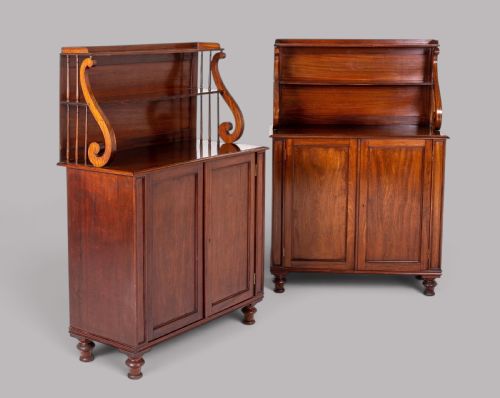
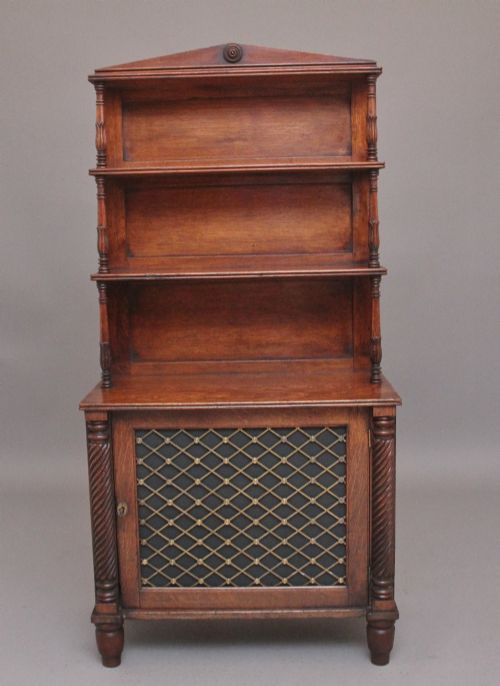
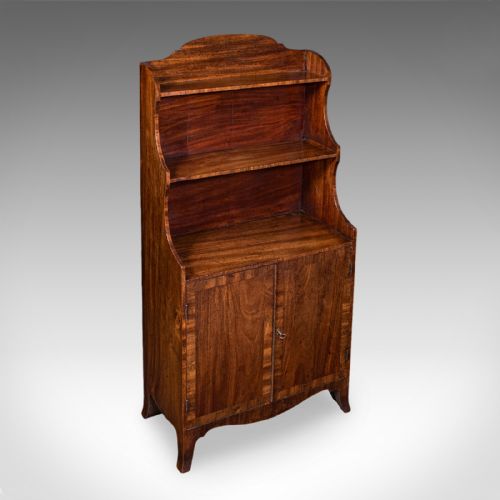
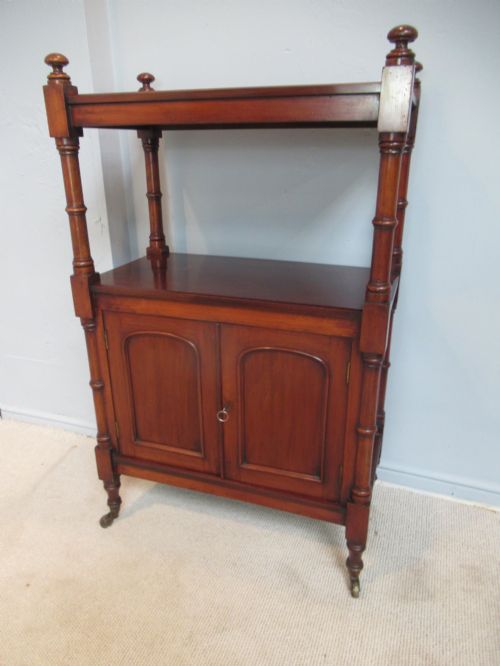
An antique tier shelf chiffonier is a piece of furniture designed for storage and display, appearing primarily in Victorian, Regency, and Georgian forms. These pieces often feature stepped upper shelving above a lower cabinet or sideboard base.
The versions most commonly met on this page combine mahogany, rosewood, or burr walnut with tiered upper shelving and enclosed lower compartments. Some examples incorporate brass inlay, marble tops, or writing drawers into the structural layout.
How they were made
Cabinet makers utilised dense timber foundations such as mahogany, rosewood, and burr walnut, frequently applying figured veneers to visible surfaces. Structural framing relied on traditional joinery techniques suited to supporting multi-tiered upper shelves and heavy lower doors.
Decorative embellishments involved brass inlay, gilt wood, and gesso work, alongside glazed panels or mirrored display backing. These elements required precise hand application to integrate metalwork and glass into the timber bodies.
Antique Tier Shelf Chiffonier Retail Price Guide 2026
Typical asking prices for tier shelf chiffonier among the pieces listed under this phrase on Sellingantiques today, from the lower quarter to the upper quarter. They describe what is for sale here now, not the wider market.
What varies in quality
The selection of timber grain heavily influences the visual distinction of each piece, with figured flame mahogany and burr walnut commanding attention through rich patterning. Subtlety and precision in brass inlay or carved gesso ornamentation separate standard joinery from finer workshop production.
Structural integrity depends on the original soundness of the tiered shelf supports and the smooth operation of writing drawers and cupboard doors. Pieces retaining their original marble tops, glass panels, and harmonious proportions represent the upper tier of quality.
The Antique Tier Shelf Chiffonier Glossary
- Chiffonier
- A low sideboard or cabinet, typically featuring a raised tier of shelves at the back. It evolved during the nineteenth century to serve both display and storage functions.
- Whatnot
- A piece of furniture consisting of a set of open shelves for displaying small objects. It frequently appears integrated into the upper structure of nineteenth-century side cabinets.
- Palisander
- A dense, dark timber often referred to as rosewood. It was favoured by nineteenth-century cabinet makers for its rich colour and decorative grain.
- Gesso
- A plaster-like mixture applied to wood surfaces as a base for gilding or painting. It allowed makers to carve intricate ornamental details onto display shelves and frames.
Antique Tier Shelf Chiffonier: Frequently Asked Questions
What is an antique tier shelf chiffonier used for?
These pieces function primarily as living room or dining room furniture, offering enclosed lower storage for household items alongside open upper shelving for display.
The tiered shelves provide designated space for books, ceramics, or decorative objects, while the cabinet base conceals items out of sight.
How do I distinguish Regency pieces from Victorian examples?
Regency items often display classical restraint, frequently incorporating precise brass inlay against dark rosewood or mahogany surfaces.
Victorian pieces lean towards figured burr walnut and more elaborate combinations with what-nots, display shelves, and mirrored backings.
Can these cabinets serve as small writing desks?
Certain variants include integrated writing drawers equipped with drop-down or pull-out writing surfaces alongside the tiered shelving.
This addition allowed the furniture to serve a dual purpose in nineteenth-century parlours without requiring a dedicated desk.
How should I care for polished mahogany and rosewood surfaces?
Maintenance requires keeping the timber away from direct sunlight and sudden temperature shifts to protect the polish and prevent veneer warping.
Regular dusting with a dry cloth preserves the finish, avoiding heavy silicone sprays that can damage antique wood.