

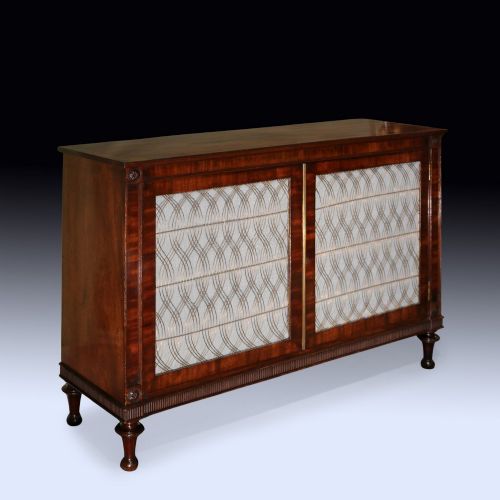


Dark Wood Regency Chiffonier
These dark wood regency chiffonier examples combine useful low storage with elegant proportions, bringing period refinement to a modern room.
Dark Wood Regency Chiffonier
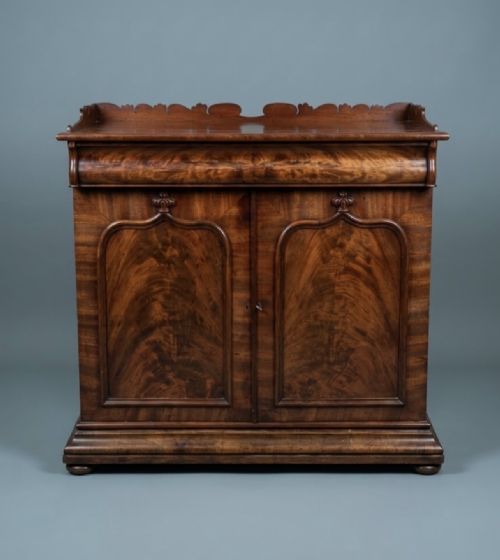
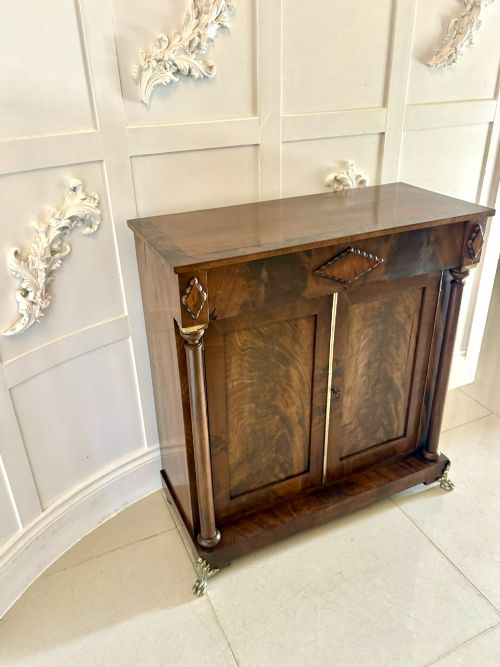
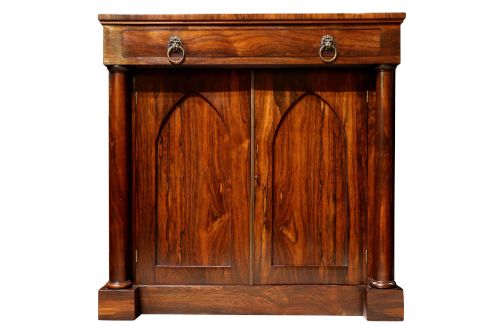
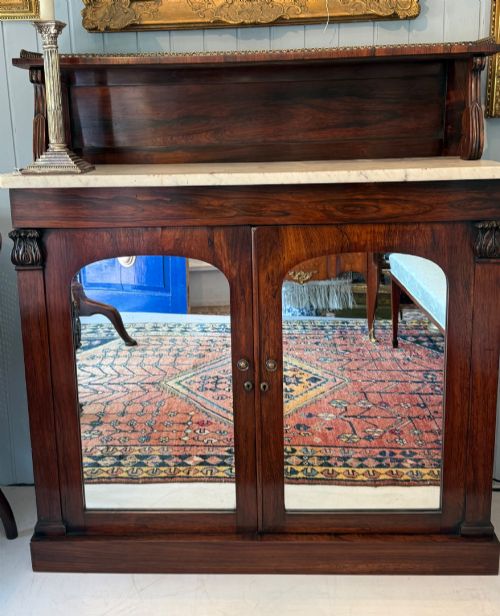
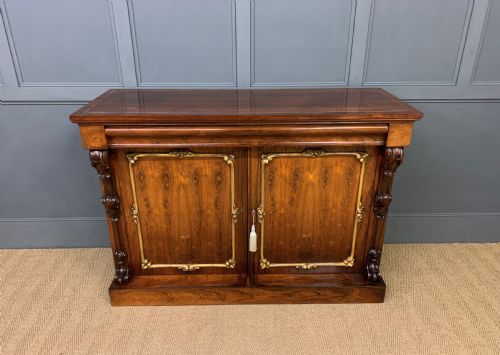
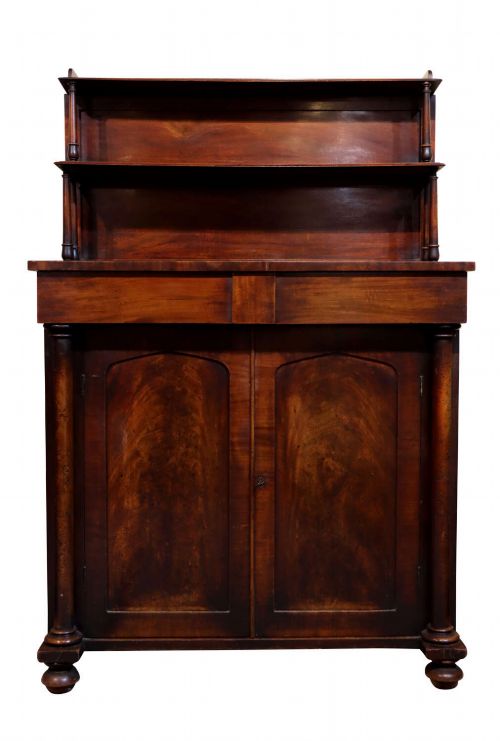
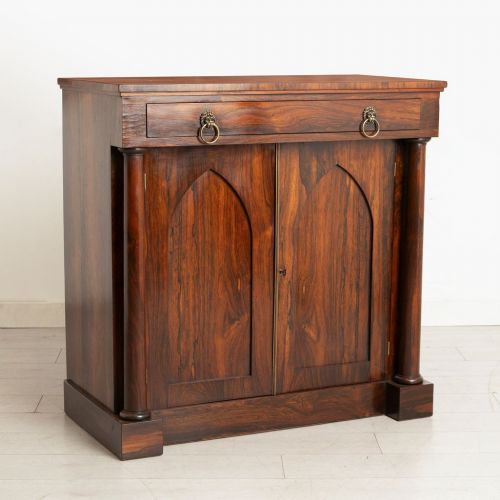
A dark wood regency chiffonier is a low sideboard or cabinet designed for the dining room or parlour during the early nineteenth century. The examples on this page span the Regency, William IV, and Victorian periods, alongside later twentieth-century interpretations.
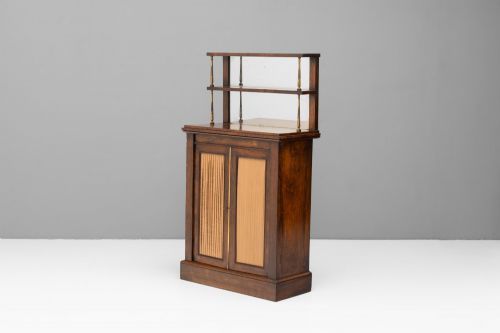
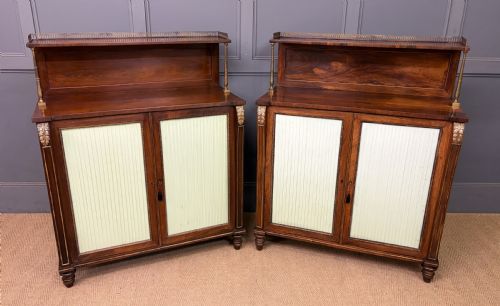
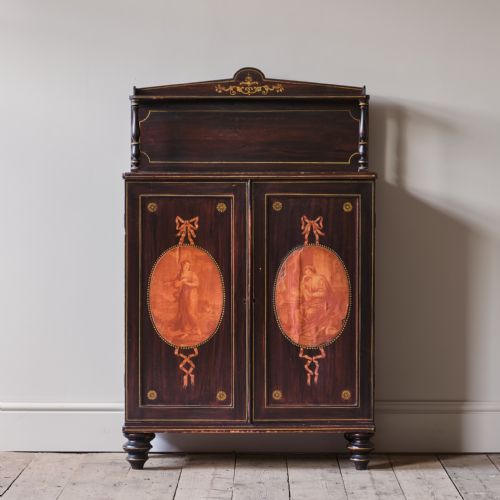
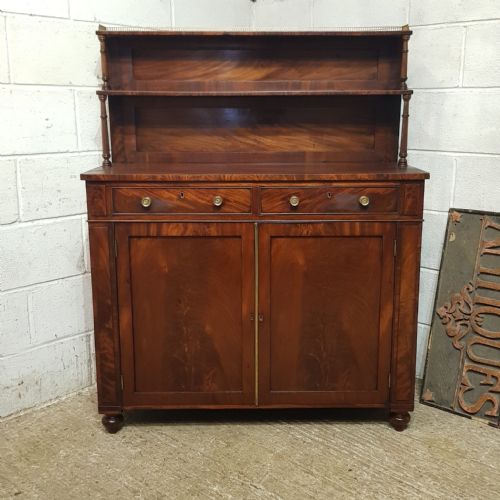
Most pieces seen here take the form of side cabinets, bookcases, or low cupboards fitted with doors, drawers, or open shelving. Mahogany and rosewood dominate the selection, often appearing alongside related variants like sideboards and credenzas.
Materials and Construction
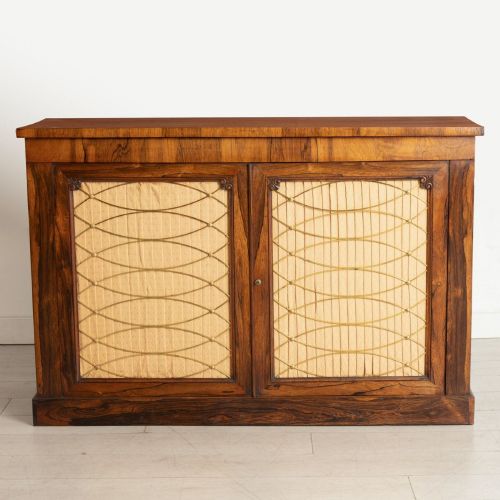
Cabinetmakers utilised solid timbers and veneers of mahogany, flame mahogany, and rosewood, occasionally employing goncalo alves or pine painted to simulate rosewood. Brass inlays, brass grilles, and glass panels frequently accent the dark wood surfaces.
Interiors and glazed sections often incorporate delicate fabric linings such as silk or pleated chiffon behind doors, while select pieces feature marble tops or brass detailing.
Listings span the Regency and Victorian periods, alongside later twentieth-century revivals, utilising mahogany, rosewood, flame veneer, brass, and marble.
Quality and Distinction
Proportion and surface finish separate simpler utilitarian cupboards from finely worked side cabinets of the period, particularly where neat proportions and original painted finishes survive.
Gillows
The Dark Wood Regency Chiffonier Glossary
- Chiffonier
- A low cabinet featuring cupboards or shelves below, originating in the early nineteenth century for storing dining silver or books.
- Flame Mahogany
- A veneer cut from the fork of the mahogany tree to produce a distinctive, flamy, figured grain pattern.
- Goncalo Alves
- A dense exotic hardwood with striking dark brown and light yellowish-brown figuring utilised in select Regency furniture.
- Simulated Rosewood
- A painted surface finish on pine or other woods designed to imitate the appearance of costly rosewood.
- Brass Grille
- A decorative metal mesh fitted into cabinet doors to allow ventilation or visibility of contents.
Dark Wood Regency Chiffonier: Frequently Asked Questions
What is a dark wood regency chiffonier used for?
These low cabinets served primarily in dining rooms and parlours for storing tableware, linens, and books during the Regency and William IV periods.
Today, they function effectively as sideboards or media consoles in contemporary rooms while retaining their historic character.
How do I identify a Regency chiffonier?
Look for architectural lines, rich dark timbers like mahogany and rosewood, and characteristic details such as brass inlays or grilles.
Authentic pieces from the period often display neat proportions and period joinery consistent with early nineteenth-century craftsmanship.
What is the difference between mahogany and rosewood?
Mahogany provides a warm, reddish-brown tone with straight grain or dramatic flame figuring, depending on how the veneer is cut.
Rosewood offers a heavier, darker wood with deep purple-brown contrasts and prominent grain patterns highly favoured in fine Regency furniture.
How do I care for a antique dark wood cabinet?
Keep the timber away from direct heat sources and strong sunlight to prevent the polish and veneers from drying out or fading.
Apply a traditional beeswax polish occasionally to maintain the lustre of the mahogany or rosewood surface without building up residue.