
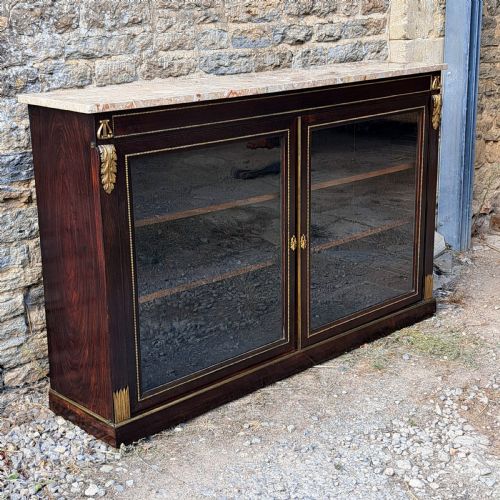

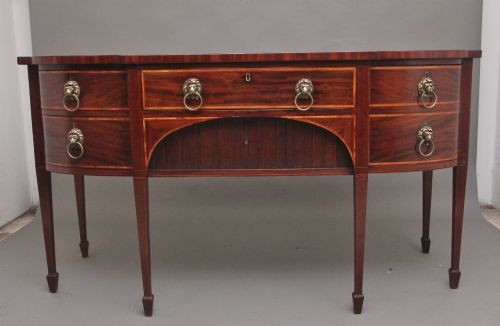
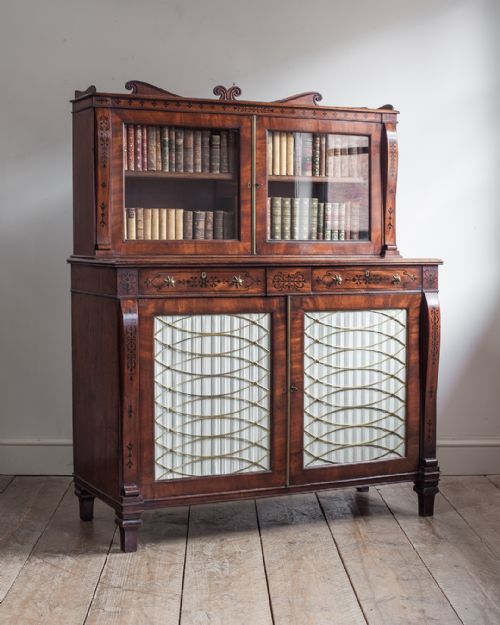


Regency Brass Inlaid Credenza
A regency brass inlaid credenza brings rich timber and bright metalwork together to anchor a formal interior.
Regency Brass Inlaid Credenza
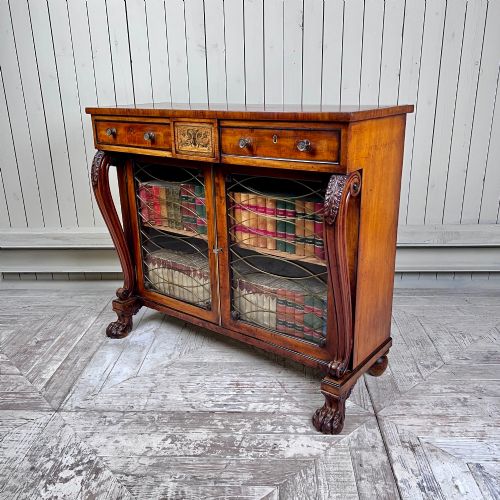
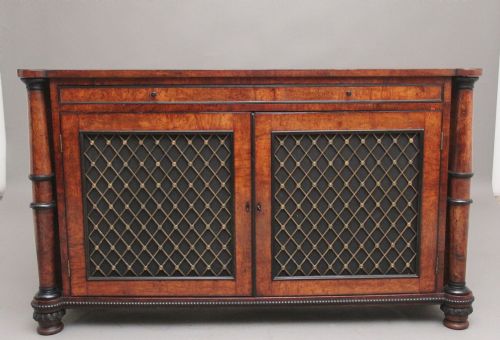
When buyers search for a regency brass inlaid credenza, they encounter low storage furniture originating mainly from the nineteenth century and the Regency period. These pieces appear under various designations in the evidence, including side cabinets, chiffoniers, and bookcases.
The rosewood and mahogany versions dominate the available selection, often featuring enclosed lower cupboards and open or glazed upper shelving. Cabinets from this lineage serve primarily as display and storage furniture in dining rooms and libraries.
Many examples date from around eighteen-twenty, representing the height of Regency taste. Makers of the period utilised exotic timbers combined with meticulous brass detailing to create formal architectural silhouettes.
Materials and construction
Cabinet makers constructed these pieces using dense tropical hardwoods such as rosewood and mahogany, supplemented by secondary timbers like boxwood and ebony. Workshops applied contrasting veneers over solid carcases to achieve rich surface variation.
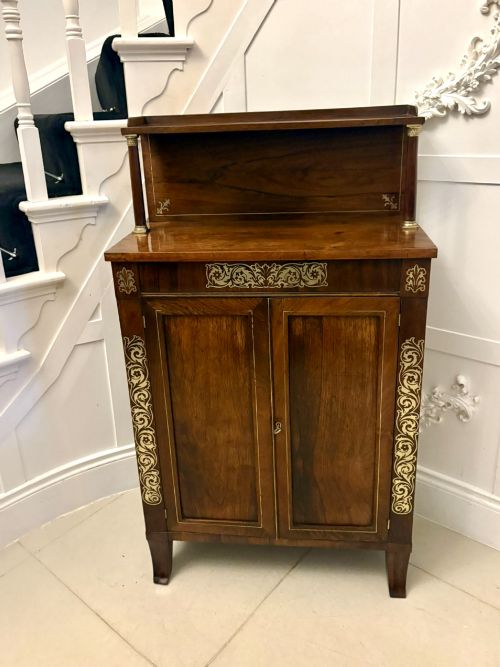
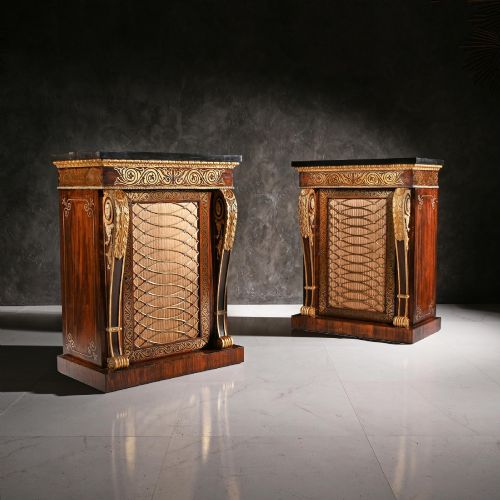
The characteristic brass inlay involves precision cutting of metal sheets to form delicate lines, scrolls, and classical motifs set flush into the timber surface. Artisans frequently paired this metallic embellishment with mirrored glass doors, marble tops, and silk fabric panels.
One unexpected piece arrived wearing an Egyptian Revival hat courtesy of a famous department store.
Gradations in craftsmanship
Quality rests upon the crispness of the brass inlay work and the selection of figured timber veneers. Superior examples display tight grain matching across the doors and drawers without gaps in the metal marquetry.
The refinement of internal carcase construction and the proportion of the classical mounts distinguish standard production from exceptional attribution pieces. Surviving original glass and secondary timbers preserved beneath the finish further separate finer specimens.
Louis Constantin Le Gaigneur·John McClean
The Regency Brass Inlaid Credenza Glossary
- Chiffonier
- A low cabinet featuring shelves or a superstructure above, commonly enclosed by doors with fabric or glass panels. This form evolved during the early nineteenth century.
- Marquetry
- The art of applying pieces of veneer to a structure to form decorative patterns. Craftsmen utilised brass alongside exotic woods for striking contrast.
- Breakfront
- A piece of furniture where the central section projects forward from the flanking wings. This architectural arrangement creates depth and shadow across the facade.
- Palisander
- A dense dark timber related to rosewood, prized for its distinctive grain patterns. It provides a heavy and durable foundation for cabinet work.
- Pedestal sideboard
- A large dining room storage unit comprising central drawers flanked by distinct columnar pedestals. These substantial forms date from the Georgian and Regency eras.
Regency Brass Inlaid Credenza: Frequently Asked Questions
What is a regency brass inlaid credenza used for?
These cabinets provide surface display space and enclosed shelving for china, linen, or books. Their decorative fronts make them suitable focal points in principal reception rooms.
Historically they stood against dining room or drawing room walls to store serving items while displaying decorative objects on top.
How do I date a brass inlaid cabinet?
Dating relies upon timber choice, hardware styles, and construction methods characteristic of the early nineteenth century. Rosewood and mahogany carcases combined with fine brass line inlay point directly to the Regency period.
Secondary woods and hand-cut dovetails inside drawers offer further clues to the manufacturing decade.
Are rosewood and mahogany the only timbers used?
Rosewood and mahogany form the vast majority of the exterior surfaces, but workshops also employed amboyna and pollard oak. Contrasting details utilise ebony and boxwood stringing.
Simulated rosewood finishes appear on selected pieces where lesser woods were painted to imitate exotic grain.
How do chiffoniers differ from side cabinets?
Chiffoniers incorporate an upright superstructure with shelves mounted on the top surface above the main cabinet body. Side cabinets maintain a flat top surface without tiers above.
Both forms utilise similar brass inlay techniques and date from the same Regency and nineteenth century periods.