


Brass Inlaid Mirror
A brass inlaid mirror brings sharp metallic contrast and warm timber tones to a wall, combining utility with decorative metalwork.
Brass Inlaid Mirror
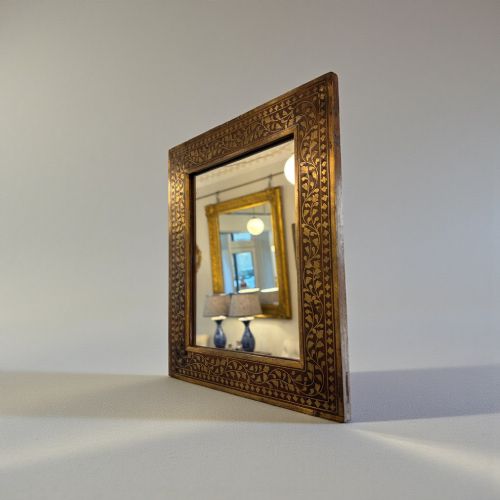
A brass inlaid mirror is a reflective glass panel set within a wooden frame embellished with metal wire, strip or sheet work. When searching for a brass inlaid mirror, buyers encounter a variety of forms ranging from compact wall hangings to larger dressing and overmantel pieces.
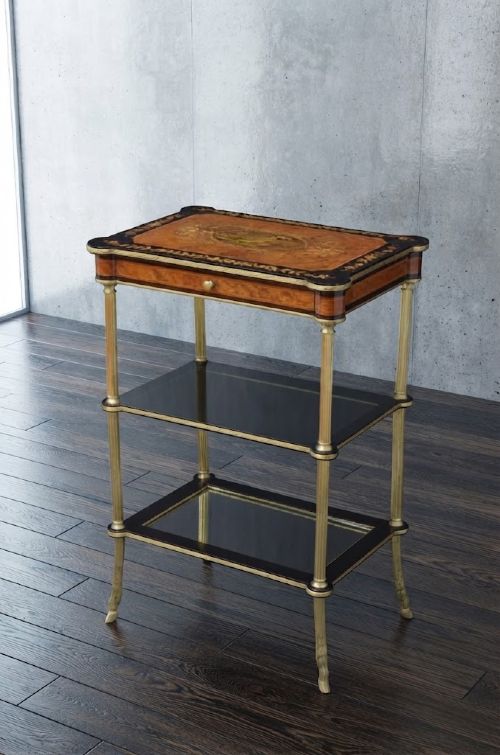
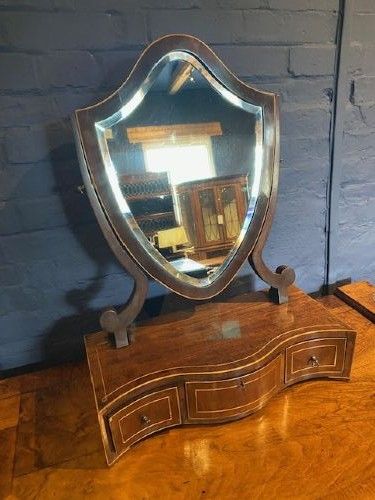
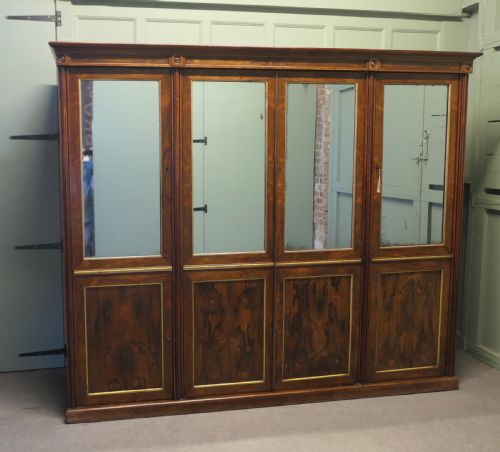
The pieces appearing on this page span several distinct periods including the Regency era, the nineteenth century and the late Victorian period. Alongside dedicated wall and dressing mirrors, the selection includes related forms featuring mirrored elements or similar decorative vocabulary.
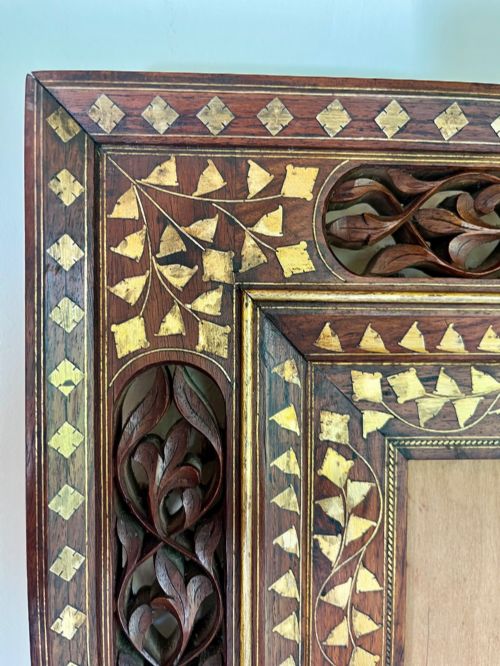
Geographic origins and stylistic influences vary significantly across the listings. Examples include British Regency rosewood pieces, French ebonised frames, and intricately decorated works originating from Hoshiarpur and Kashmir.
Materials and construction
Makers constructed these frames using dense timbers such as rosewood, mahogany, walnut and ebonised wood, providing a dark ground that made bright metalwork stand out. Glass plates, sometimes bevelled or cut, were fitted into rebated backs behind the decorative wooden surrounds.
Brass was beaten, cut or drawn into fine wire and strip before being sunk into hand-cut channels carved directly into the timber surface. Glue and small pins secured the metal in place, while French polish or wax finished the surrounding wood.
The listings combine British Regency rosewood with nineteenth-century French ebonised work and detailed North Indian Hoshiarpur frames.
Distinguishing quality in craftsmanship
Quality rests heavily on the precision of the metalwork and the selection of the timber grain. Finer examples display tight, seamless joins where the brass meets the wood without gaping or lifting along the channels.
The depth and intricacy of the carving further separate standard production from superior work, particularly in regional pieces where dense geometric or floral brass patterns cover the entire wooden armature.
The Brass Inlaid Mirror Glossary
- Regency
- A style and period spanning the early nineteenth century characterised by classical restraint and rich timber veneers. Pieces from this era often utilise brass stringing to accentuate structural lines.
- Hoshiarpur
- A North Indian city renowned for intricate woodwork traditions. Artisans there produced frames densely overlaid with geometric brass inlay and carved botanical motifs.
- Ebonised wood
- Timber stained or treated to imitate ebony, providing a deep black surface. This finish frequently serves as a high-contrast background for bright brass inlay.
- Chiffonier
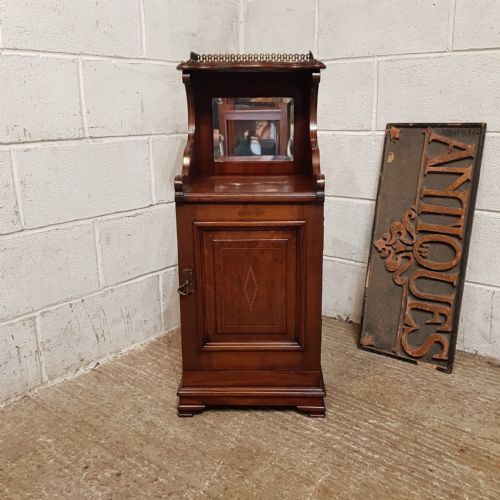
- A low cabinet with shelves or a mirror superstructure, popular during the nineteenth century. Many incorporate brass inlay matching companion mirrors of the period.
- Cheval mirror
- A full-length plate glass mirror suspended on a vertical frame with a pivoting stand. These freestanding pieces allowed users to check their entire attire.
Brass Inlaid Mirror: Frequently Asked Questions
How do I date a brass inlaid mirror?
Dating relies on identifying the underlying timber species, construction methods, and stylistic cues present in the frame. Regency pieces often pair dark rosewood with fine brass lines, whereas later nineteenth-century and Indian export pieces feature denser overall patterns.
Examining the reverse of the frame and the type of glass plate also offers clues. Older mirrors frequently retain original mercury silvering or hand-bevelled edges that differ sharply from modern replacements.
Where should I hang a heavy wooden mirror?
Heavy mirrors require secure fixings anchored directly into wall studs or masonry rather than relying solely on plasterboard. Using appropriate picture wire or strap brackets distributed across multiple points ensures the weight is supported safely.
Positioning the glass opposite a window maximises natural light reflection within a room. Care should also be taken to keep antique timber away from direct heat sources to prevent wood movement.
How do I clean brass inlay safely?
Cleaning requires a soft, dry cloth to remove dust from both the glass and the wooden surrounds. Avoid commercial metal polishes that can stain the adjacent timber or seep beneath the brass strips.
If the brass requires attention, a very gentle application using a specialist metal cleaner on a cotton bud prevents the compound from touching the French polished wood.
What is the difference between an overmantel and a wall mirror?
An overmantel mirror is specifically proportioned to hang horizontally above a fireplace mantelpiece. These pieces often feature landscape orientations and substantial frames designed to anchor the decorative scheme of a reception room.
Standard wall mirrors come in various shapes and sizes suited to multiple locations around a home. They lack the specific architectural context of an overmantel.