
Floral Brass Inlay
Floral brass inlay turns up on Victorian and Edwardian tables and trays, bringing bright metallic contrast to dark woods.
Floral Brass Inlay
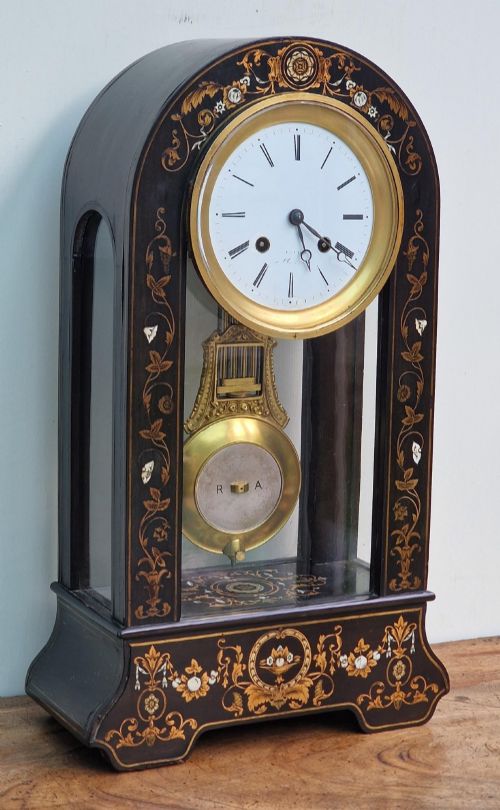
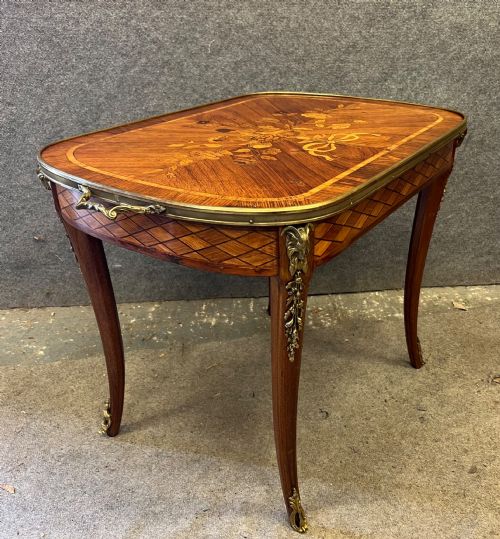
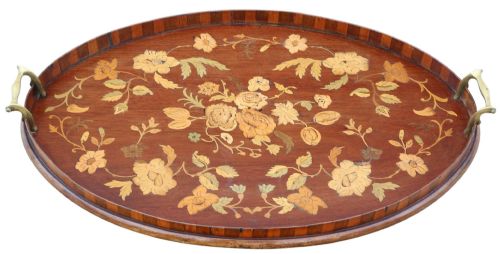
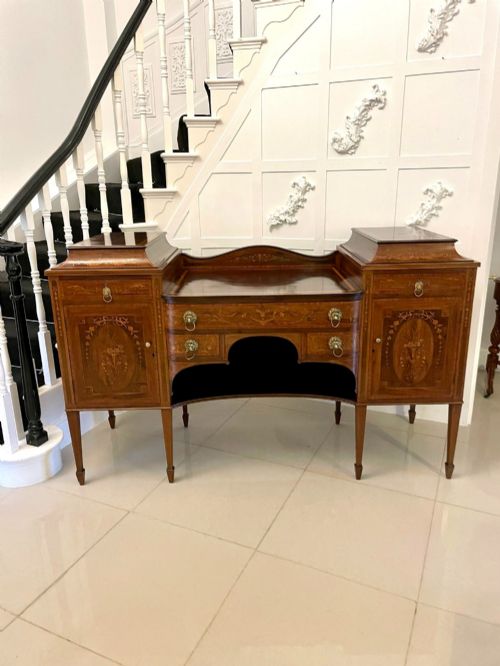
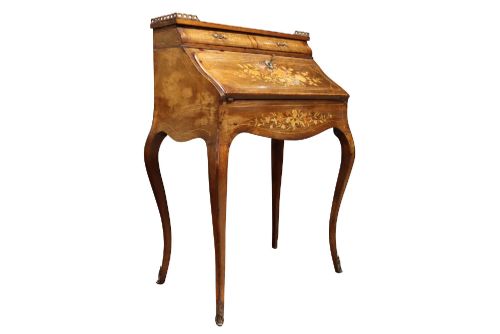
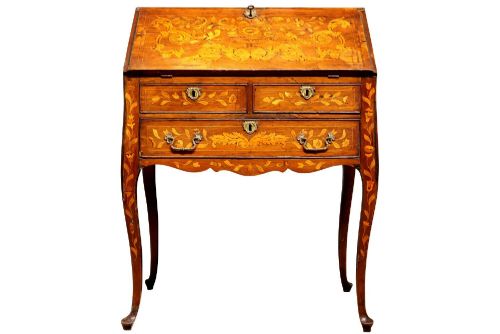
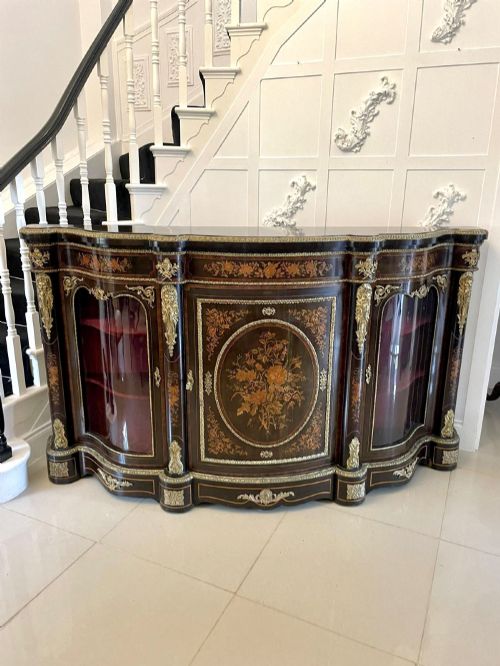
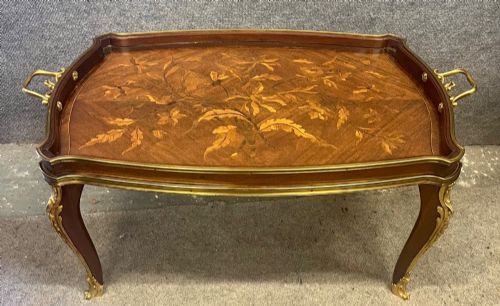
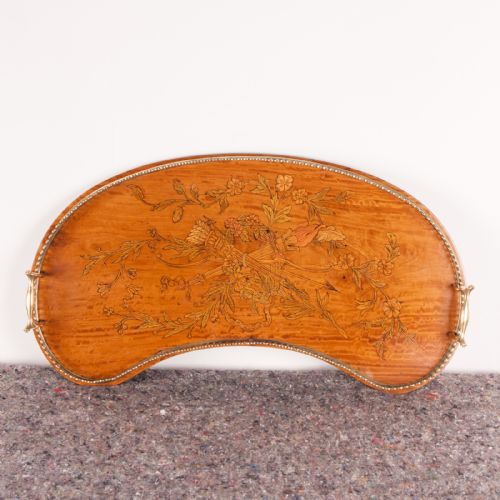
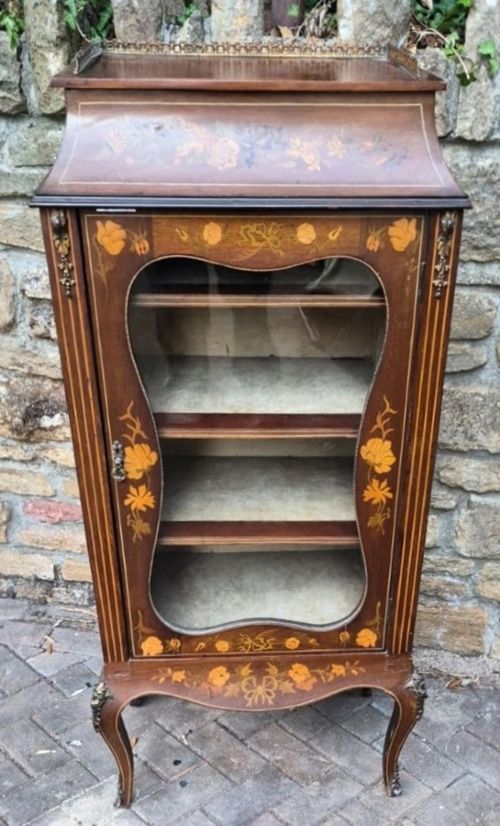
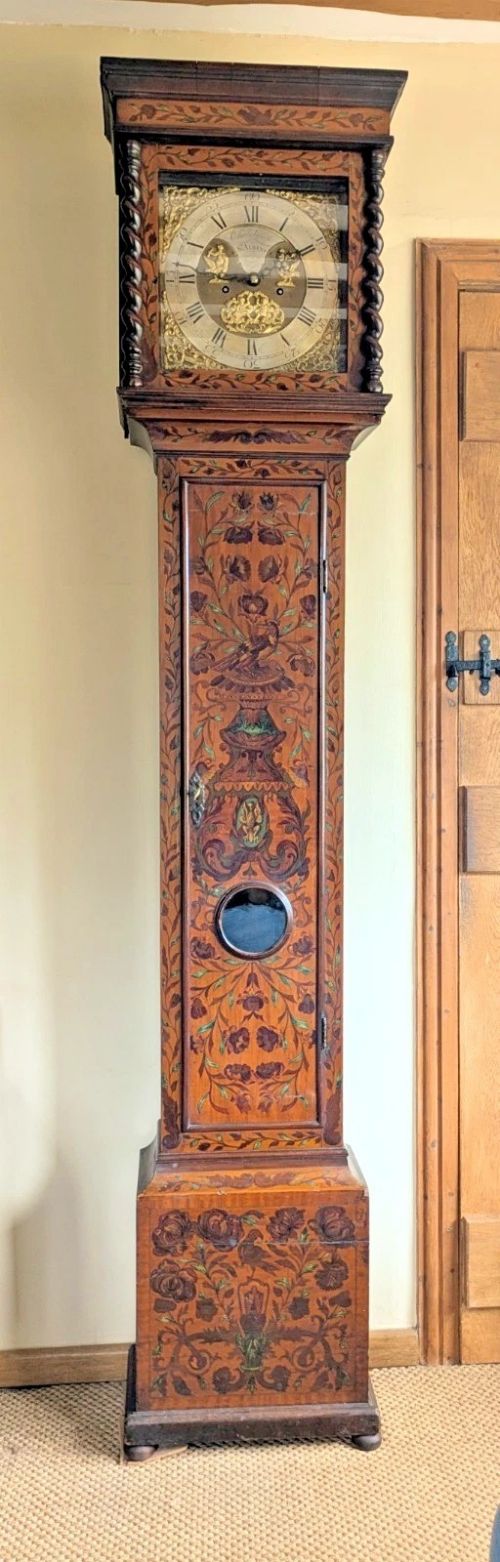
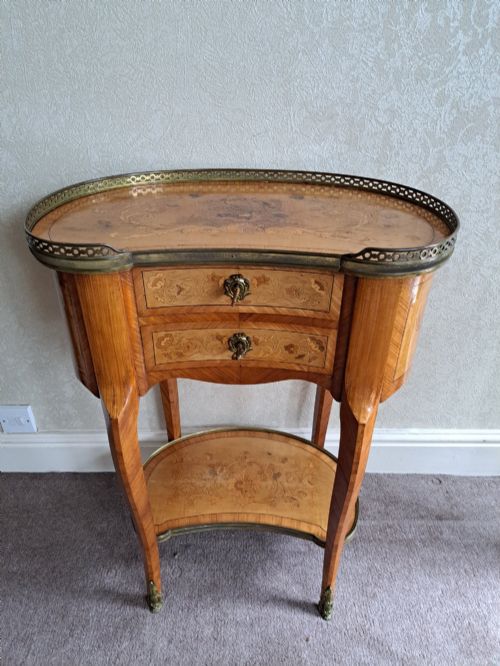
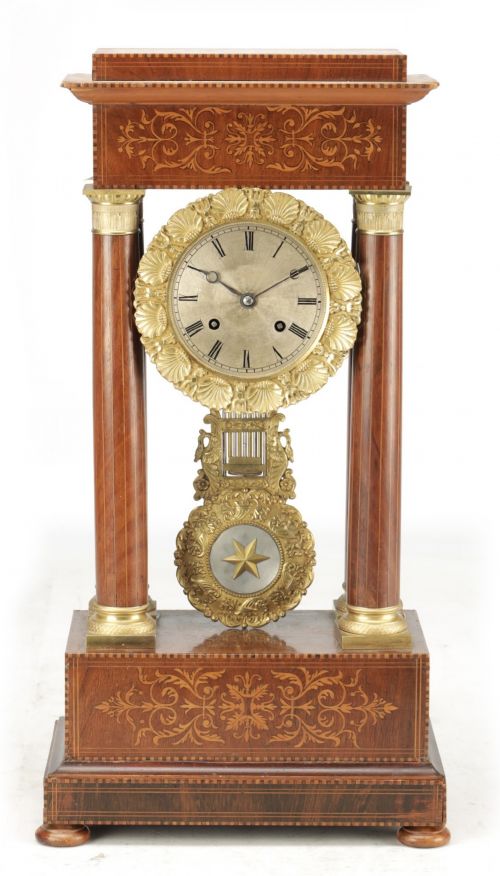
When you search for floral brass inlay, you encounter occasional tables, serving trays, and cabinets spanning the Victorian and Edwardian periods, alongside earlier pieces. The materials include walnut, mahogany, rosewood, and satinwood, frequently paired with brass work.
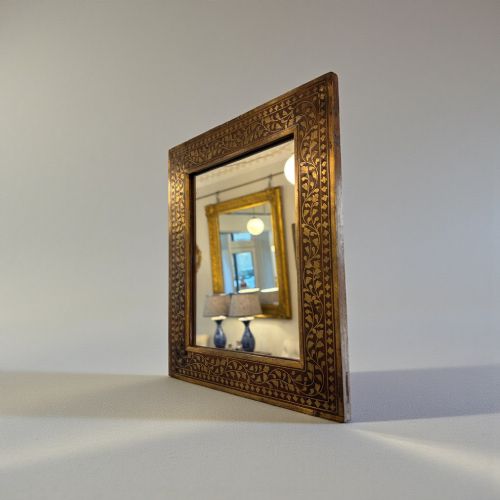
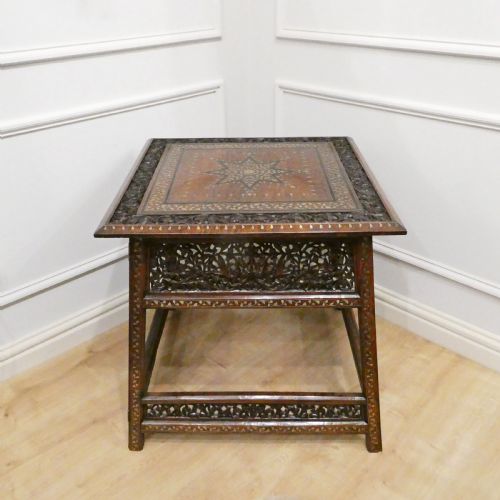
You are most likely to meet pieces originating from English workshops or French cabinet makers following Louis styles, as well as Anglo-Indian items from Hoshiarpur. These objects range from small side tables to larger credenzas and longcase clocks.
The decorative schemes rely on brass wire and sheet cut into leaf and flower motifs, set flush into timber surfaces. This technique creates a distinct visual rhythm across serving trays, centre tables, and side cabinets.
Materials and technique
Craftsmen cut floral patterns out of thin sheet brass or hammered wire, then fitted them into hand-carved channels in hardwoods such as mahogany, kingwood, and rosewood. The metal sits level with the timber surface, secured with animal glue or tiny pins.
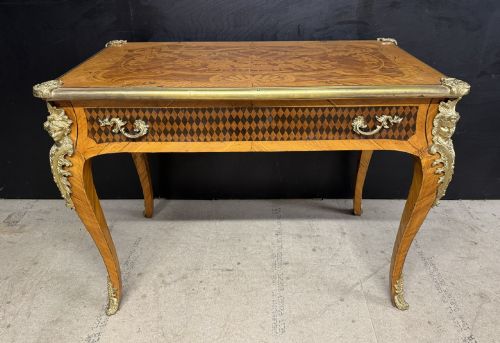
French pieces often combine brass inlay with ormolu mounts and exotic veneers like satinwood and tulipwood, creating high-contrast surfaces. Anglo-Indian examples from Hoshiarpur utilise dense brass wire work embedded into shesham or other regional timbers.
Materials appearing across these pieces include walnut, mahogany, rosewood, kingwood, glass, and ormolu.
Qualities to consider
The precision of the metal fitting separates standard work from superior examples, with top-tier pieces showing zero gap between the brass and the surrounding wood. Finer items maintain crisp edges on every leaf and stem without lifting or movement in the timber.
The selection of the underlying timber dictates the visual depth, with dense grains and rich natural colour providing a stable bed for intricate metalwork. Ormolu mounts, where present, show sharper chasing and heavier gilding on superior items.
Hewetsons London·Charles Louch St. Albans·Nathaniel Pyne
The Floral Brass Inlay Glossary
- Ormolu
- Gilded bronze used for mounts and decorative accents on furniture. It adds a bright metallic highlight alongside brass inlay.
- Marquetry
- The art of applying pieces of veneer to a structure to form decorative patterns. It often accompanies brass work on French and English cabinets.
- Étagère
- A piece of furniture consisting of open shelves for displaying small objects. These tiered stands frequently incorporate inlaid surfaces.
- Credenza
- A side cabinet used for storage and display, originating in Italy and adopted in Victorian drawing rooms. They commonly display extensive surface decoration.
- Demi-lune
- A half-moon shape used for tables and consoles designed to stand flush against a wall. The curved top provides a canvas for floral patterns.
Floral Brass Inlay: Frequently Asked Questions
How do I clean brass inlay?
Dust regularly with a dry cloth and avoid harsh metal polishes that can stain the surrounding wood.
Apply a microcrystalline wax sparingly to protect both the metal and the timber from atmospheric moisture.
Is brass inlay delicate?
The metal and wood expand and contract at different rates, meaning extreme changes in humidity can cause lifting.
Keep these items away from direct heat sources and strong sunlight to maintain the stability of the adhesive.
How do I date these items?
Look at the secondary timbers inside drawers and the style of the brass cutting to determine the period.
Victorian and Edwardian pieces often show machine assistance, while 17th and 18th-century examples rely entirely on hand tools.
Where should I place a tray?
Serving trays with floral brass inlay work well displayed flat on a low table or mounted securely on a wall.
Avoid placing damp items directly onto the surface to prevent water rings on the polished timber.