

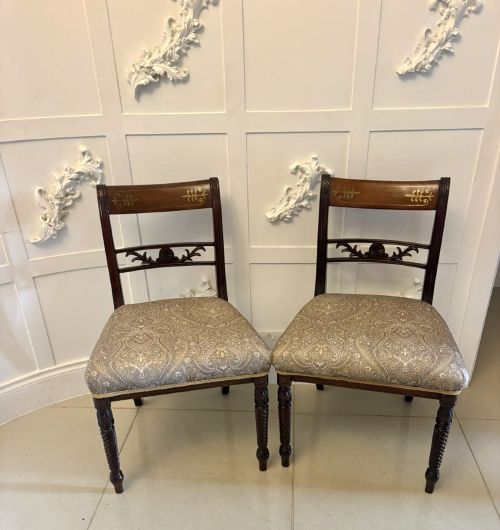
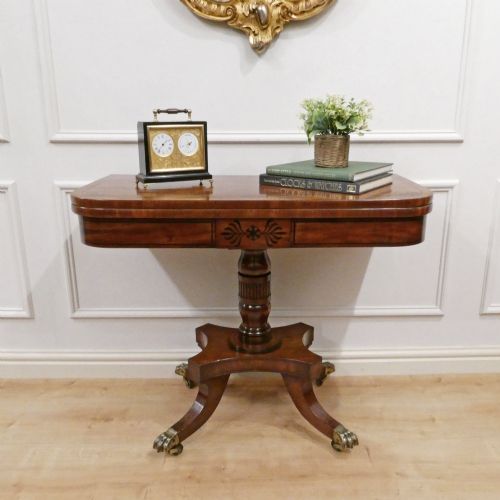
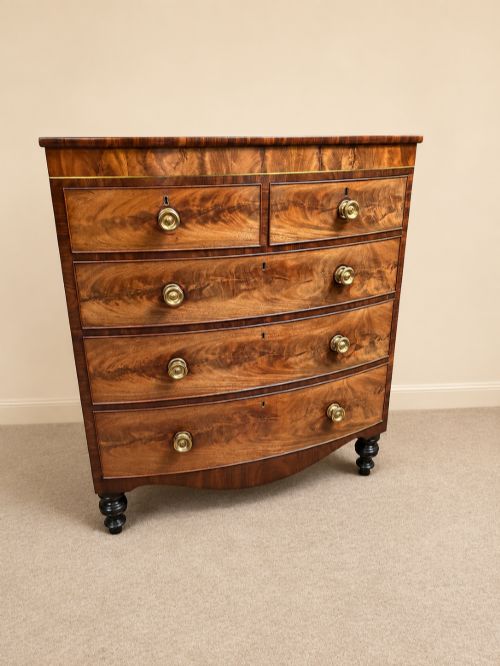
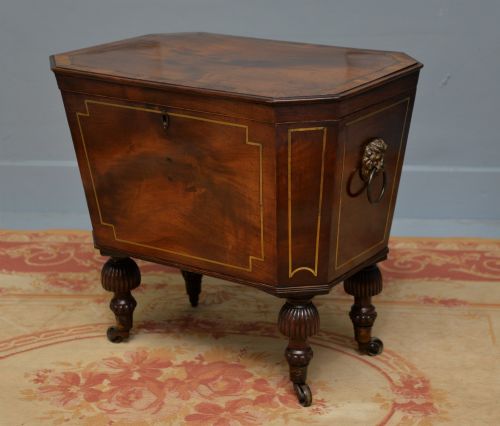
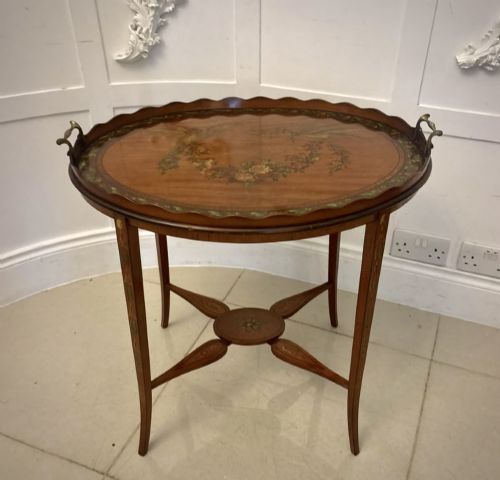
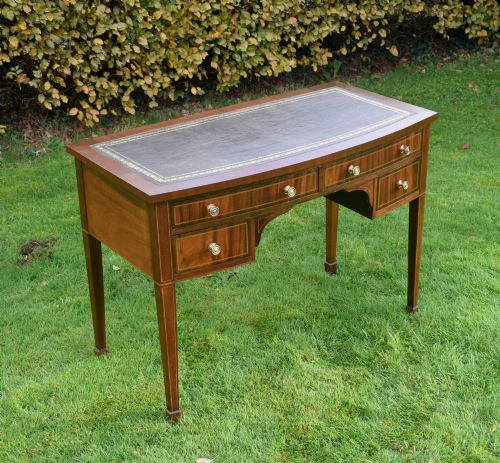
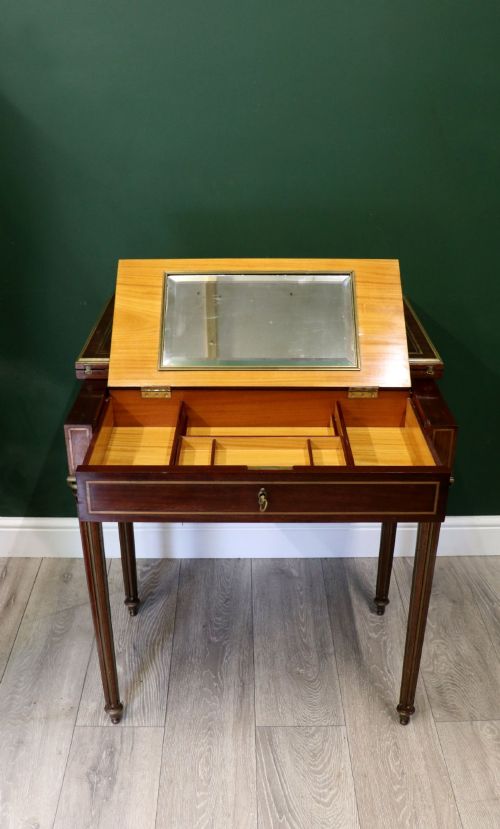
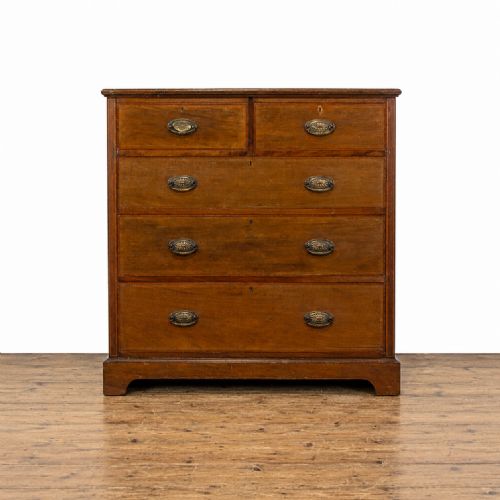
Brass Inlaid Mahogany Furniture
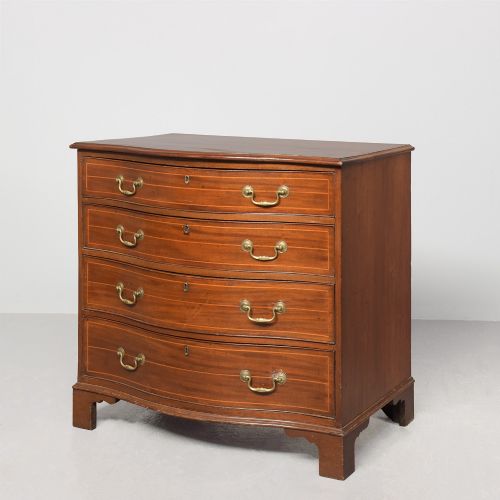
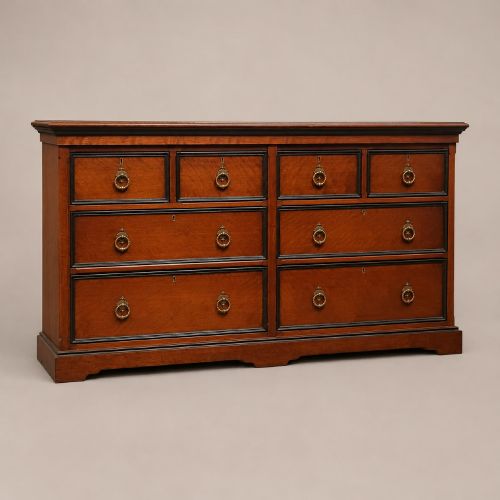
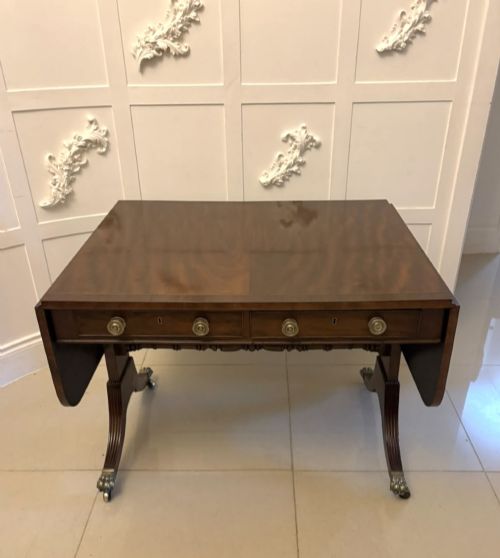
These pieces of brass inlaid mahogany furniture bring together rich cabinet timber and sharp metal work for domestic use.
Brass Inlaid Mahogany Furniture
Brass inlaid mahogany furniture encompasses pieces made across the Georgian, Regency, Victorian, and Edwardian periods, featuring dark timber enriched with metallic detail. A buyer searching this phrase encounters utilitarian and formal forms alike, spanning practical storage and refined entertaining items.
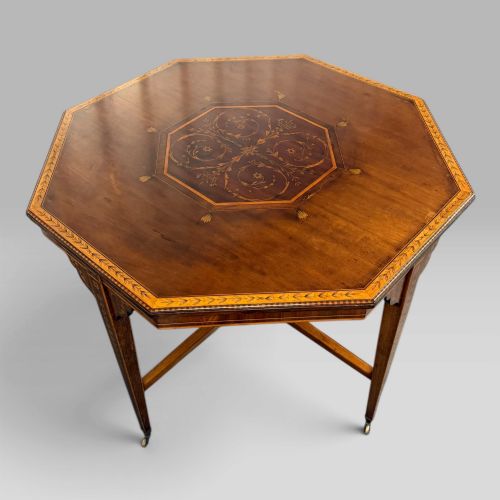
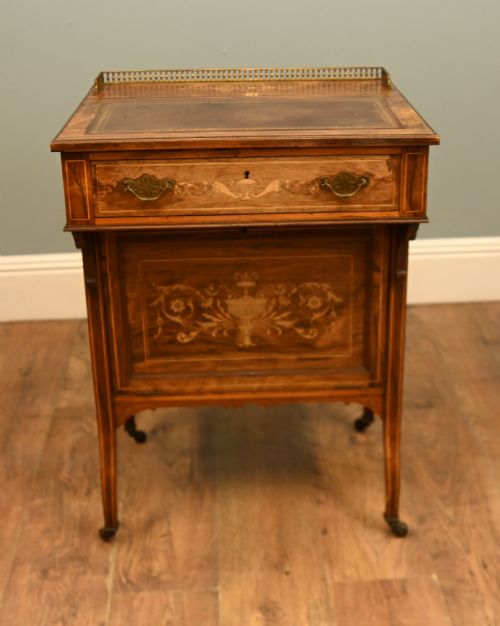
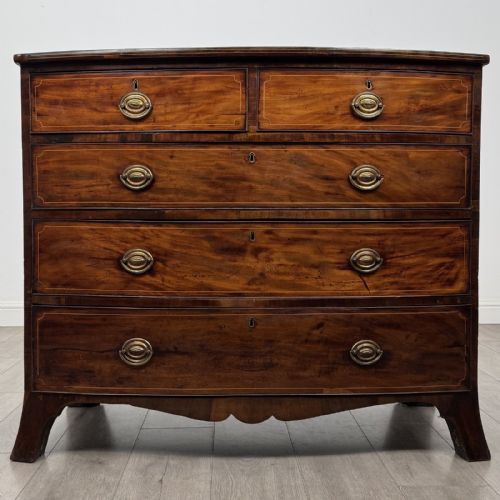
The most frequent examples on this page date from the Regency and Edwardian eras, combining traditional sideboards, chests of drawers, and dining chairs with lighter occasional tables and desks. These items range from strict geometric brass stringing to elaborate classical motifs set into polished timber surfaces.
Originating largely from British and French workshops, these items serve as functional focal points for drawing rooms, dining spaces, and studies. The surviving stock demonstrates how cabinet makers adapted brass enrichment to domestic forms over more than a century of production.
Construction and materials
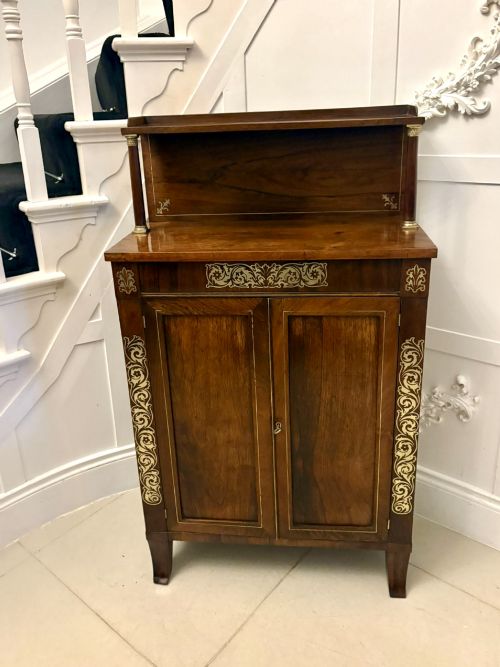
Makers built these pieces primarily using solid and veneered mahogany, frequently combining secondary timbers such as satinwood, boxwood, ebony, and rosewood to create contrasting borders and panel details. Artisans routed precise channels into the primary timber surfaces to receive flat strips or cast elements of brass, securing the metal flush with the polished wood.
Inlay and marquetry techniques required steady hands to recess the brass alongside organic stringing materials without splitting the surrounding grain. Once the metal and contrasting woods were set, polishers applied finishes that protected the timber while highlighting the metallic sheen against the dark red-brown grain.
Brass Inlaid Mahogany Furniture Retail Price Guide 2026
Typical asking prices for brass inlaid mahogany furniture among the pieces listed under this phrase on Sellingantiques today, from the lower quarter to the upper quarter. They describe what is for sale here now, not the wider market.
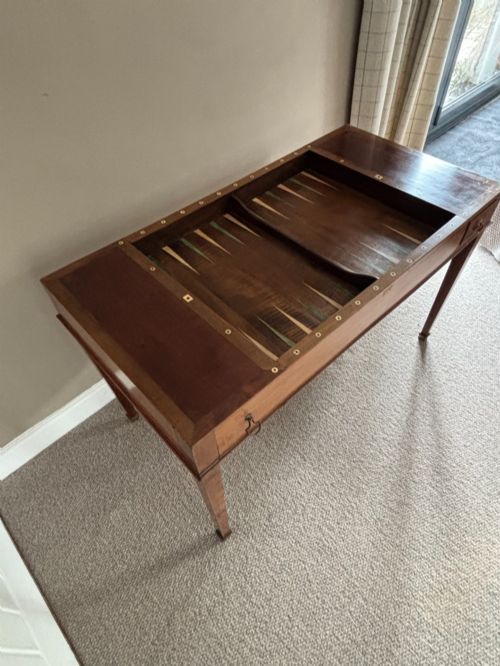
French trid-trac tables combine backgammon pits with secret drawer compartments for losing your winnings in refined silence.
Factors influencing quality
Quality rests upon the precision of the cabinet work and the crispness of the metal integration into the timber grain. Finer examples display tight joints, harmonious secondary timber selection, and meticulous hand-cut brass channels that remain completely flush with the surrounding surface.
The ambition of the design dictates the tier of the piece, moving from simple linear stringing on practical chests to complex figurative brass and marquetry work on formal side tables and card tables. Superior items maintain structural integrity alongside balanced proportions that reflect the aesthetic standards of their specific period.
John McLean·Dovestone, Bird & Hull·Hewetsons, London·Mawer & Stephenson
The Brass Inlaid Mahogany Furniture Glossary
- Brass inlay
- The technique of embedding thin strips or shaped pieces of brass into routed channels within a wooden surface. This method creates decorative geometric patterns and borders that contrast with the dark grain of the timber.
- Marquetry
- The art of applying small pieces of veneered wood and other materials to form pictorial or decorative motifs on furniture surfaces. It appears frequently alongside brass elements on Edwardian and French pieces.
- Sarcophagus cellarette
- A large, heavy container shaped like an ancient stone coffin, lined with lead for holding and chilling wine bottles. These freestanding Regency items often feature prominent brass mounts and inlay.
- Pembroke table
- A small, versatile table with hinged drop leaves on two opposing sides, supported by folding brackets or hinged legs. These functional pieces suited breakfasting or writing in smaller rooms.
- Etagere
- A set of open shelves arranged in tiers for displaying small decorative objects or serving items. These light tables emerged strongly during the later nineteenth and early twentieth centuries.
Brass Inlaid Mahogany Furniture: Frequently Asked Questions
How do I clean brass inlaid mahogany furniture?
Dust surfaces regularly with a soft, dry cloth to prevent grit accumulation in the grain and metal channels. Avoid harsh chemical cleaners that might loosen the brass or strip the traditional wax finish from the mahogany.
Apply a quality beeswax periodically and buff gently to maintain the natural sheen of the wood. Take care around the edges of the brass inlay so that cloths do not catch on the metal.
Where should I place these pieces at home?
Position them away from direct sunlight and strong heat sources such as radiators to prevent the mahogany from drying out and the timber from shrinking away from the brass inlay. Stable indoor humidity levels protect both the structural joints and the metalwork.
Use coasters and felt pads beneath objects placed on table tops to protect the polished surface. Freestanding desks, sideboards, and occasional tables function effectively as central focal points in reception rooms and hallways.
How do I tell Regency brass inlay from Edwardian copies?
Examine the construction methods and the depth of the timber patination to gauge the age of the piece. Regency examples typically show hand-cut joinery marks and heavier brass gauges, reflecting the manufacturing techniques of the early nineteenth century.
Edwardian Sheraton Revival pieces often display lighter internal construction and machine-standardised inlay patterns. Comparing secondary timbers and fastener types helps confirm the manufacturing era.