

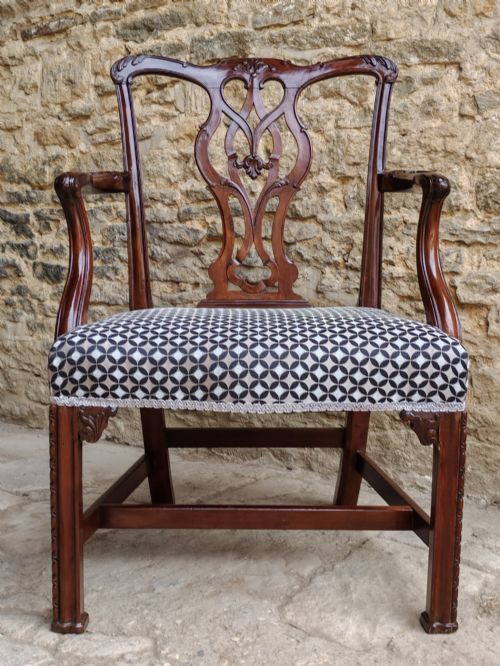
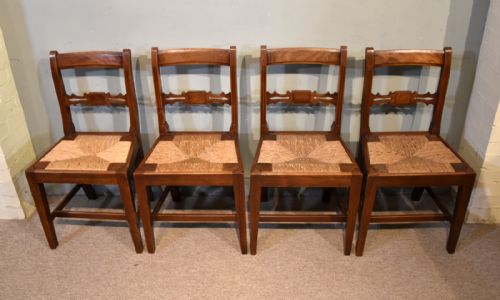


Carved Splat Regency Chairs
Carved splat regency chairs bring architectural line and rich timber to a room, offering sturdy seats designed for formal dining and parlour use.
Carved Splat Regency Chairs
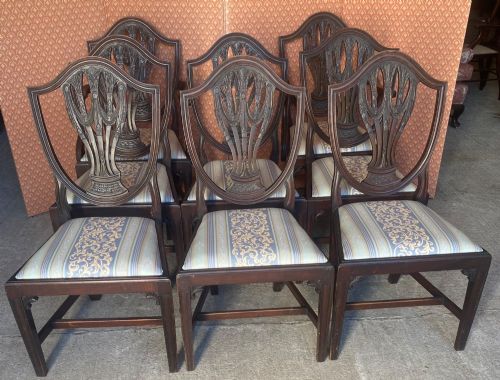
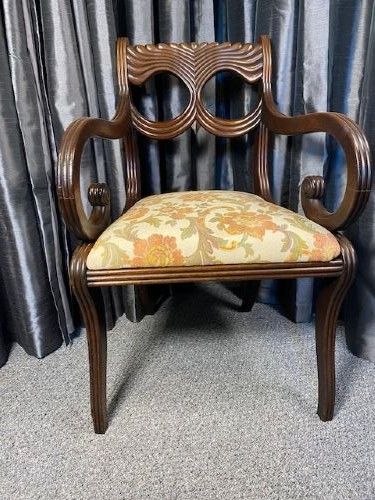
When you search for carved splat regency chairs, you are looking at seating shaped by the aesthetic of the early nineteenth century. The forms range from pairs of side chairs to sets of dining chairs and individual armchairs.
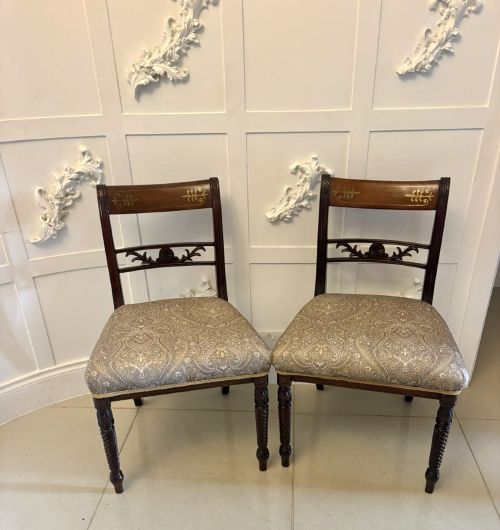
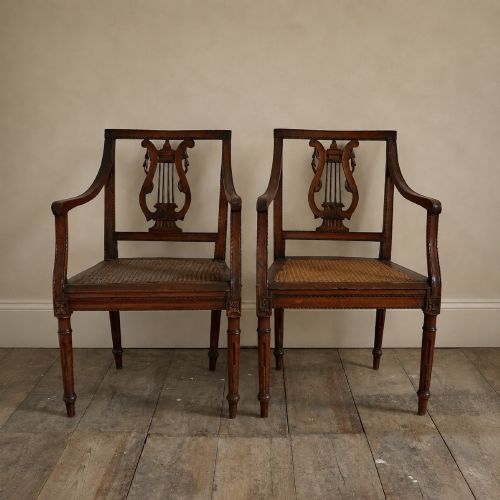
Mahogany is the dominant timber, often paired with fruitwood in country interpretations. You will find cane seats, rush, and various upholstery fabrics across these pieces.
How they were made
Cabinetmakers shaped solid timber into curved backs and distinctive splats, frequently utilising lyre motifs or lambrequin designs. Brass inlay appears on finer examples to accentuate the grain of the wood.
Joinery relied on traditional pinned mortise and tenon construction to ensure the frames withstood daily use. Caned panels were hand-woven into the seat rails, while upholstered variants used webbing and horsehair stuffing.
Carved Splat Regency Chairs Retail Price Guide 2026
Typical asking prices for carved splat regency chairs among the pieces listed under this phrase on Sellingantiques today, from the lower quarter to the upper quarter. They describe what is for sale here now, not the wider market.
Some country dining chairs swap fine mahogany for honest fruitwood, proving that provincial cabinetmakers had just as much flair as city shops.
What varies in quality
The sophistication of the carved splat dictates much of the distinction between pieces, moving from simple country forms to elaborate urban designs. Crispness of detail in the woodwork shows the skill of the original maker.
The choice of primary timber affects the character of the chair, with well-figured mahogany commanding attention over plain fruitwood. Original brass inlay work and intact cane seating add to the integrity of a piece.
The Carved Splat Regency Chairs Glossary
- Splat
- The vertical central strip of wood within a chair back. It often takes a carved lyre shape in this period.
- Carver
- An armchair designed to match a set of dining chairs, usually placed at the head of a table.
- Lambrequin
- A decorative motif resembling draped fabric or leather, sometimes carved into the top rail or splat.
- Cane
- Woven rattan strips used to form light, resilient seat panels. It requires careful handling to maintain tension over decades.
- Fruitwood
- A generic term for timber from fruit-bearing trees like apple or pear, used frequently in regional cabinetmaking.
Carved Splat Regency Chairs: Frequently Asked Questions
What are carved splat regency chairs?
These are nineteenth-century seats featuring shaped wooden splats in the backrest, produced during the Regency era and subsequent revival periods.
They function primarily as dining or side chairs, combining classical motifs with practical domestic seating.
How do I use them in a modern room?
Place a pair of side chairs in a hallway or bedroom as accent pieces, or mix a set around a contemporary dining table.
Their restrained proportions allow them to sit comfortably alongside modern furniture without dominating the floor space.
Are cane seats durable?
Caned panels offer flexibility and strength when treated with moisture and kept away from direct heat sources.
Original cane is uncommon, but professional re-caning restores the seat to full working order.
How do I distinguish regional pieces from urban ones?
Country versions often employ fruitwood or rush and feature simpler turnings compared to city-made mahogany examples.
Urban pieces usually display finer brass inlay and more complex carved details on the splat.