

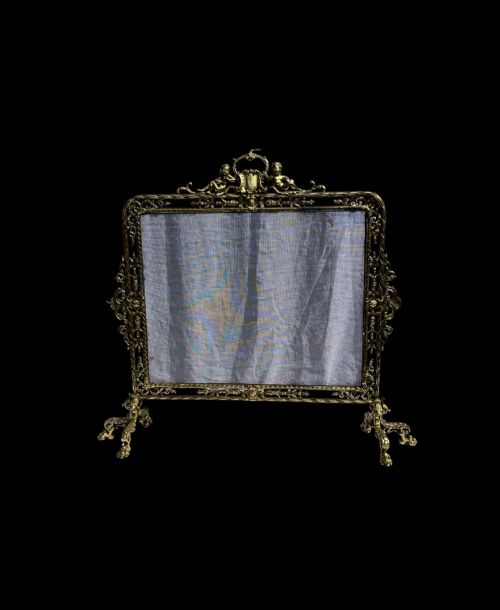
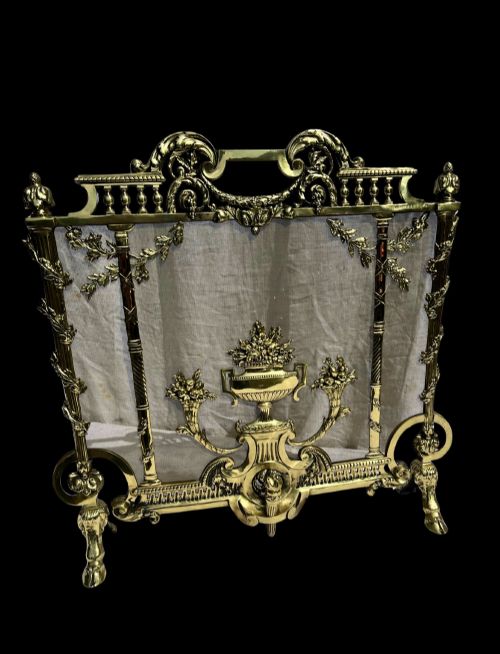
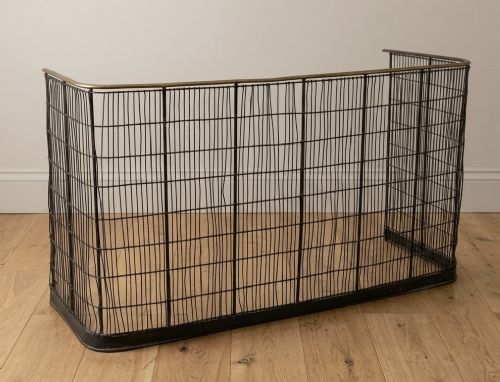
Brass Hearth Spark Screen
A brass hearth spark screen turns a cold fireplace into a brilliant focal point while keeping stray embers at bay.
Brass Hearth Spark Screen
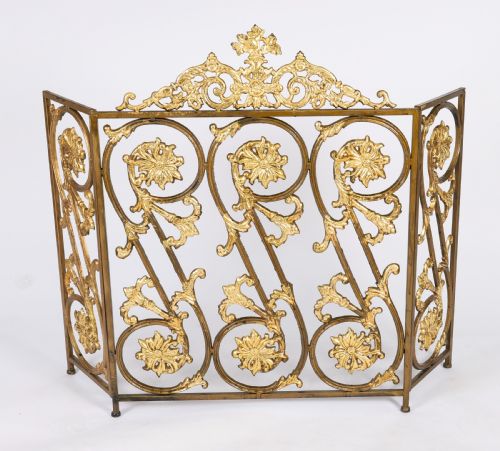
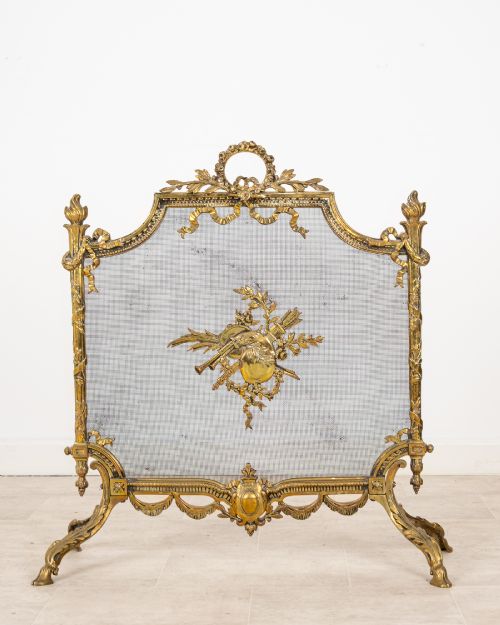
A brass hearth spark screen serves as both a protective barrier and an ornamental centrepiece for the fireplace, originating primarily in the nineteenth and early twentieth centuries. These guards appear across various styles, including Victorian, Edwardian, Art Nouveau, and French Rococo Revival forms.
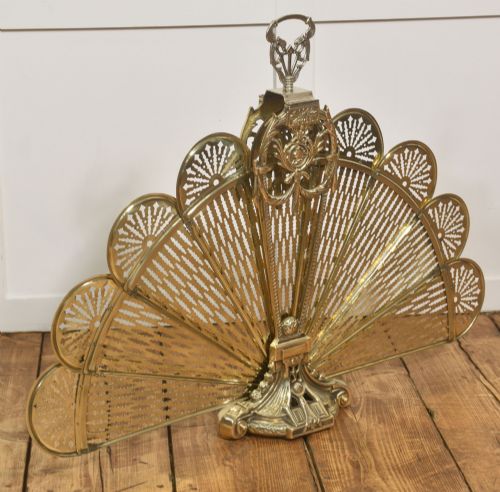
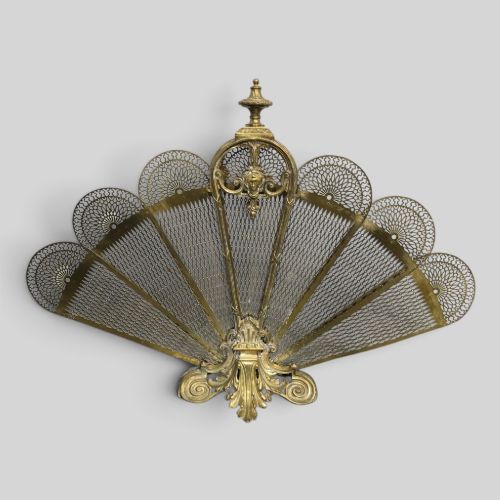
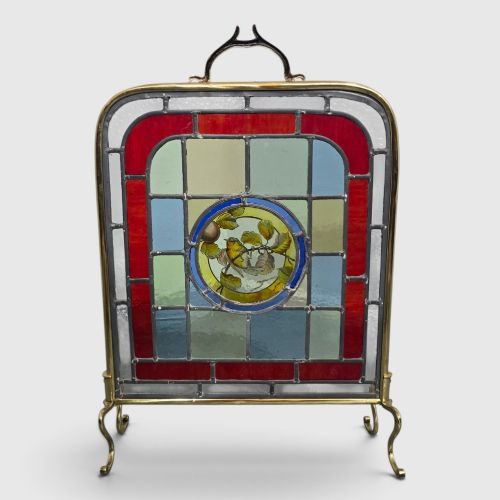
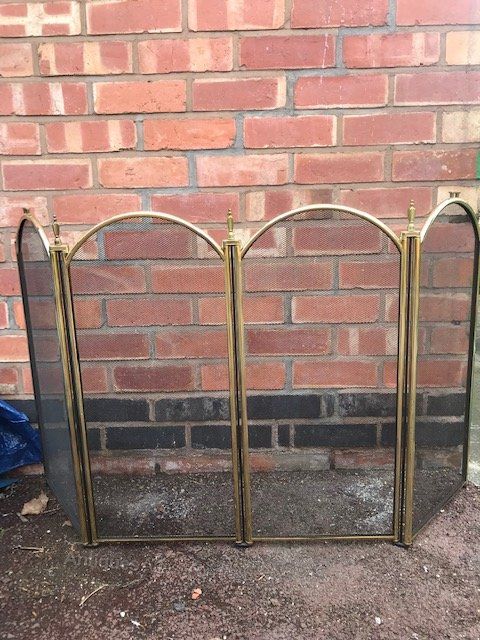
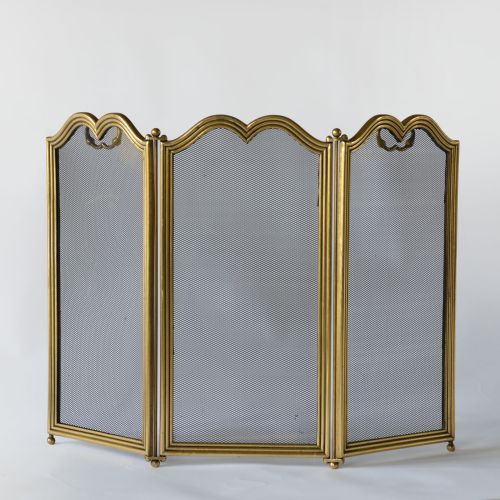
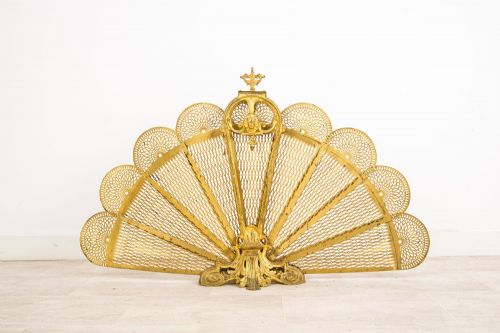
Buyers will encounter several distinct configurations on this page, ranging from single-panel frames to multi-fold screens and expanding peacock fan designs. Many examples incorporate fine wire mesh or iron supports behind polished brass frames to catch sparks effectively.
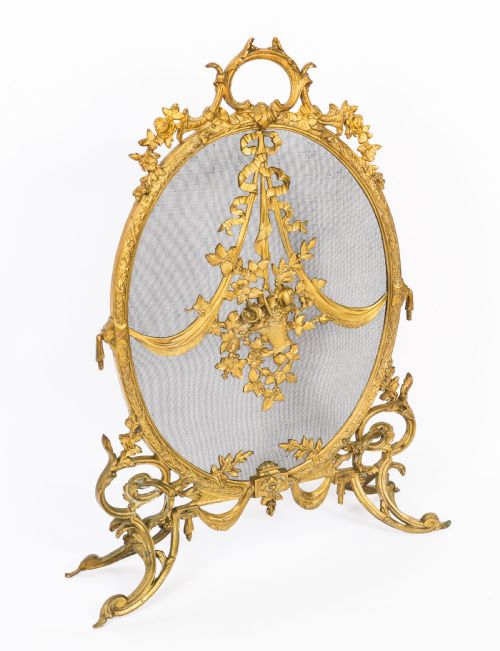
The material palette extends beyond plain brass to include gilt bronze, gilt brass, and steel mesh, often paired with oak or glass elements. Origins span local British workshop pieces to elaborate continental French revival designs featuring embossed, chased, or pierced ornamentation.
Materials and Construction Methods
Makers constructed these screens using heavy brass and iron frames combined with fine wire mesh or articulated folding sections. Many nineteenth-century and Edwardian pieces utilise cast or pressed brass mounts secured to rigid metal backings.
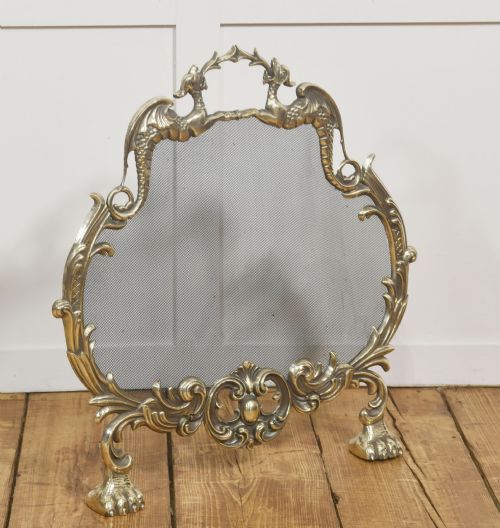
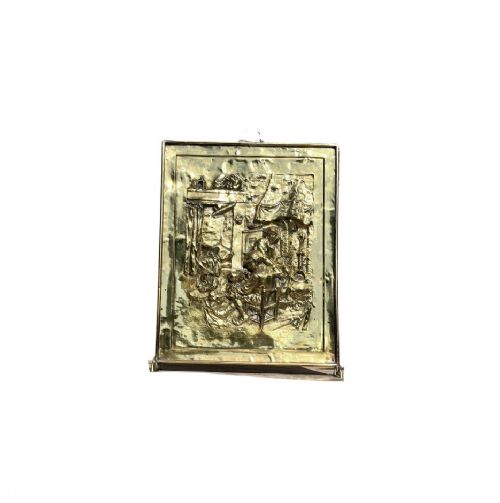
Surface decoration involved chasing, embossing, and piercing to achieve intricate floral, musical trophy, or rococo scroll motifs. Gilt bronze and ormolu finishes appear on French revival examples, giving a rich metallic lustre to the completed guards.
Listings feature brass hearth spark screens spanning the nineteenth century through the 1920s, incorporating iron, wire mesh, and gilt bronze elements.
Defining Quality in Period Fire Screens
Quality rests upon the weight of the cast brass, the crispness of the chased or embossed details, and the structural integrity of the folding joints. Finer screens exhibit deep relief work and substantial metal gauges rather than thin, pressed sheet construction.
The sophistication of the stylistic execution distinguishes standard utilitarian guards from high-end revival pieces. Elaborate pierced brass panels and well-balanced multi-fold mechanisms indicate superior craftsmanship and original design ambition.
The Brass Hearth Spark Screen Glossary
- Spark screen
- A protective mesh or wire barrier designed to prevent burning embers from escaping the hearth into the room. These guards fit directly in front of the fireplace opening.
- Peacock fan screen
- A folding screen composed of radiating brass blades that open and close like a fan. This form becomes particularly popular during the Victorian and Edwardian periods.
- Rococo Revival
- A nineteenth-century style drawing inspiration from Louis XV design, characterised by asymmetrical scrolls, C-curves, and naturalistic floral motifs. It appears frequently on French brass fire screens.
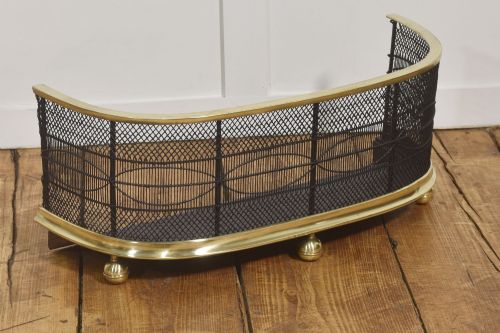
- Nursery fender
- A low metal barrier enclosing the hearth to keep small children and pets at a safe distance from the fire. Some versions include integrated mesh guards or clothes rails.
- Chasing
- A metalworking technique where the artisan hammers details into the front surface of the brass to create raised decorative patterns. This method adds textural depth to floral and trophy motifs.
Brass Hearth Spark Screen: Frequently Asked Questions
How do I choose the right size spark screen?
Measure the width and height of your fireplace opening to ensure the screen covers the entire hearth aperture adequately. Consider whether you need a flat single panel or a folding multi-section design to fit your mantel surround.
Account for any protruding hearth fixtures or fenders when calculating the required depth and stability of the frame.
Can I use a vintage brass screen with a working fire?
Most period screens utilise robust brass and iron wire mesh specifically built to withstand high temperatures and contain sparks. Ensure the mesh and hinges remain secure before placing the guard in front of an active fire.
Delicate gilt bronze or glass panels suit decorative use or low-heat environments better than heavy coal fires.
How do I clean and polish antique brass?
Dust the brass frame gently with a soft, dry cloth to remove surface soot and debris without scratching the metal. Avoid harsh chemical dips that strip away the aged patina accumulated over decades.
Apply a mild, non-abrasive brass cleaner sparingly if bright polishing is desired, taking care not to stain adjacent wire mesh.
What is the difference between a fire screen and a nursery fender?
A fire screen stands upright to block radiant heat and sparks directly in front of the fireplace opening. They often feature decorative folding panels or fan shapes.
A nursery fender forms an enclosed low perimeter around the entire hearth area, creating a physical boundary for child safety.