


Decorative Metal Hearth Screen
A decorative metal hearth screen keeps stray embers in check while framing an unlit fireplace with brass, iron, or copper craftsmanship.
Decorative Metal Hearth Screen
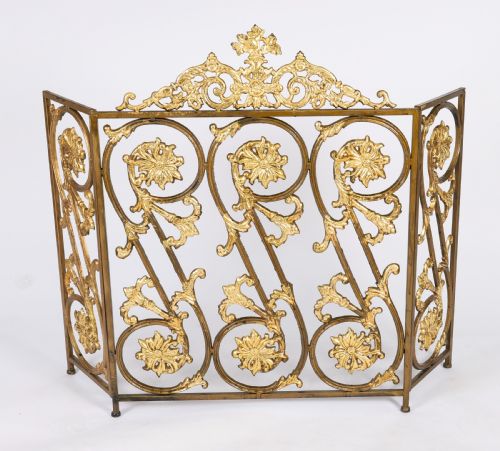
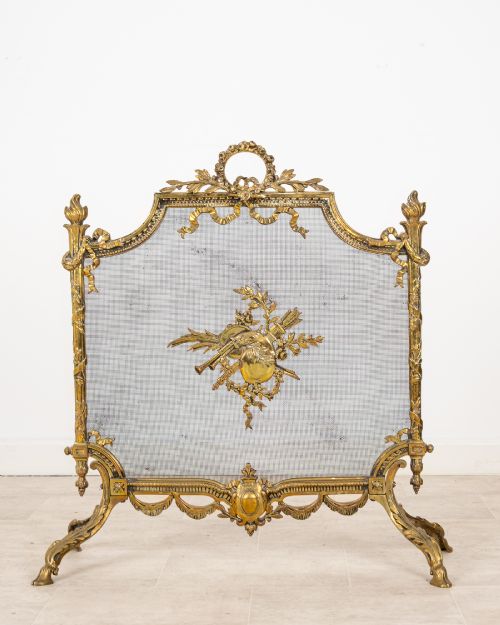
When you search for a decorative metal hearth screen, you are looking at functional fireplace accessories designed to shield a room from sparks while adding metalwork detail to a chimney breast. These items act as room centrepieces during warmer months when fires are unlit.
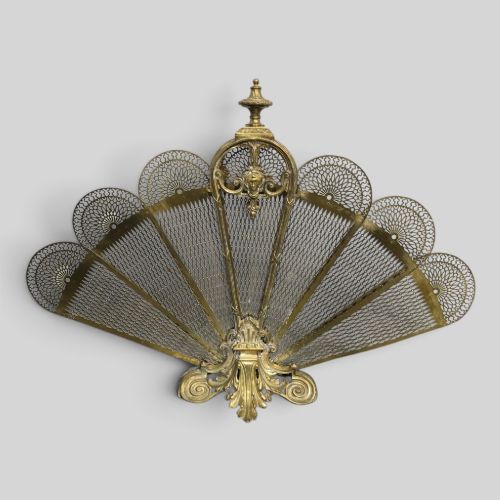
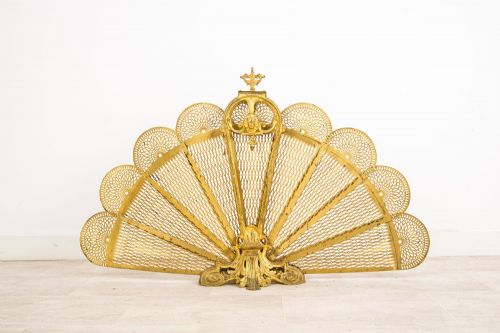
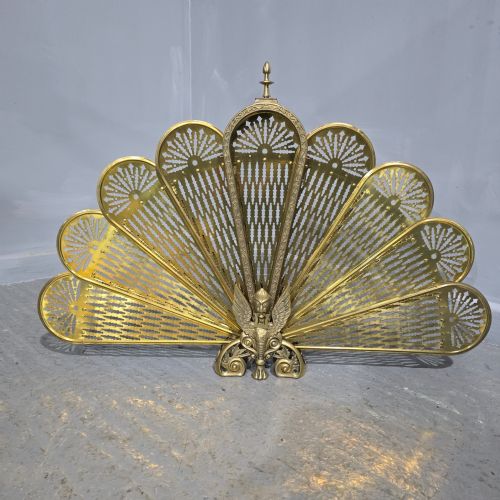
The versions you are most likely to meet on this page date from the Victorian, Edwardian, and early twentieth-century periods, spanning from eighteen seventy to nineteen thirty. They appear in forms such as folding fireguards, peacock fan screens, and solid panels.
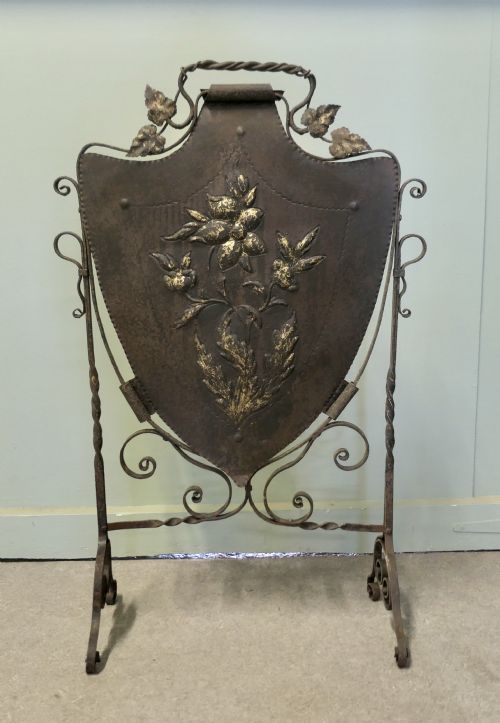
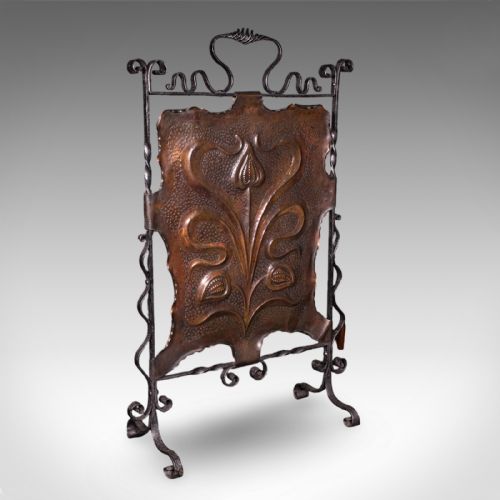
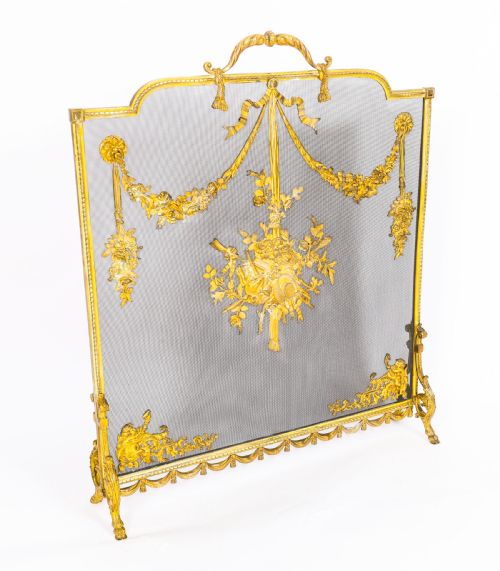
Many examples reflect revivalist tastes popular in nineteenth-century France and Britain, drawing on French Rococo, Louis XIV, Louis XVI, and Gothic Revival styles alongside simpler Arts and Crafts designs.
How they were made
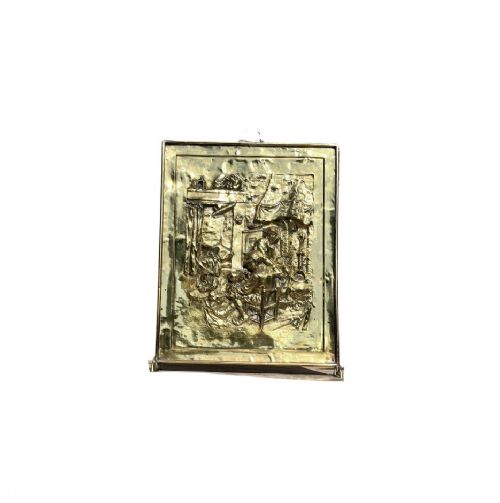
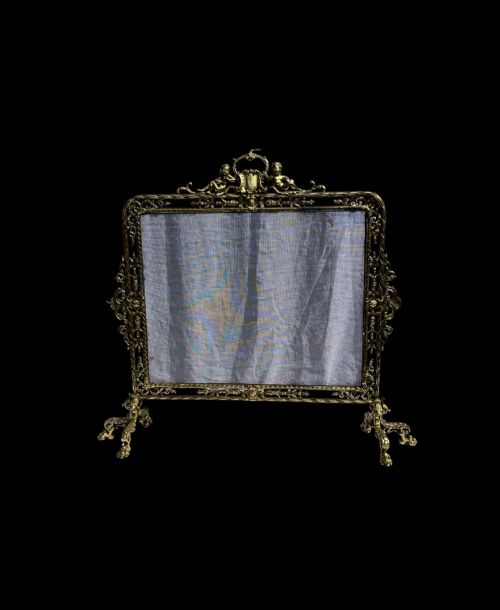
Makers shaped structural frames from wrought iron and cast metals, often incorporating wire mesh or metal mesh panels to catch sparks. Brass, gilt brass, gilt bronze, and copper supplied the polished surfaces and decorative panels seen across these pieces.
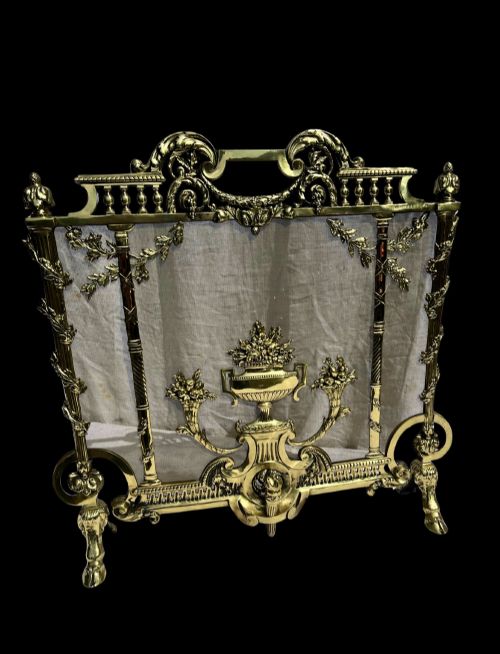
Ornate frames relied on casting, chasing, and repoussé techniques to render floral motifs, musical trophies, and scrollwork. Riveting and forge-welding joined iron bars and folding sections together on sturdy spark guards.
Design styles on this page range from French Rococo and Louis XIV revivals to British Arts and Crafts and Gothic shield forms.
What varies in quality
The distinction between standard utility guards and finer specimens lies in the depth of hand-chasing and the weight of the cast metal. Heavier gauge brass, thick copper panels, and substantial wrought iron frames denote superior production.
Artistry in the detailing separates mass-produced items from masterwork pieces. Crisp casting on French ormolu mounts and finely articulated peacock fan blades elevate a fire screen from a basic safety barrier to an ornamental focal point.
The Decorative Metal Hearth Screen Glossary
- Fire screen
- A movable barrier placed before a fireplace opening to block radiant heat or contain sparks when the hearth is not in active use. These accessories often feature mesh panels or decorative metal frames.
- Peacock fan screen
- A specific design featuring folding metal blades that fan out into a semi-circular or circular array resembling a peacock tail. They typically fold inward into a protective brass case.
- Ormolu
- Gilt bronze ornaments applied to furniture and decorative metalwork, created by fusing a mercury-gold amalgam to a bronze base. This technique produces a rich golden lustre on nineteenth-century French frames.
- Spark guard
- A protective mesh or iron screen specifically intended to catch flying embers from an open fire. These practical accessories range from simple wire mesh frames to elaborate folding iron guards.
- Repoussé
- A metalworking technique where a design is hammered into relief from the reverse side of a sheet of metal. Copper fire screens frequently utilise this method to display floral and figural motifs.
Decorative Metal Hearth Screen: Frequently Asked Questions
What is a hearth screen used for?
A hearth screen serves primarily to catch stray sparks and embers flying from an open fire, protecting nearby carpets and furniture. Beyond safety, it conceals the empty grate during warmer months.
These pieces function as decorative furnishings that anchor the fireplace in a room's overall interior scheme.
How do I identify a Victorian fire screen?
Victorian fire screens often display heavy cast brass frames, Gothic Revival ironwork, or elaborate revival styles inspired by French design. Look for robust construction and period-specific motifs.
Constructed predominantly in the nineteenth century, these guards frequently incorporate wire mesh panels or folding fan designs.
Are these screens safe to use with a real fire?
Most metal hearth screens with wire mesh or iron construction function effectively as spark guards during active fires. Solid copper or brass panels block radiant heat and contain embers securely.
Ensure the screen is stable and positioned correctly across the hearth opening before lighting any fire.
How do I clean antique brass and copper?
Antique brass and copper benefit from gentle dusting with a soft cloth to preserve patinas built up over decades. Avoid harsh chemical polishes that strip away historical character.
Consult a specialist if a piece requires deeper restoration or cleaning to protect delicate gilt surfaces and ormolu mounts.