
Brass Hearth Coal Scuttle
These brass hearth coal scuttles sit beside the fireplace to hold fuel, combining daily utility with gleaming metalwork.
Brass Hearth Coal Scuttle
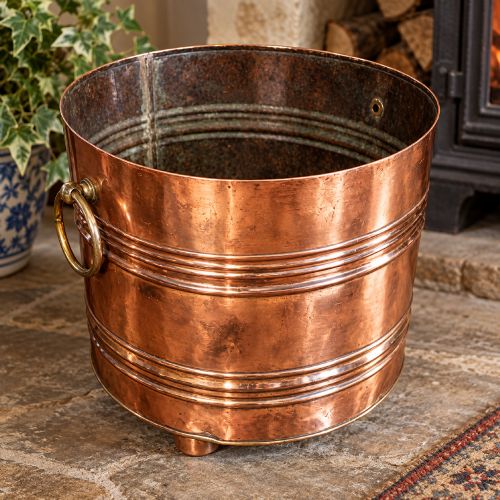
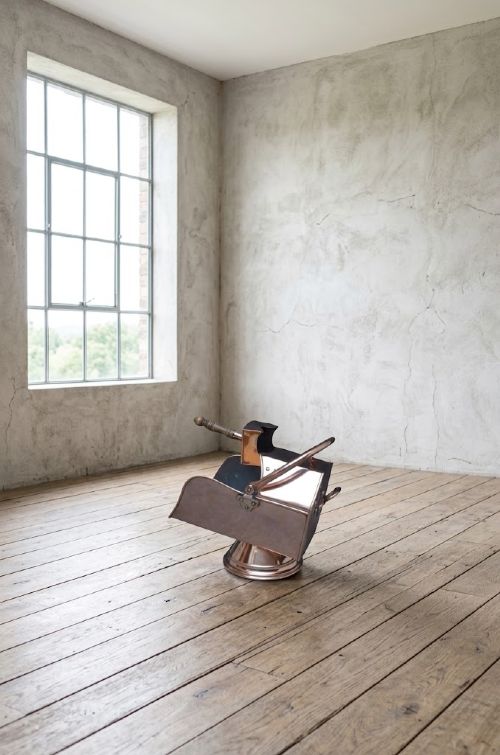
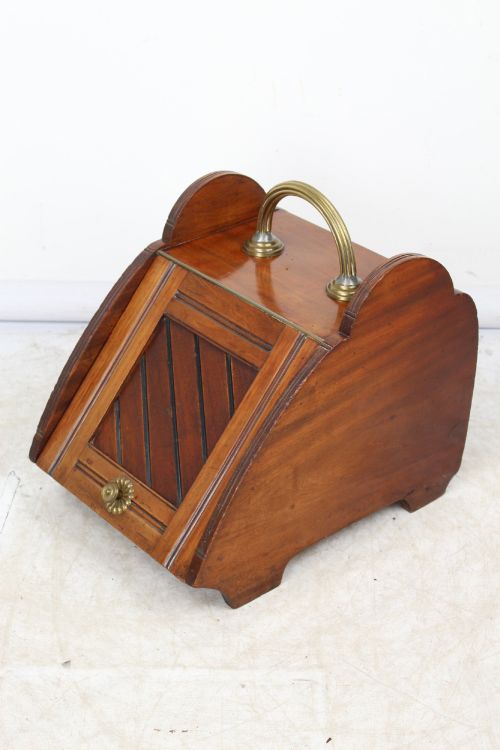
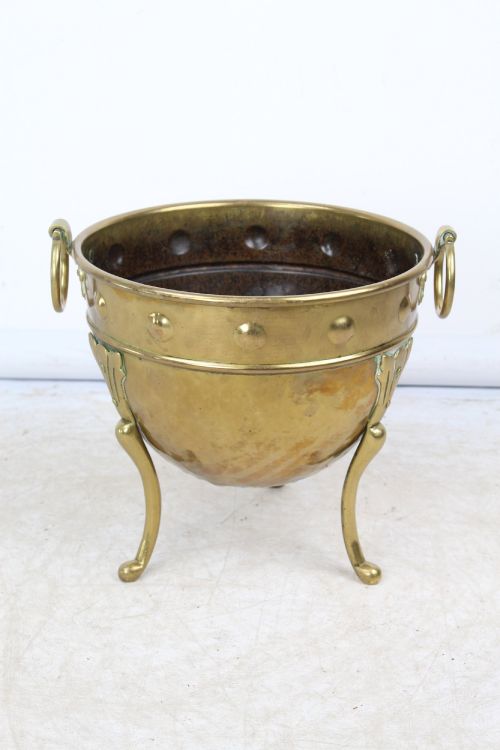
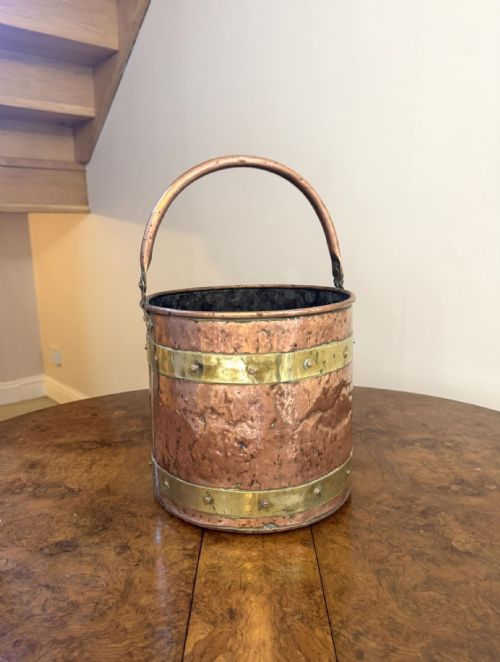
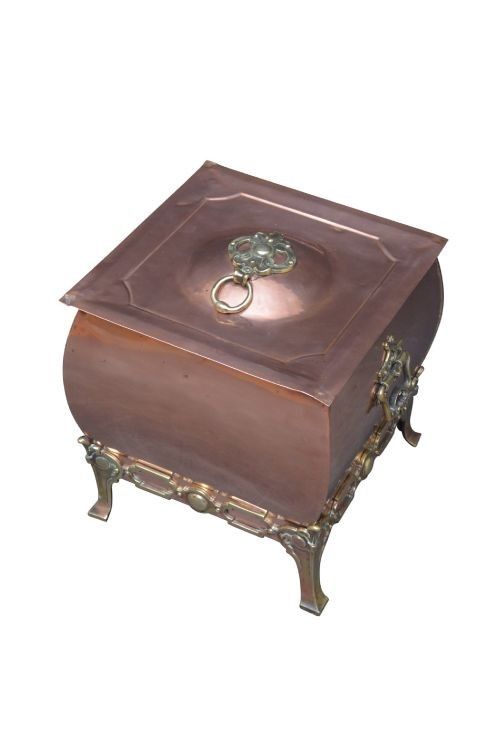
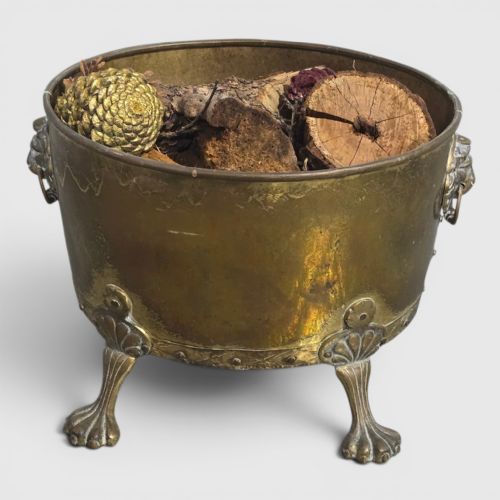
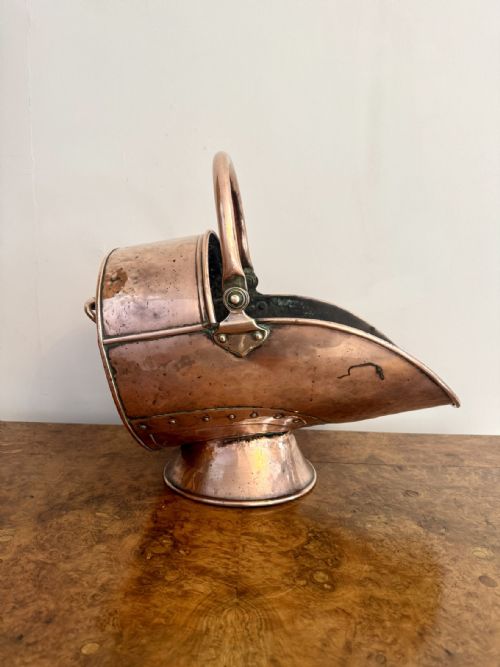
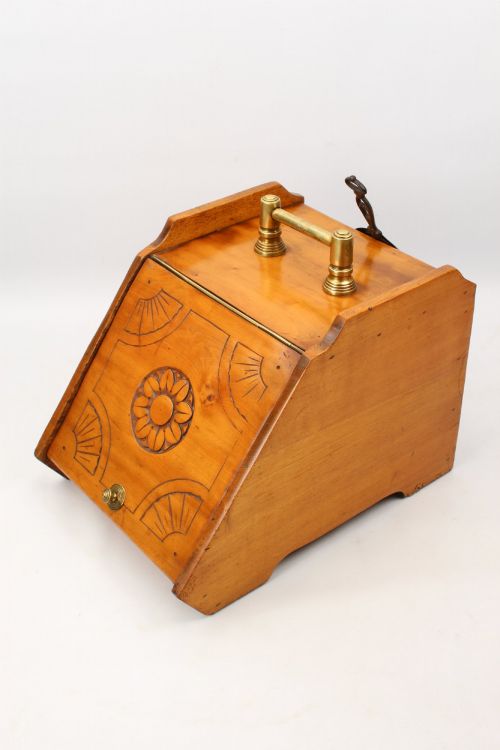
A brass hearth coal scuttle is a fireside accessory designed to store solid fuel near an open fire. Buyers searching for a brass hearth coal scuttle encounter various forms, including helmet-shaped buckets, lidded boxes, and cylindrical log bins. The selection spans the Victorian, Edwardian, and Georgian periods, alongside Arts and Crafts designs.
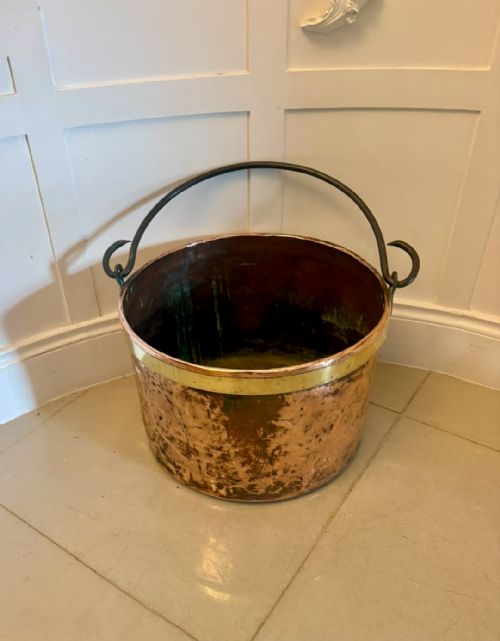
Victorian and Edwardian examples dominate the listings, frequently combining bright brass with copper, oak, mahogany, or iron. Many pieces double as planters or log bins, reflecting how these items function in modern interiors.
Materials and construction
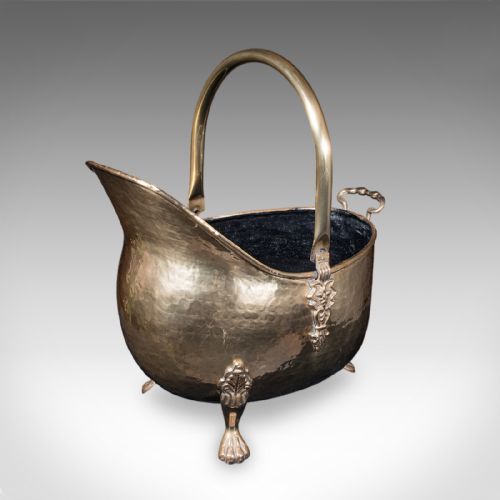
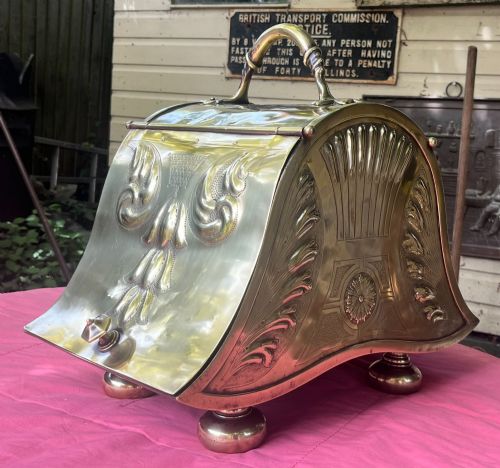
Maker's workshops built these vessels from sheet brass and copper, frequently joining the metal panels with visible rivets or smooth seams. Handles, feet, and swing bails often feature cast brass, attached securely to bear the weight of heavy fuel.
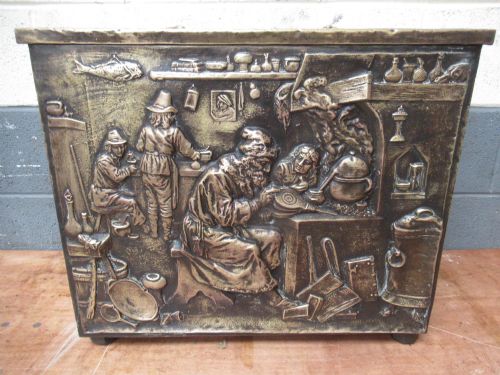
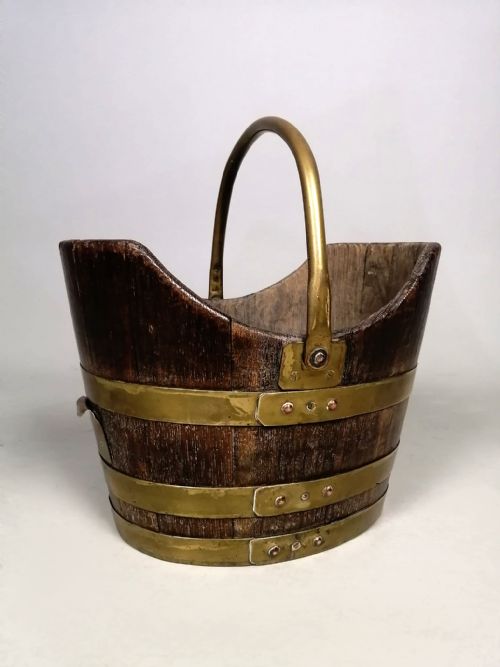
Wood-bodied variations utilise oak, mahogany, walnut, or rosewood, strengthened with brass banding or decorative corner mounts. Hand-beaten surfaces and engraved tavern scenes appear on Arts and Crafts pieces, showing distinct tool marks from the artisan.
Some nineteenth-century makers decorated coal buckets with embossed tavern scenes, bringing indoor drinking revelry right to the fireside.
Judging quality
Gauge thickness separates heavier, sturdier buckets from lighter alternatives that flex under pressure. Superior examples display crisp casting work on handles and mounts, alongside tight joints in wooden bodies or solid riveting on metal seams.
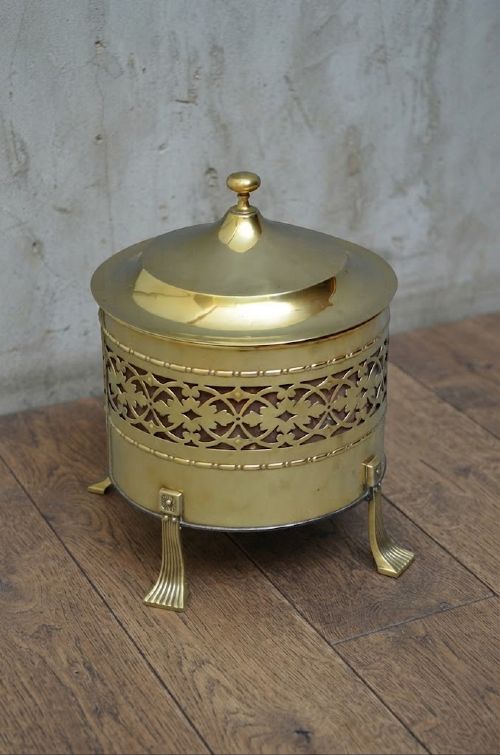
The presence of original components, such as matched shovels, liners, and swing handles, elevates an example. Fretwork designs and intricate inlays indicate higher craftsmanship compared to plain utility items.
Henry Loveridge·Benham and Froud·Petrus Ramus
The Brass Hearth Coal Scuttle Glossary
- Coal helmet
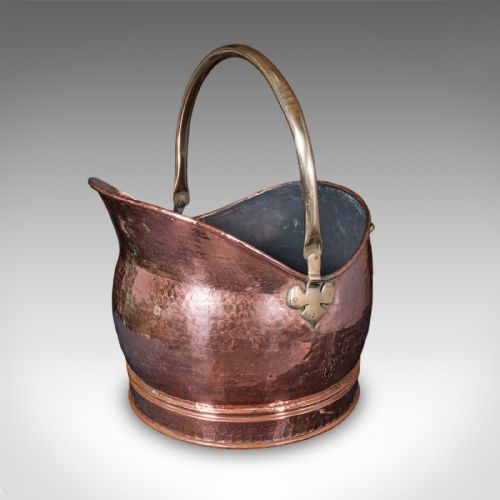
- A traditional coal scuttle shaped with a flared mouth resembling a classical helmet, designed to pour fuel cleanly into the grate. This form became particularly popular during the Victorian period.
- Purdonium
- A box-style coal container, usually featuring a hinged sloping front and an interior metal liner to catch debris. These wooden or metal boxes kept fuel neatly enclosed beside the hearth.
- Log bin
- A cylindrical or oval fireside container intended for storing larger pieces of firewood rather than small coal. They frequently incorporate metal banding around wooden staves.
- Coopered
- A method of construction where narrow staves of wood are fitted together and held under tension by metal hoops, similar to barrel-making. This technique appears on wooden peat buckets and log bins.
- Swing bail
- A moveable arched handle attached to opposite sides of a bucket, allowing it to be lifted and tilted. These handles are typically cast in brass and secured with sturdy pins.
Brass Hearth Coal Scuttle: Frequently Asked Questions
What is a coal scuttle?
A coal scuttle is a dedicated vessel for holding and carrying solid fuel to an open fire. They sit on the hearth as both a decorative accessory and a practical container.
Designs vary from open buckets to lidded boxes and helmet-shaped hods intended for easy pouring.
How do I clean brass and copper?
Cleaning depends on the desired finish, as many collectors prefer to leave an aged patina intact. Gentle dusting and mild soapy water remove surface grime without disturbing the historical metal surface.
Harsh chemical polishes strip away the aged character that accumulates over generations of use near the fireplace.
Can I use these for logs?
Many of these containers function equally well for logs, kindling, or peat, despite their original purpose for coal. Larger bins and wooden buckets accommodate firewood easily.
Check the interior condition to ensure the base can support heavier logs without damage.
How do I date a piece?
Dating relies on stylistic markers, construction methods, and materials associated with specific periods like the Victorian or Georgian eras. Riveting styles, wood types, and decorative motifs provide clear clues to the decade of manufacture.
Maker's marks stamped onto the metal base also help identify specific nineteenth-century manufacturers.