



Antique Fireside Ash Bucket
An antique fireside ash bucket brings functional hearthside utility into a room through enduring metalwork spanning the Georgian, Victorian, and Edwardian eras.
Antique Fireside Ash Bucket
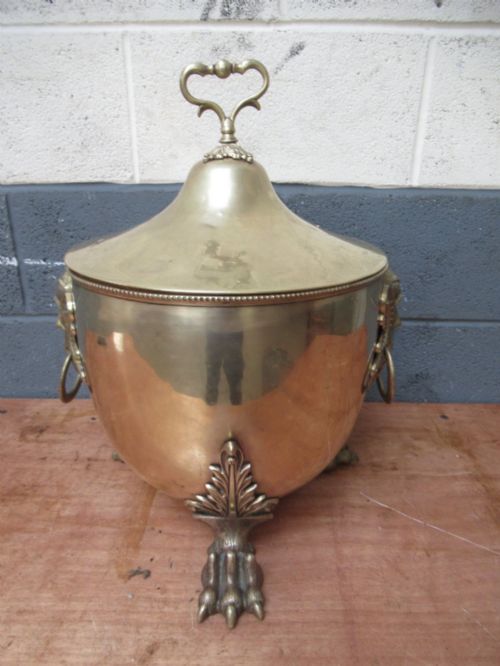
An antique fireside ash bucket serves the hearth as a durable container for fuel and cinders, often taking the form of a helmet coal scuttle, a cylindrical bin, or a deep pail. These practical accessories emerge frequently from the nineteenth century, including the Victorian and Edwardian periods, alongside earlier George III examples.
Buyers encountering this selection will most commonly find copper and brass vessels shaped for daily fireside service. Many pieces double as log stores or kindling baskets, reflecting the domestic routines of country houses and parlours across Britain.
Materials and Construction
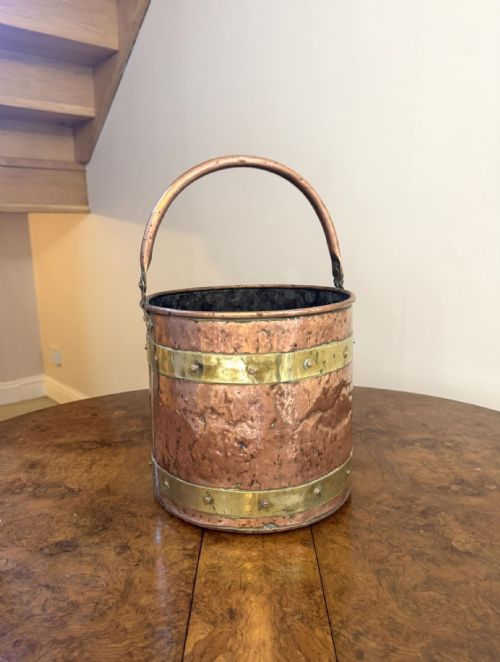
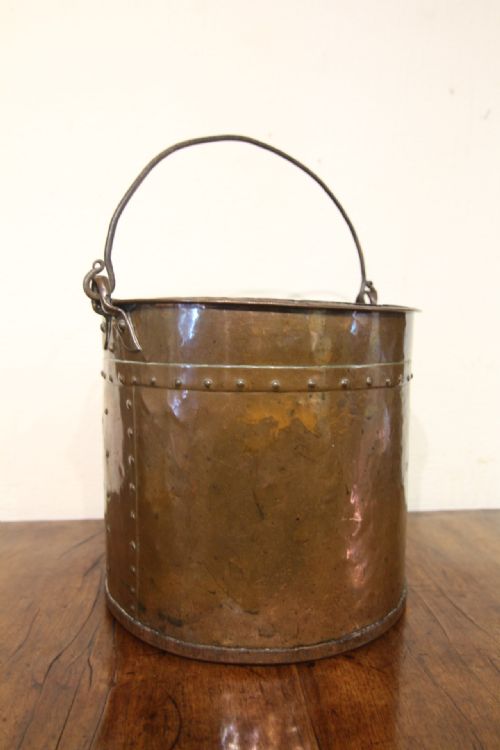
Metal fabrication defines these pieces, with heavy reliance on copper and brass sheets shaped into functional bodies. Workshops employed visible riveting, handbeaten texturing, and iron handles to ensure structural strength under heavy loads of coal.
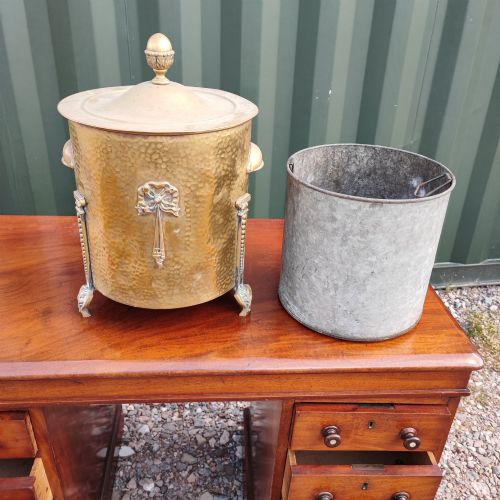
Secondary elements include wrought iron for pivoting bails, timber for carrying grips, and occasional ebony or brass banding. Liners in certain Edwardian examples indicate an adaptation for interior plant display as well as traditional fuel storage.
Design styles represented include Georgian, Victorian, Arts and Crafts, Art Nouveau, and Edwardian domestic forms.
Quality and Distinction
Construction methods separate standard vessels from finer workshop productions, particularly in the thickness of the metal gauge and the neatness of the riveting. Handbeaten surfaces and decorative elements, such as tavern scenes or Art Nouveau motifs, demonstrate greater artisan skill.
The integrity of the handles, the presence of original liners, and the harmonious pairing of brass trim with copper bodies dictate the standing of a piece. Well-balanced proportions and untouched patination distinguish the superior examples.
The Antique Fireside Ash Bucket Glossary
- Helmet coal scuttle
- A traditional coal container featuring a flared rim resembling a classical helmet and a raised back to facilitate pouring fuel. This specific silhouette is common among Victorian brass and copper pieces.
- Coal hod
- A deep bucket or container designed specifically for holding and transporting coal to the fire. These often incorporate a flat base for stability and a sturdy iron handle.
- Riveted
- Joined together using metal bolts hammered flat at the ends. This technique provides both structural reinforcement and a distinctive industrial aesthetic on copper bodies.
- Handbeaten
- Shaped and textured manually using a hammer to work the metal sheet. This method leaves subtle surface undulations typical of Arts and Crafts production.
Antique Fireside Ash Bucket: Frequently Asked Questions
How do I clean an antique copper bucket?
Maintenance requires gentle washing with warm soapy water to remove accumulated dust and soot from the surface. Avoid harsh chemical polishes that strip away historical patination.
Dry the metal thoroughly with a soft cloth to prevent spotting and preserve the warm tone accumulated over decades of use.
Were these buckets used for ash or coal?
These vessels served primarily as coal scuttles and log bins to supply the hearth with fresh fuel. Their robust metal construction also suited the removal of cooled cinders.
Many designs incorporate pivoting handles and stable bases specifically for carrying heavy loads of solid fuel safely across a room.
Can I use an antique coal bucket for plants?
Certain Edwardian and Victorian containers were manufactured with internal metal liners precisely for holding potted plants. Using a waterproof liner protects the historic metal from moisture damage.
Unlined copper and brass bins risk corrosion if filled with wet soil or damp vegetation over extended periods.
How do I date a brass coal bucket?
Dating relies upon stylistic markers, such as the flowing organic lines of Art Nouveau pieces or the handbeaten surface treatment characteristic of the Arts and Crafts movement. Manufacturing techniques like machine rolling versus hand riveting also offer clues to the decade of production.
Georgian examples display simpler, heavier proportions, while Victorian and Edwardian items often feature stamped brass trim and helmet shapes.