


Victorian Brass Fire Bucket
These robust victorian brass fire bucket vessels served hearths across the nineteenth century, and today they bring metallic warmth to firesides as log bins.
Victorian Brass Fire Bucket
A victorian brass fire bucket usually takes the form of a heavy metal container intended for hearth use, combining utility with robust nineteenth century design. Buyers search for these pieces to store logs, coal or kindling beside the fireplace while adding authentic period character to a room.
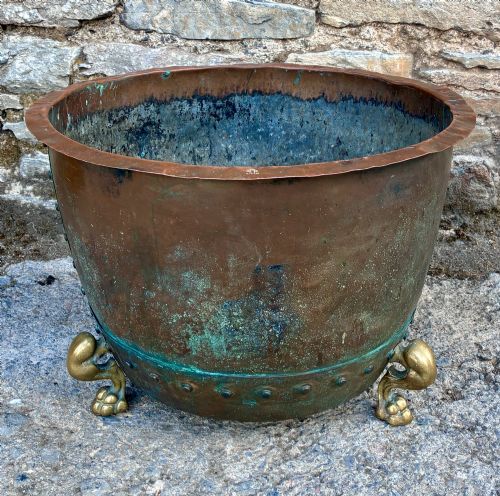
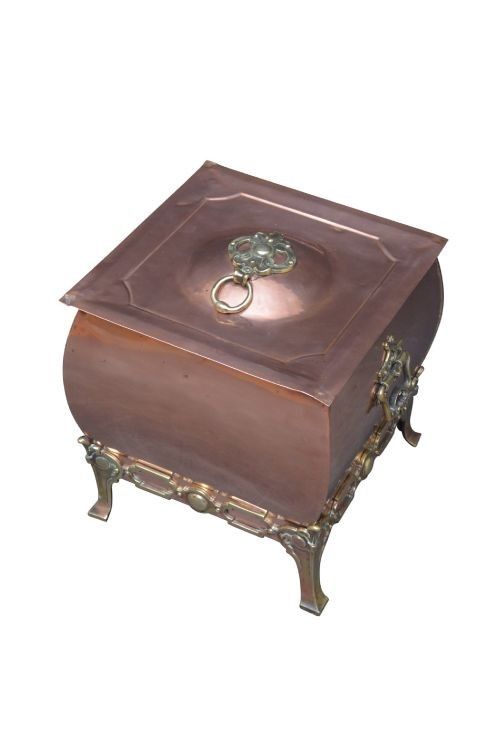
The selections available here span various formats including large cauldrons, lidded bins and riveted coal scuttles. Most examples date from the mid to late nineteenth century, reflecting the domestic and maritime needs of the period through practical metalwork.
How they were made
These vessels rely on hammered and riveted sheet metals, principally brass and copper, joined together to create durable containers. Workshops frequently added wrought iron swing handles, rope grips or wooden components like oak and mahogany to complete the structure.
Surface finishing involved hand-beating the metal panels and sometimes applying armorial crests or brass mounts for decoration. The combination of sturdy metal bodies and secure fixings ensured the vessels could withstand heavy daily use near the hearth.
The inventory records various styles such as rustic farmhouse, arts and crafts, and victorian maritime.
What varies in quality
Quality rests upon the thickness of the metal gauge and the integrity of the riveted joints holding the body together. Heavier brass and copper sheets indicate a superior build designed to endure the rigorous demands of nineteenth century firesides.
The presence of original fittings, such as sturdy wrought iron swing handles, solid brass mounts and distinct maker or armorial details, elevates the distinction of a piece. Finer examples display careful hand-beating and balanced proportions rather than plain industrial fabrication.
The Victorian Brass Fire Bucket Glossary
- Cauldron
- A large round metal vessel with a rounded base, often fitted with a swing handle for hearth utility.
- Scuttle
- A deep metal container with an angled opening designed for holding and pouring coal or logs.
- Armorial crest
- A heraldic design engraved or applied to metal surfaces, denoting specific ownership or maritime origin.
- Riveted
- Joined together using metal pins hammered flat at the ends, ensuring durable structural integrity in heavy containers.
Victorian Brass Fire Bucket: Frequently Asked Questions
What were fire buckets used for?
These vessels were originally kept filled with water near the hearth or hallway to douse sudden chimney or room fires.
Over time, their sturdy metal construction made them ideal for carrying and storing coal, wood and kindling by the fireplace.
How do I clean a brass bucket?
Dust the surface gently with a soft cloth to remove everyday particles without disturbing the aged patina.
Avoid harsh chemical polishes that strip away the historical character, opting instead for gentle cleaning if necessary.
Can I use these for logs?
Many buyers repurpose these historical vessels specifically as log bins or coal scuttles beside active fireplaces.
Their robust metal and riveted construction easily withstands the weight and rough texture of firewood.
How do I date a piece?
Examine the construction methods, such as hand-beating marks and the style of the riveted joints characteristic of the nineteenth century.
Materials like wrought iron, heavy brass and specific armorial crests also help narrow down the period of manufacture.