


Claw Feet Coal Scuttle
A claw feet coal scuttle stands by the hearth as a practical fireside accessory, bringing period character and polished metalwork to a traditional room.
Claw Feet Coal Scuttle
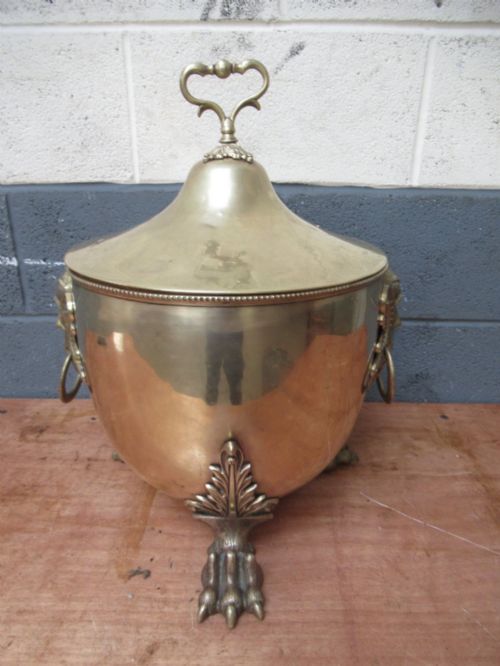
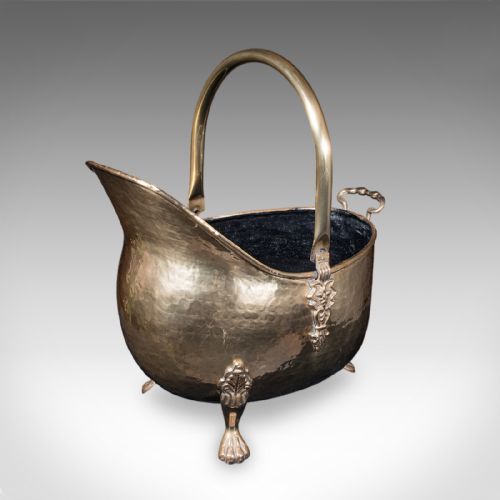
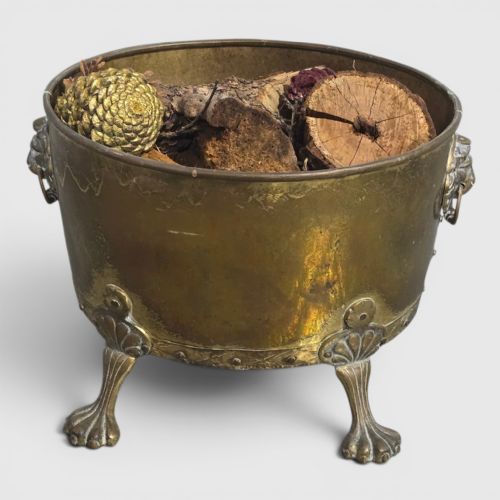
A claw feet coal scuttle serves as a fireside container for fuel, appearing across listings in forms such as coal buckets, log bins, and cauldrons. These pieces function as both utility items for the fireplace and decorative metalwork for the hearth.
The objects seen on this page span the Victorian era, the Regency period, and the early twentieth century, alongside Edwardian and Aesthetic Movement styles. Collectors encounter forms made from brass, copper, silver plate, and painted toleware.
The most common versions on this page are constructed from brass or copper, frequently featuring handles and decorative embossing. They appear in round, oval, and helmet shapes designed to sit beside domestic hearths.
How they were made
Makers utilised sheet metals like brass and copper, shaping them through handbeating, embossing, and riveting to create durable coal bins and buckets. Some examples incorporate contrasting materials such as wooden bodies in pine or details in ebony.
Cast brass components form the decorative claw feet and handles attached to the main body of the scuttle. Surface finishes range from polished brass and hammered copper to painted toleware.
Listings on this site feature brass and copper as the predominant materials, spanning the Victorian period and the Regency era.
What varies in quality
The standard of a piece depends on the weight of the metal and the crispness of any embossed or handbeaten decoration. Heavier gauges of brass and copper provide greater structural integrity for daily fireside use.
Execution of detail in the handles, rims, and cast brass feet distinguishes standard production items from finer country house examples. The integrity of construction methods, such as secure riveting and joined seams, marks the division between ordinary utility items and superior decorative pieces.
William Soutter & Sons
The Claw Feet Coal Scuttle Glossary
- Toleware
- Painted or enamelled metalware, typically tin or steel, decorated in colourful finishes. This technique appears on certain decorative fireside vessels.
- Aesthetic Movement
- A late nineteenth-century design style focusing on visual beauty over narrative content. Pieces from this period often display refined surface decoration.
- Regency
- A style period spanning the early nineteenth century, known for classical restraint and elegant proportions. Items from this era often feature clean lines and restrained ornamentation.
- Cauldron
- A rounded metal vessel with a wide opening and carrying handles. In a fireside context, this form functions as a log or coal bin.
Claw Feet Coal Scuttle: Frequently Asked Questions
What materials are these coal scuttles made from?
The listings show pieces constructed primarily from brass and copper, sometimes paired with pine wood, ebony details, or painted toleware. Silver plate also appears among the available finishes.
Metal thickness and construction techniques vary by maker and period, ranging from handbeaten copper to heavy cast brass elements.
How do I date a Victorian coal scuttle?
Dating relies on stylistic markers, construction methods, and materials associated with the nineteenth century. Pieces from the Victorian period often feature embossed brass or handbeaten copper surfaces.
Comparison with documented examples from makers active during the era helps narrow down the production decade.
Are these items suitable for storing logs?
Many of these vessels serve double duty as log bins and coal buckets. Their robust metal construction handles the weight of firewood.
Buyers should check the internal dimensions and shape of each specific container to ensure it accommodates their preferred fuel size.
What styles are common among these fireside accessories?
The pieces span Regency, Victorian, Edwardian, and Aesthetic Movement design traditions. Each style brings distinct decorative elements to the metalwork.
Victorian and Regency examples dominate the selection, offering classical forms and traditional hearth aesthetics.