




Brass Handle Tea Tray
A brass handle tea tray brings tactile warmth and period utility to modern hosting, combining solid timber with polished metal mounts.
Brass Handle Tea Tray
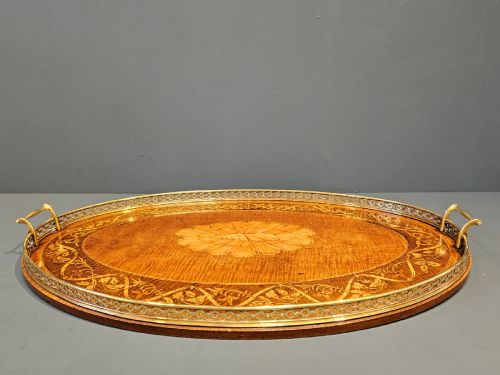
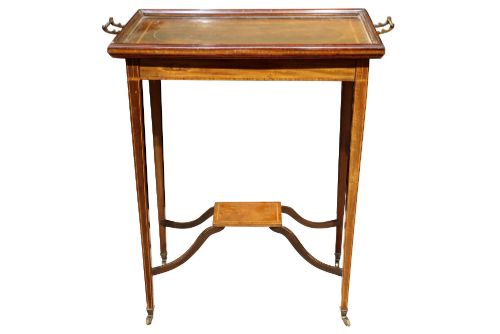
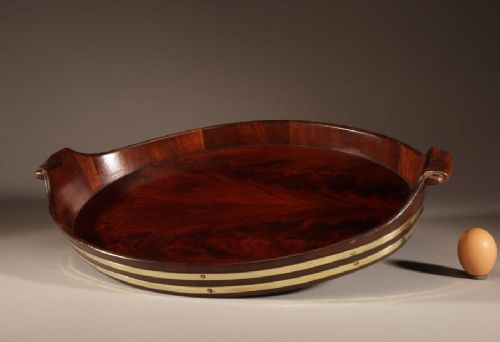
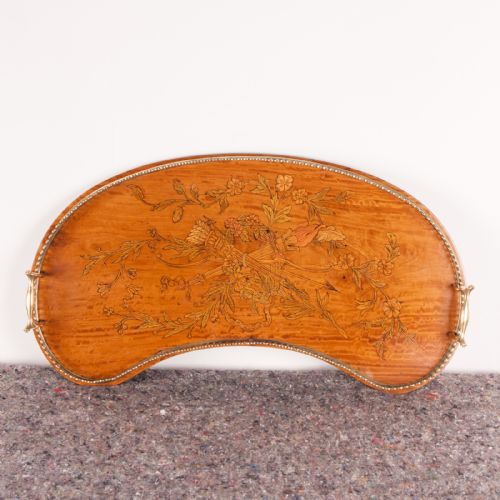
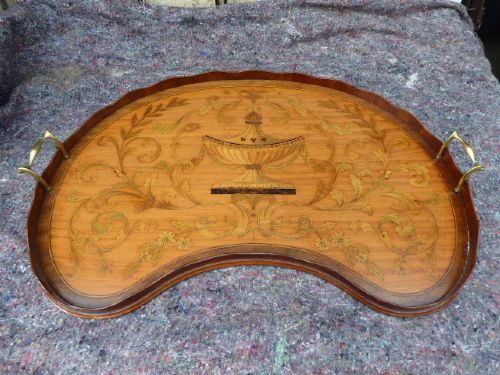
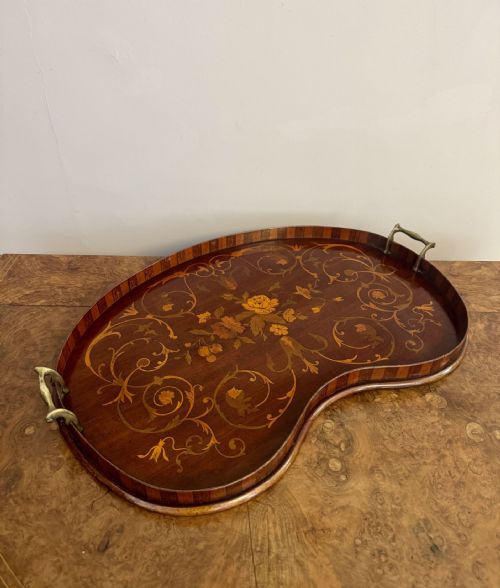
A brass handle tea tray bridges decorative display and practical service, appearing primarily in oval, kidney-shaped, and rectangular forms across Edwardian, Victorian, and Georgian periods. These pieces serve as functional servingware or rest upon folding stands to operate as occasional tables and etageres within the home.
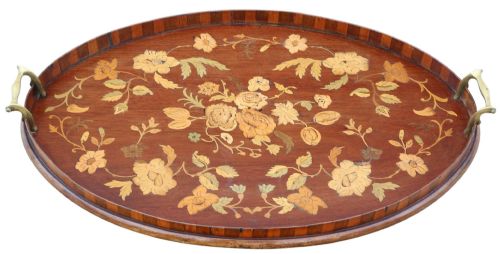
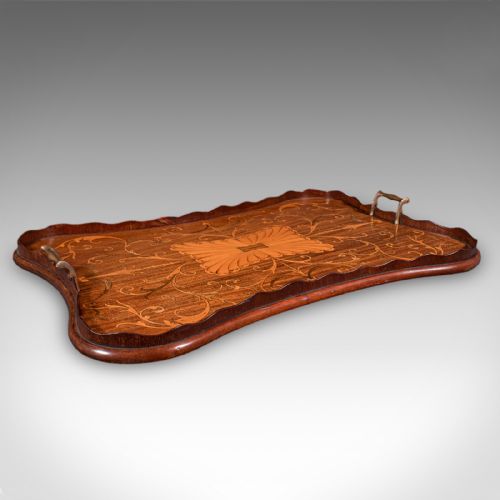
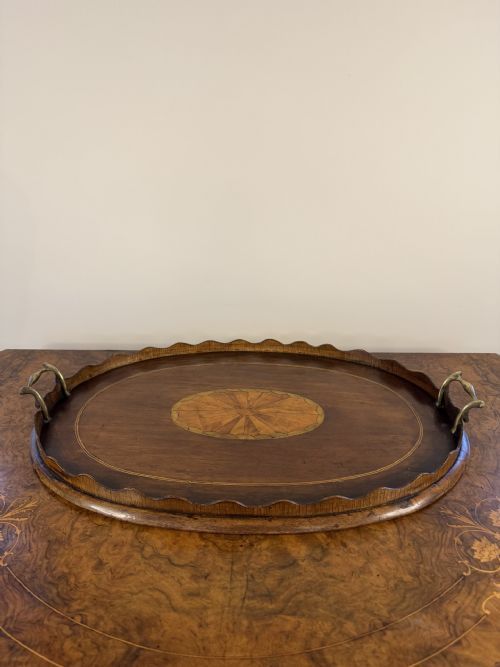
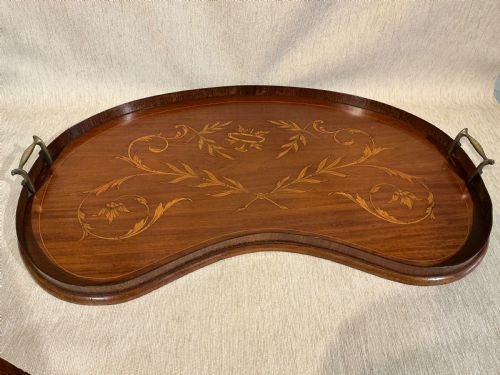
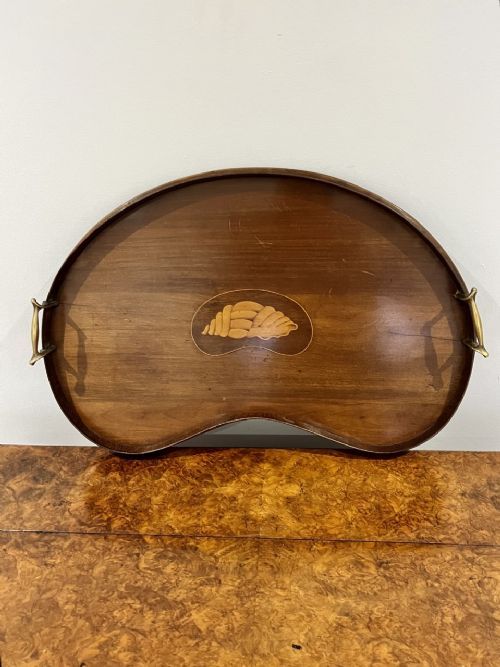
The version most commonly met on this page is the inlaid mahogany serving tray featuring sturdy brass carrying handles and delicate marquetry or boxwood stringing. Alongside traditional serving platters, buyers encounter occasional tray tables and tiered pieces that integrate wooden frames with metal galleries.
Materials and construction methods
Makers constructed these pieces using mahogany, satinwood, elm, and burr yew, frequently applying intricate marquetry inlay and boxwood or satinwood stringing to decorate the timber surfaces. Coopered wooden bases and wood veneer techniques provided structural stability for carrying heavy afternoon tea services.
Cast brass mounts, galleries, and drop handles were securely fitted to the timber rims, offering a durable contrast to the polished wood. Lacquered finishes and fine joinery protected the surfaces from moisture during daily service.
Some Victorian ship's trays utilised coopered elm hulls so deeply dished that even a rolling sea could not part a gentleman from his afternoon tea.
Evaluating craftsmanship and condition
The standard of craftsmanship shows clearly in the precision of the marquetry inlay and the tightness of the timber joints. Superior pieces exhibit crisp, hand-cut botanical or geometric patterns rather than simplified decoration.
Quality also rests in the weight and finish of the brass handles and galleries, where solid, well-cast metal outlasts lighter plated alternatives. Well-preserved patination on the mahogany or satinwood indicates careful past maintenance.
Edwards and Roberts·Clay
The Brass Handle Tea Tray Glossary
- Marquetry Inlay
- Decorative wood veneers assembled into pictorial or geometric patterns on the surface of the tray. This technique required high skill to fit contrasting timbers together smoothly.
- Gallery
- A raised rim or railing, often pierced brass, running around the edge of the tray to prevent items from sliding off during service. It provides both structural rigidity and visual definition.
- Étagère
- A piece of furniture featuring multiple tiers or open shelves for display and serving. These often incorporate removable trays into their upper levels.
- Coopered
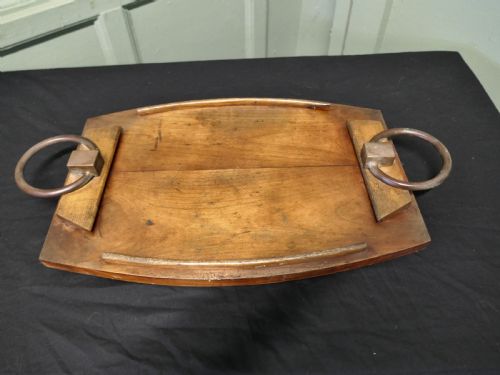
- Constructed from curved wooden staves joined edge-to-edge, similar to barrel-making. This method added strength to round or oval serving trays.
- Kidney Shaped
- A curved, asymmetrical tray profile popular during the Edwardian period. The indentation allowed the server to hold the piece closer to the body.
Brass Handle Tea Tray: Frequently Asked Questions
How were these trays used historically?
These trays served primarily for carrying tea services, china, and silver across formal drawing rooms and parlors. They functioned as portable hospitality items during afternoon gatherings before being placed onto side tables or stands.
Over time, many of these serving platters transitioned into permanent furniture pieces by resting upon dedicated folding or fixed wooden stands. This dual utility allowed households to adapt their living spaces for entertaining.
How do I distinguish Edwardian from Victorian trays?
Edwardian trays often favor lighter satinwood timbers, delicate marquetry, and kidney shapes reflecting Neoclassical and Sheraton Revival tastes. They tend to feel lighter and more decorative in their overall aesthetic.
Victorian pieces lean toward darker, solid mahogany constructions, sometimes featuring coopered sides or robust brass galleries for heavier daily service. The decorative focus remains on utility combined with restrained inlay work.
Can I use an antique tray for daily serving?
Most pieces handle light daily use when treated with care, though moisture and heat require careful management to protect the antique wood veneer and polished finish. Placing felt pads underneath hot teapots prevents thermal shock to the lacquer.
Many owners prefer to utilise these items primarily for stationary display or dry service to preserve the historical surface patination. Regular dusting and occasional wax maintenance keep the timber nourished.
What is the difference between a tray and an étagère?
A standard tray is a portable serving surface with integrated handles, designed to be lifted and moved between rooms. It relies on a flat base and raised edges for holding items.
An étagère incorporates tiered shelving and often integrates a removable tray top into a permanent or semi-permanent side table structure. These multi-level pieces function as static furniture rather than portable servingware.