

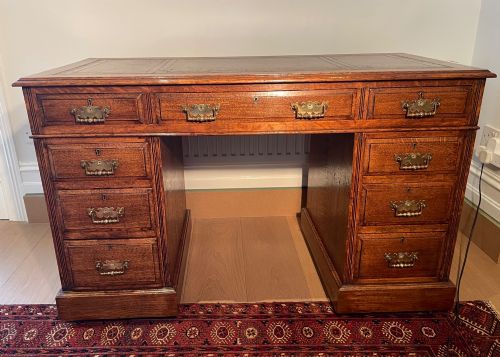
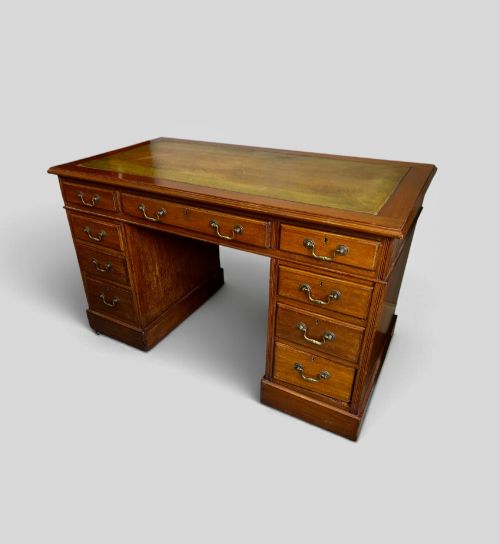
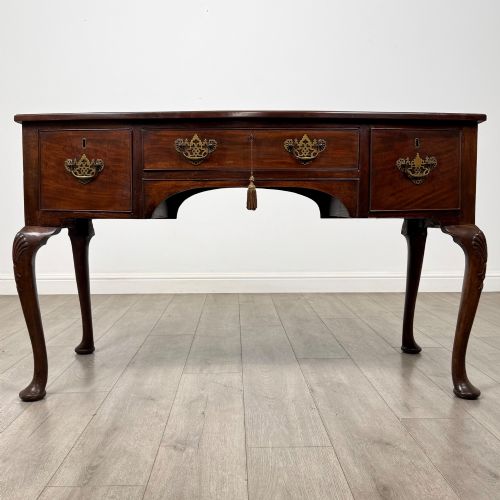
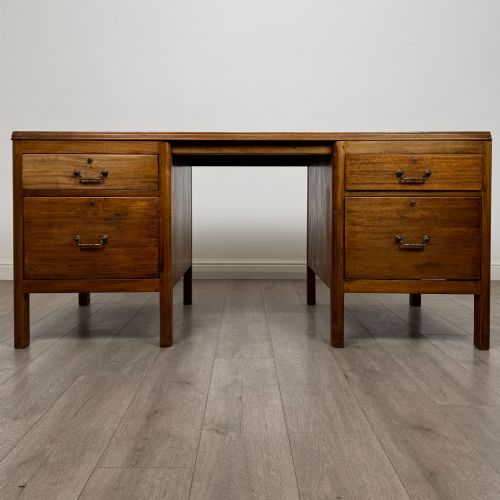

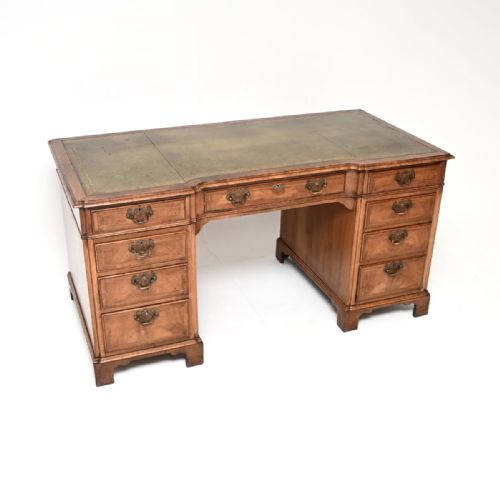
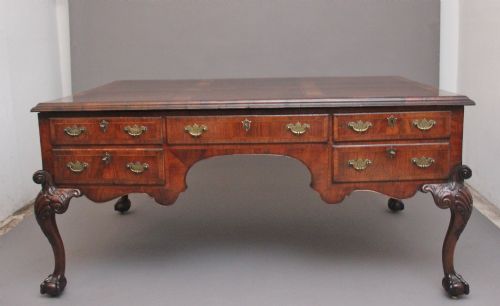
Brass Handle Office Desk
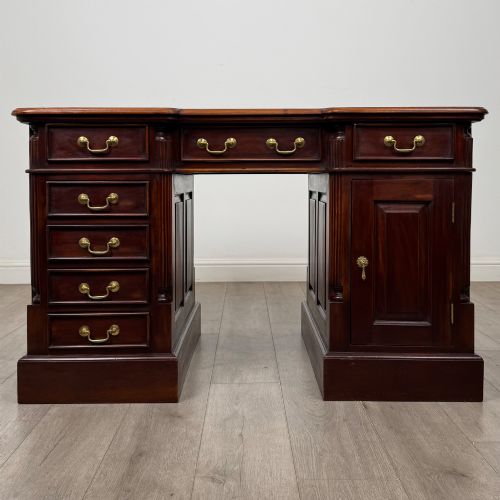
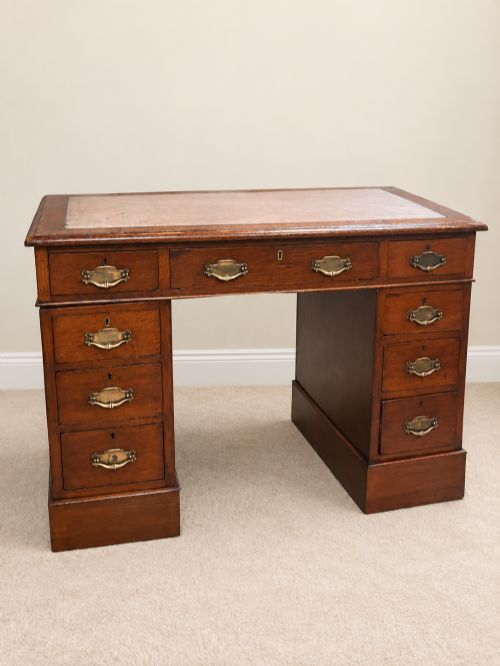
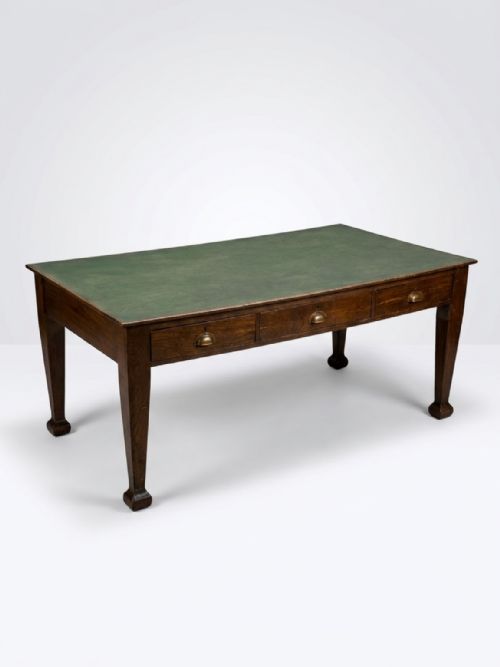
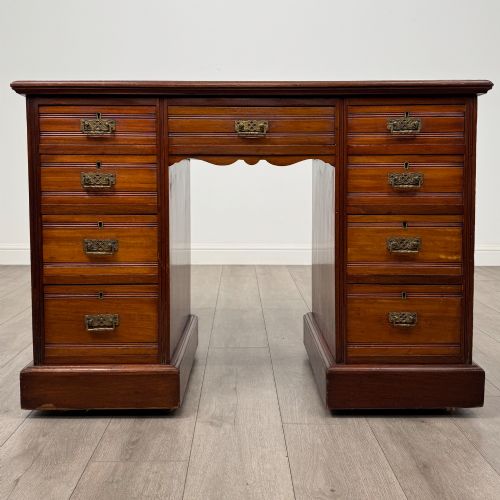
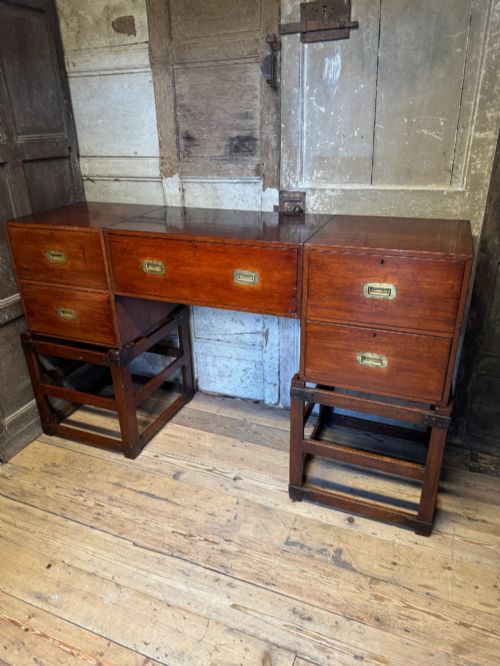
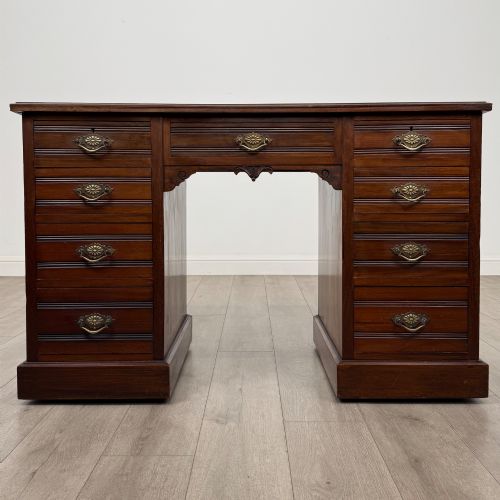
A brass handle office desk brings heavy timber and period metalwork together to anchor a study.
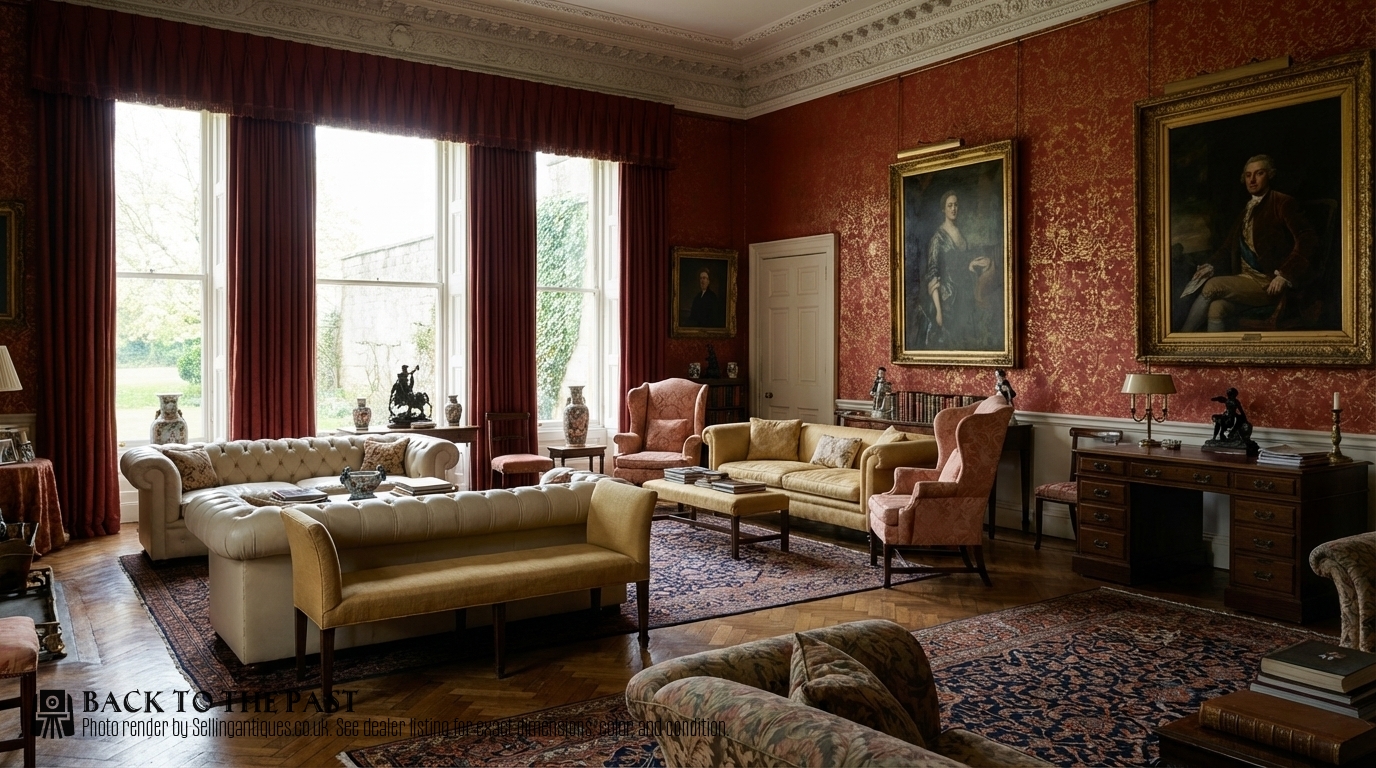
Brass Handle Office Desk
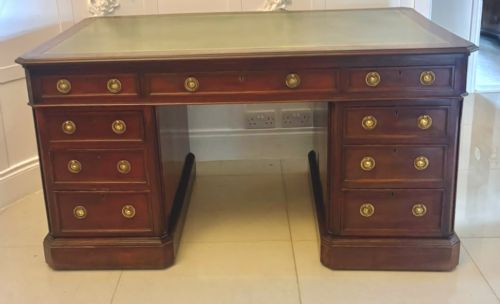
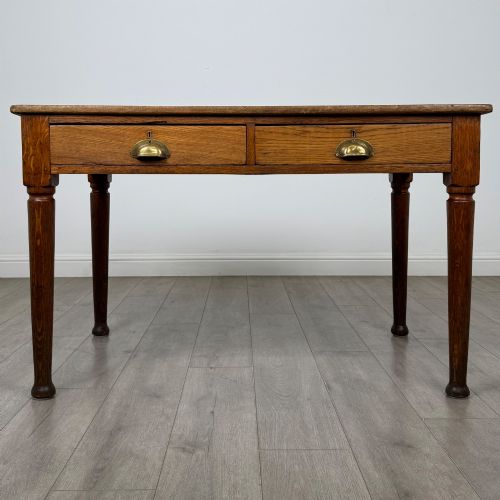
A brass handle office desk is a heavy workspace designed for practical daily use, appearing in forms such as pedestal desks, writing tables, partners desks, and cabinet furniture. These pieces span several distinct eras, bringing working surfaces from the Georgian, Victorian, and Edwardian periods into modern rooms.
Buyers seeking a brass handle office desk will most frequently encounter Edwardian and Victorian examples rendered in mahogany, oak, or walnut. Many incorporate functional writing slides, leather inset tops, and fitted drawers alongside period brass hardware.
How they were made
Cabinetmakers constructed these desks using solid and veneered timbers including mahogany, oak, walnut, satinwood, teak, and pine, often finished with tooled leather writing surfaces. Joinery techniques relied on sturdy framing to support large writing surfaces and heavy pedestal banks of drawers.
Hardware such as drop handles, ring handles, and campaign mounts were cast in brass and secured to drawer fronts to withstand frequent daily pulling. Inlaid details, ebony stringing, and glazed or panelled doors appear on revival pieces following Georgian, Sheraton, and Chippendale designs.
Design styles span the Georgian, Regency, Victorian, Edwardian, Chippendale Revival, and Sheraton Revival periods.
What varies in quality
The standard of timber selection largely defines the worth of these desks, with figured mahogany, curl mahogany, and quarter-sawn oak representing superior material choices. Simple utilitarian tables contrast with finely carved revival pieces and partners desks finished on all sides for central room placement.
Hardware integrity and the retention of original brass fittings alter the character and historical weight of the piece. Interior secondary woods, the smoothness of drawer runners, and the condition of original leather inserts distinguish standard workspace furniture from finer cabinetmaker output.
Trollope & sons·Maples of London·Jenners
The Brass Handle Office Desk Glossary
- Pedestal desk
- A heavy writing desk supported by two pedestals or banks of drawers resting on the floor. This form provides substantial storage underneath the main writing surface.
- Partners desk
- A large double-sided desk designed for two people to work opposite each other. These pieces feature drawers and cupboards on both longitudinal sides.
- Writing table
- A freestanding table with one or more drawers beneath the writing surface, lacking the heavy pedestal banks found on standard office desks. These offer a lighter visual profile within a room.
- Tambour top
- A flexible desk covering constructed from narrow strips of wood glued to canvas backing, allowing the writing area to slide open. Cylinder desks utilise a solid rotating wooden cylinder instead.
- Campaign table
- A portable folding desk designed for travel, featuring recessed brass handles and corner brackets to prevent damage during transport.
Brass Handle Office Desk: Frequently Asked Questions
What is a partners desk?
A partners desk is a large double-sided workspace featuring drawers and cupboards facing both directions. This configuration allows two people to sit opposite each other while working.
Such desks usually occupy the centre of a room rather than standing against a wall. They represent some of the largest and most substantial writing furniture built in the nineteenth and early twentieth centuries.
How do I care for leather top desks?
Leather surfaces require gentle cleaning with a slightly damp cloth followed by dry buffing. Avoid harsh chemical cleaners that can strip the natural colour and dry out the hide.
Applying a specialist leather cream periodically maintains suppleness and prevents cracking. Keeping the leather away from direct sunlight preserves the tone of the tooling.
How do I date a pedestal desk?
Dating relies on examining timber species, construction methods, and hardware styles. Georgian and Regency pieces often show hand-cut dovetails and simpler internal framing.
Victorian and Edwardian examples frequently incorporate heavier mouldings, machine-sawn elements, and factory-cast brass handles. Comparing the secondary woods inside the drawers provides further chronological clues.
Where should I place a pedestal desk?
Pedestal desks function best freestanding in the middle of a room if they are finished on the back, or against a wall if the rear is plain panelled timber. Ensure there is adequate clearance around the pedestals for chairs and movement.
Positioning the desk away from direct heat sources protects the solid timbers and prevents the leather writing surface from shrinking.