


Brass Handle Copper Bucket
A brass handle copper bucket brings warmth and utility to a hearth, combining sturdy metalwork with practical design for domestic use.
Brass Handle Copper Bucket
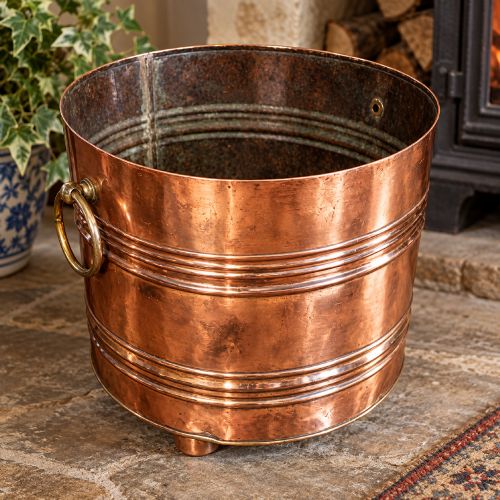
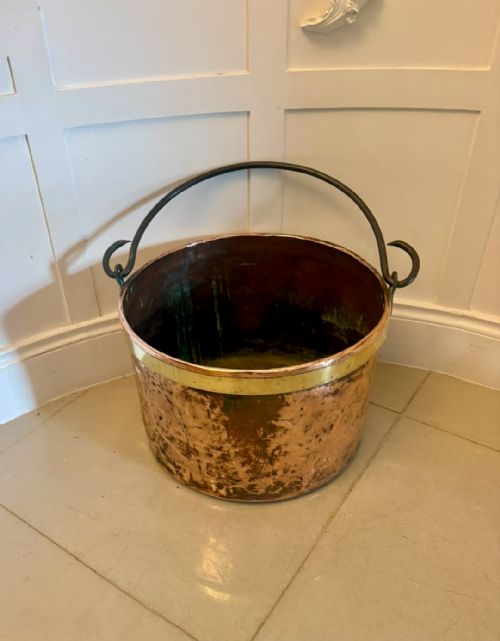
A brass handle copper bucket serves primarily as a fireside accessory, designed to hold coal, logs, or peat for the hearth. When you search for a brass handle copper bucket, you encounter items originating from the nineteenth century onward, including Victorian, Edwardian, and George III periods.
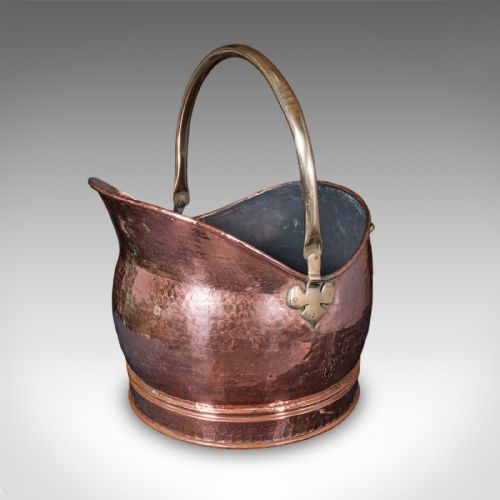
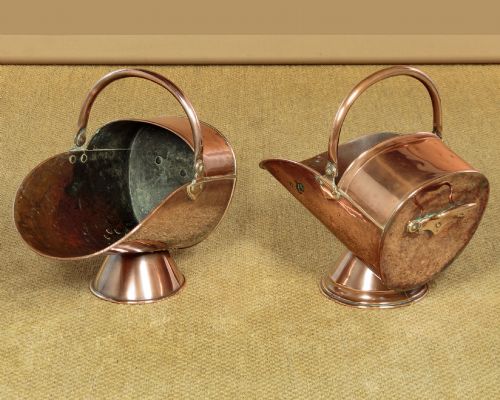
The selection ranges from helmet-shaped coal scuttles and swing-handled cauldrons to large planters and jardinières. Victorian examples appear most frequently, often featuring robust metal construction intended for daily domestic service.
What varies in quality
The gauge of the copper sheet and the weight of the brass handle determine the sturdiness and longevity of each vessel. Thicker metal resists denting during daily hearth use, while heavier brass fittings anchor securely without loosening over time.
Subtlety of form and finish separates standard utilitarian items from finer examples. Hand-hammered surfaces and well-proportioned helmet shapes reflect greater care in construction than plain, unshaped containers.
William Soutter & Sons
The Brass Handle Copper Bucket Glossary
- Helmet scuttle
- A coal container featuring a high, sloping back and a flared front resembling a classical helmet. This shape allowed coal to be poured cleanly onto the fire.
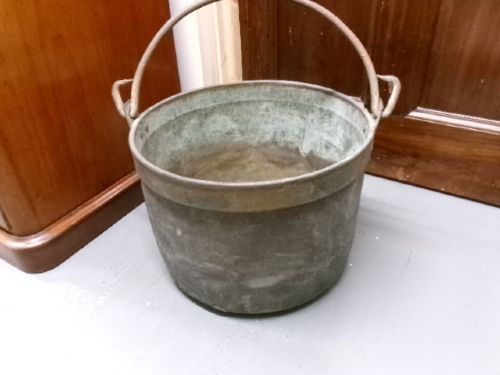
- Cauldron
- A round, deep metal vessel, typically resting on three small feet or a rounded base, fitted with a movable swing handle. These pieces often serve multiple purposes as planters or log holders.
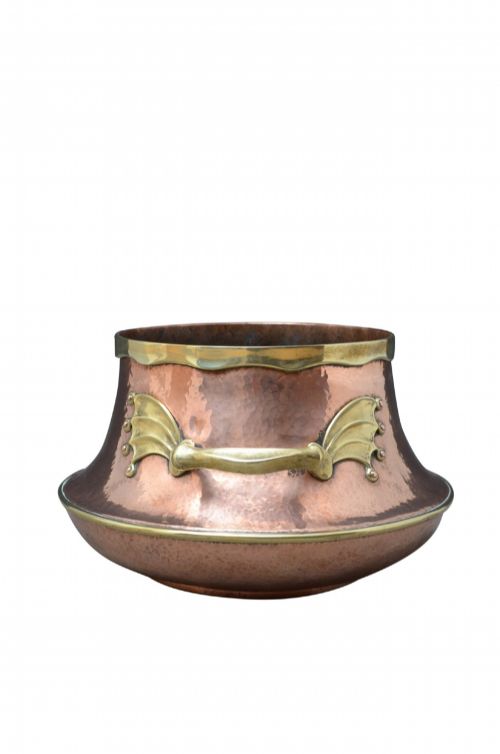
- Dinanderie
- A term for various objects made of brass, copper, or bronze, named after the Belgian town of Dinant. It often applies to decorative vessels produced in the Art Deco style.
- Coopered
- A construction method utilising wooden staves bound together with metal hoops, similar to barrel making. This technique appears in specialised tea and peat buckets.
- Jardinière
- An ornamental pot or stand designed to hold live plants or flowers. These vessels often double as indoor log bins.
Brass Handle Copper Bucket: Frequently Asked Questions
What were copper buckets used for?
These vessels served primarily by the fireplace for holding coal, logs, or peat to feed domestic fires. Their durable metal construction made them practical for daily heavy hauling.
Over time, many of these containers transition into decorative roles, serving as indoor planters or fireside ornaments.
How do I clean a copper bucket?
Gentle washing with warm soapy water removes accumulated dust and soot without harming the historic surface. Avoid harsh abrasive cleaners that strip away the natural age.
Many collectors prefer to leave the darkened patina untouched rather than polishing the metal to a bright shine.
Are these buckets safe for real fires?
While originally built for heavy hearth service, modern owners often use them for dry storage rather than damp fuel. Using them to hold logs or kindling keeps them functioning as intended.
Water should not stand in unlined vessels for extended periods to prevent corrosion of the metal.
How can I tell the period?
George III and early nineteenth-century pieces often display hand-beaten surfaces and simpler, heavier construction. Victorian and Edwardian examples frequently introduce stamped brass mounts and helmet shapes.
Examining the rivets, handle attachments, and overall silhouette helps establish the manufacturing era.