


Brass Grille Doors
Brass grille doors screen the contents of library bookcases, cabinets and chiffoniers while keeping the room light.
Brass Grille Doors
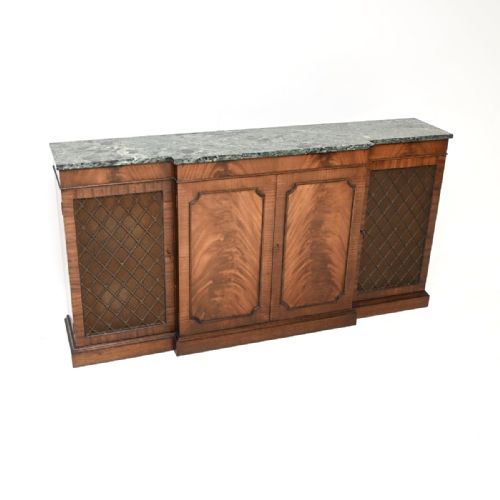
Brass grille doors define refined storage pieces such as bookcases, side cabinets and chiffoniers built across the eighteenth, nineteenth and early twentieth centuries. These fitted panels replace solid timber or glass, providing ventilation and a semi-transparent view of the interior shelves. Regency and Victorian examples appear most often among these listings, alongside earlier George III works and later Edwardian variations.
Makers designed these fitted metal meshes primarily for libraries and elegant sitting rooms to store books and valuable collections safely. Common forms span low side cabinets, tall breakfront bookcases and compact chiffoniers fitted with single or paired doors. The timber frames framing the mesh match formal domestic rooms, using rich native and exotic woods.
Materials and construction
Makers constructed the primary carcasses and doors of these pieces from dense hardwoods, predominantly mahogany and rosewood, alongside walnut, oak, pollard oak and satinwood. Cabinet makers occasionally incorporated exotic timbers like Gonçalo Alves or detailed the frames with ebony stringing and brass inlays. Marble tops and fabric linings behind the metal mesh also appear in the record.
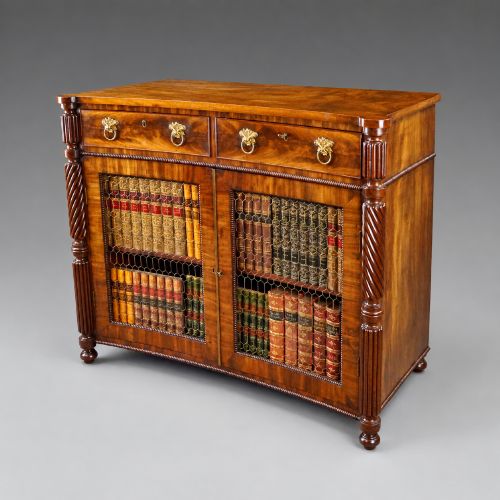
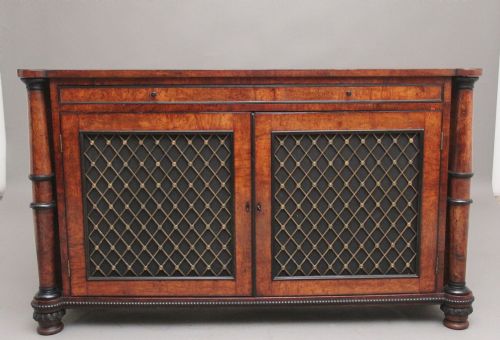
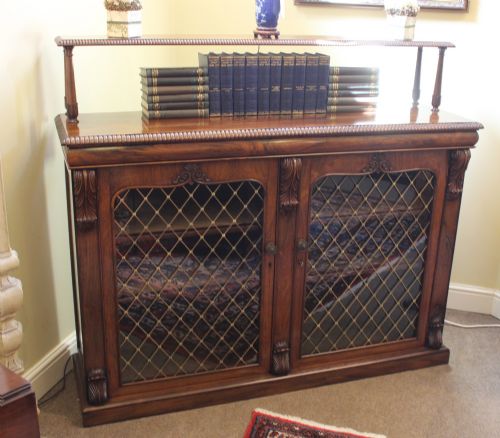
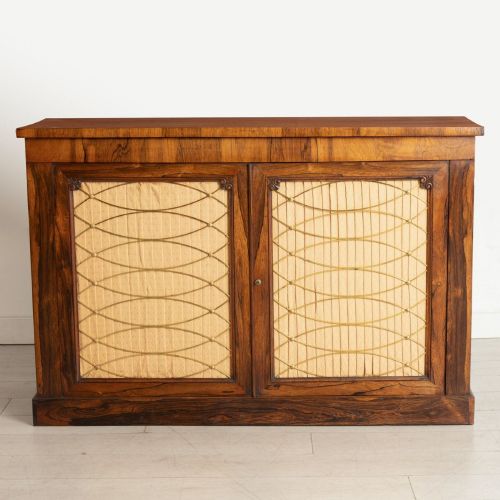
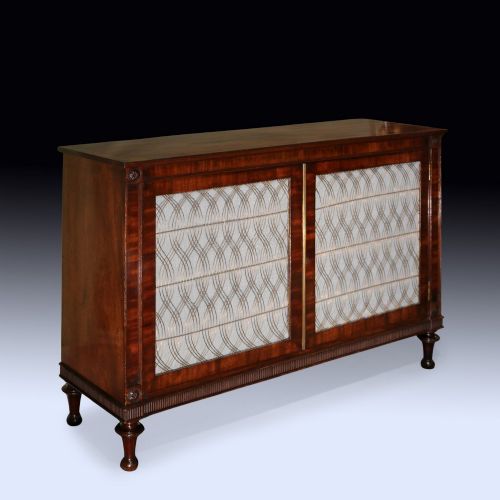
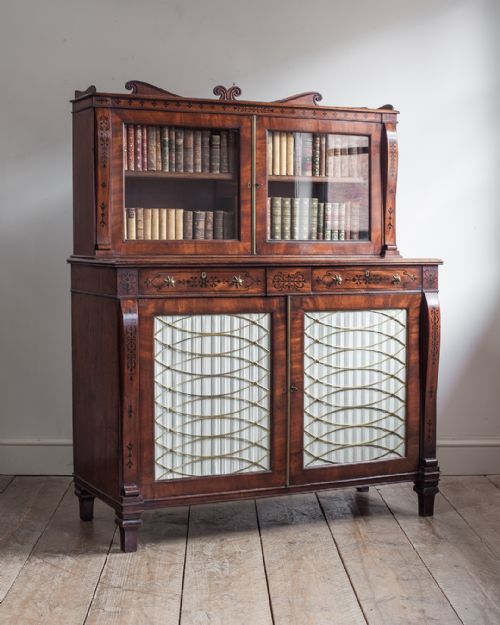
The defining brass grilles consist of woven or joined metal wire secured directly into rebated timber door frames. These metal inserts range from simple diamond patterns to intricate trellis and geometric arrangements. Cabinet makers fixed the delicate mesh behind wooden muntins to protect the inner fabric and contents.
Behind every tidy brass mesh panel lies a delicate pleated silk backing designed to hide unruly book collections.
The standard of execution
Quality rests on the crispness of the timber joinery and the precision of the brass wirework set into the doors. Pieces designated as exhibition quality display superior figure in timbers such as flame mahogany, rosewood or Gonçalo Alves, matched across breakfront profiles. Simpler country house versions use plainer oak or painted finishes with straightforward geometric grilles.
The integration of the metal grille into the overall design marks the graduation from standard workshop output to finer cabinet work. Superior examples preserve original fabric linings behind intact brass wire, while lesser items show later replacements of the mesh or timber frame components.
Gillow
The Brass Grille Doors Glossary
- Chiffonier
- A low sideboard or cabinet with shelves or enclosed storage below, popular during the Regency and Victorian periods. These pieces frequently feature silk-backed mesh doors.
- Breakfront
- A piece of furniture whose central section projects forward from the flanking wings. This architectural form provides depth and visual variety to large bookcases and side cabinets.
- Gonçalo Alves
- A dense exotic hardwood with striking contrasting grain patterns used in high-status Regency furniture. It yields rich brown and dark figures.
- Pollard oak
- Oak timber taken from trees that were cut back near the trunk to encourage dense, gnarled branching. The resulting wood displays intricate clustered growth patterns.
Brass Grille Doors: Frequently Asked Questions
What are brass grille doors used for?
Brass grille doors enclose the shelving spaces of bookcases, side cabinets and chiffoniers. They protect books and decorative objects while allowing air circulation and a filtered view of the interior.
Historically, this design kept valuable libraries ventilated and secure in formal domestic rooms. The mesh also permitted early remote media or heat circulation in specialised furniture.
How do I identify a Regency period piece?
Regency pieces dating from the early nineteenth century rely on classical architectural proportions, dark exotic timbers and restrained brass ornamentation. Look for balanced proportions, bracket or plinth feet and precise stringing.
Makers working in this style favoured rosewood and mahogany carcasses paired with intricate brass wire mesh door inserts. Classical neoclassical motifs often influence the overall geometry.
Are the fabric linings behind the grilles original?
Fabric behind the wire mesh often dates to later restorations because silk and cotton perish over decades of exposure. Original backing materials remain uncommon in survival records.
When fabric survives, it usually consists of pleated silk or damasco matching the interior shelving trim. Replacement lining allows owners to choose colours that complement modern interiors.
What timbers were used for these cabinets?
Makers constructed these cabinets using dense native and imported hardwoods suited to fine joinery. Mahogany and rosewood dominate the record, alongside walnut, oak and exotic Gonçalo Alves.
Secondary woods like deal or oak appear inside drawer linings and back panels. Painted wood finishes also occur on specific regional Scottish and English dresser bases.