



Regency Brass Dwarf Bookcase
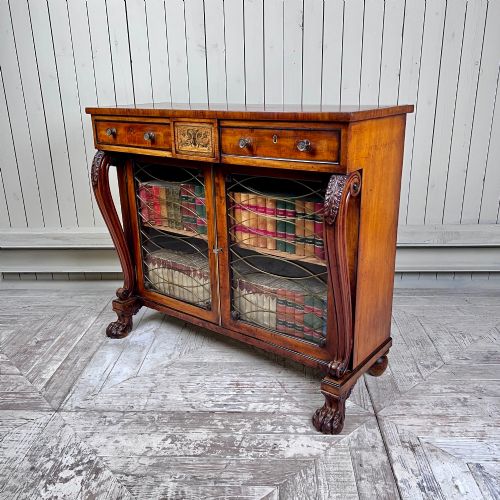
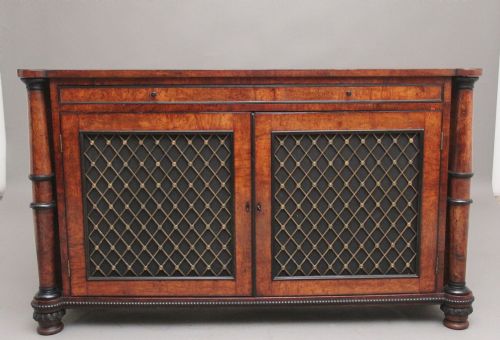
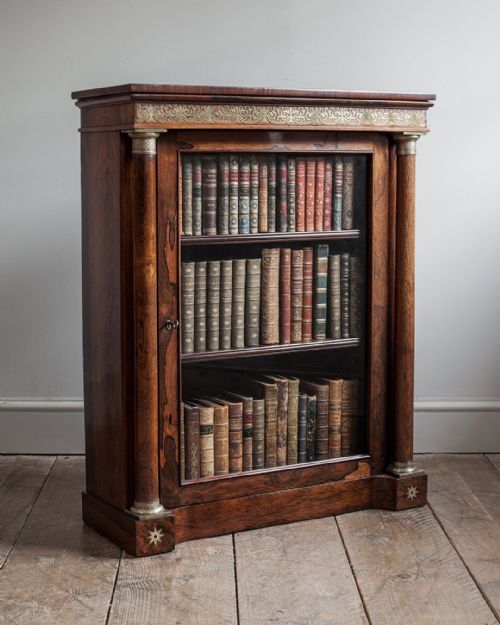
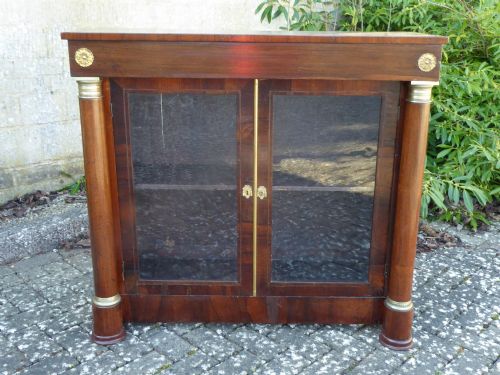
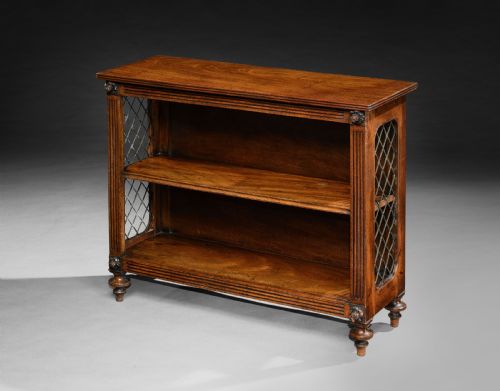
These low timber cabinets with brass mounts are regency brass dwarf bookcase examples, offering compact shelving and surface display for modest rooms.
Regency Brass Dwarf Bookcase
A regency brass dwarf bookcase stands at a low height, keeping the upper wall clear while holding modest collections of volumes. These pieces appear most frequently in rich dark timbers like rosewood and mahogany, often fitted with open shelving or enclosed behind glazed or fabric panels.
The form bridges the gap between a full-height bookcase and a serving table, serving as a prominent furnishing in the parlour or library. Most examples date from the early nineteenth century, carrying the clean architectural lines characteristic of the Regency period.
Materials and construction
Cabinetmakers built these low bookcases using dense tropical hardwoods such as rosewood, mahogany, and pollard oak, often selecting boards for prominent grain patterns. Ebony and amboyna wood appear as contrasting banding, highlighting the structural geometry of the front elevation.
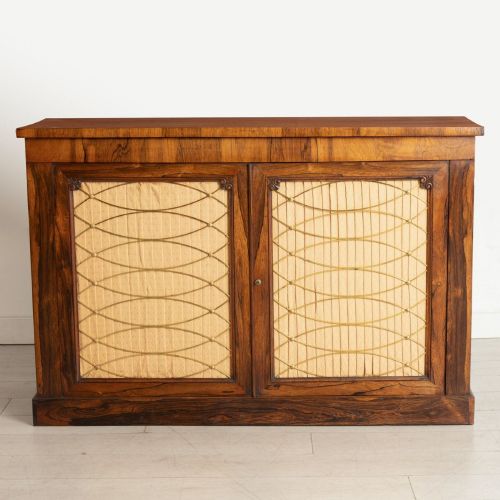
Fine cast and chased brass embellishments, sometimes gilt, are inlaid into the timber or mounted as grilles and gallery rails. Pleated fabric panels and glass doors protect the interior contents while softening the visual weight of the timber carcass.
Listings for this phrase frequently feature rosewood and mahogany timbers paired with intricate brass inlay work.
Markers of distinction
The calibre of a regency brass dwarf bookcase rests on the precision of its timber selection and the integration of its metalwork. Subtle variations in the depth of the brass inlay and the harmonious grain matching across the doors distinguish finer examples.
Proportion and restraint define the upper echelon of these pieces, where structural mouldings complement rather than crowd the primary wood surface. The crispness of the turned columns and the quality of the internal shelving timber reveal the original maker's intent.
The Regency Brass Dwarf Bookcase Glossary
- Dwarf bookcase
- A low-standing bookcase designed to sit beneath dado height or window sills. This form leaves the upper wall unobstructed.
- Breakfront
- A cabinet front where the central section projects forward from the flanking wings. This architectural arrangement creates depth and shadow.
- Chiffonier
- A low sideboard or cabinet featuring shelves or enclosed cupboards beneath. They frequently include silk-pleated door panels.
- Pollard oak
- Timber taken from trees that were pollarded, resulting in a dense, knotted grain pattern with rich figuring. It provides strong visual texture.
Regency Brass Dwarf Bookcase: Frequently Asked Questions
What is a dwarf bookcase?
A dwarf bookcase is a low-standing piece of furniture designed to hold books while keeping the wall space above it clear for paintings or mirrors. These compact units sit comfortably beneath standard window heights.
In period interiors, they functioned as accessible library units and surface display areas for decorative objects.
How were brass inlays applied?
Cabinetmakers channelled the dense hardwood surfaces precisely to receive thin strips and intricate motifs of brass. The metal was then tapped flush into the timber.
This technique required immense skill to prevent the wood from splitting as the materials responded differently to environmental changes.
Where did these cabinets sit?
These pieces found their natural home in the Regency drawing room, morning room, or intimate library. Their modest proportions allowed them to line walls without overwhelming smaller chambers.
They often stood beneath windows or flanked a fireplace, providing convenient access to favoured volumes.
Why use rosewood and mahogany?
Dense tropical hardwoods offered exceptional stability, rich natural colours, and smooth surfaces that took a high polish. Mahogany provided structural reliability, while rosewood presented striking dark grain figures.
Cabinetmakers utilised these imported timbers to project wealth, refinement, and modern taste.
What are pleated chiffon panels?
Pleated chiffon panels consist of gathered fabric set behind wooden frames or brass grilles on cabinet doors. They shielded the book bindings from dust and strong sunlight.
This textile element also added softness and colour variation to the dark timber elevation of the cabinet.