


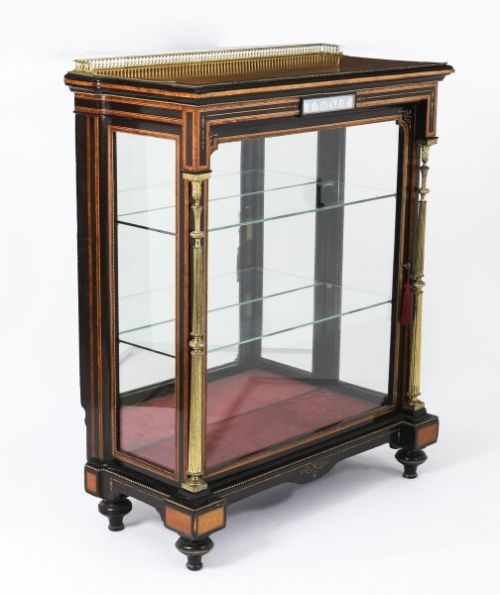


Brass Glazed Vitrine
A brass glazed vitrine displays precious objects behind clear glass panes held securely within metallic framing.
Brass Glazed Vitrine
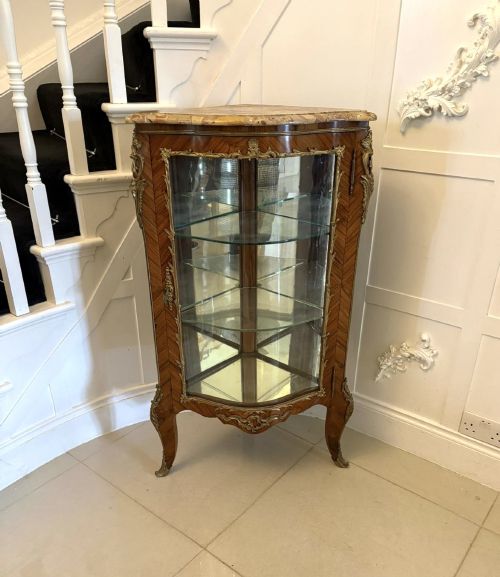
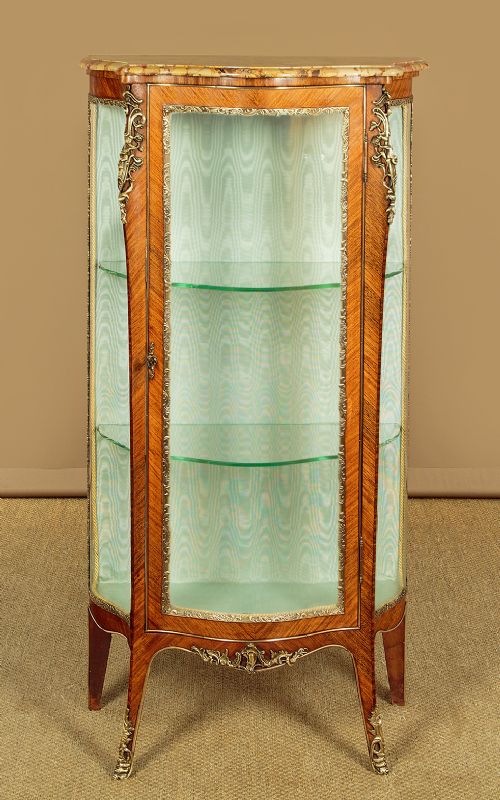
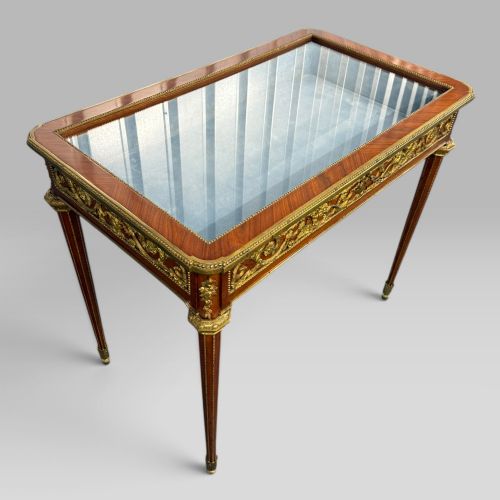
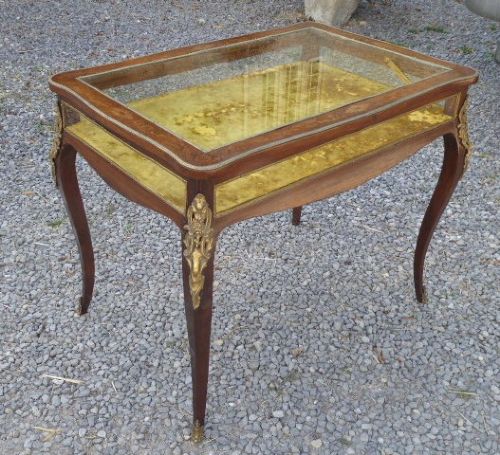
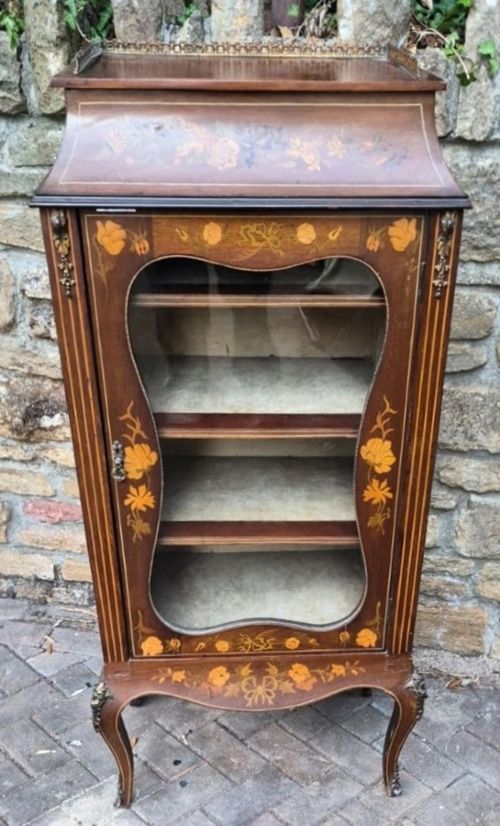
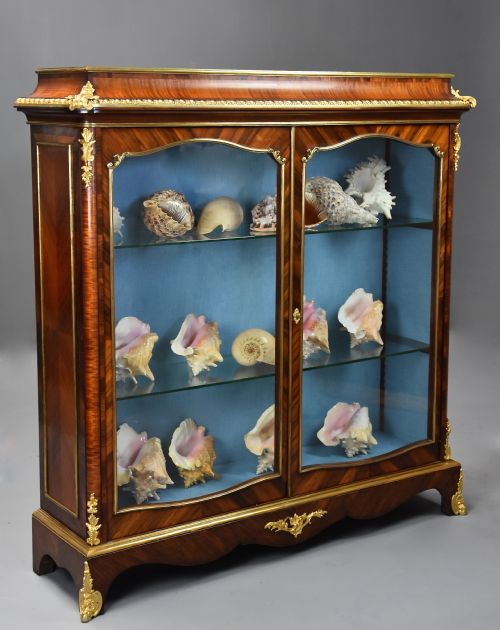
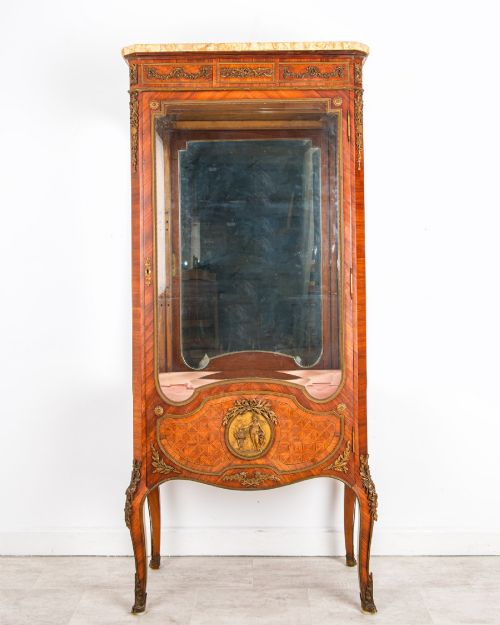
A brass glazed vitrine functions primarily as a display cabinet for housing porcelain, silver, and curiosities safely away from dust. These pieces emerge in various forms including tall pier cabinets, side tables, and freestanding bookcases.
Nineteenth century examples heavily favour French revival styles such as Louis XV and Napoleon III alongside Edwardian interpretations. Makers constructed these items using robust timbers to support extensive glass panelling and metal mounts.
The layout typically incorporates multiple glass shelves illuminated from the front or sides by natural light passing through the surrounding enclosure. Collectors encounter both corner units and flat-fronted floor-standing models.
Materials and construction
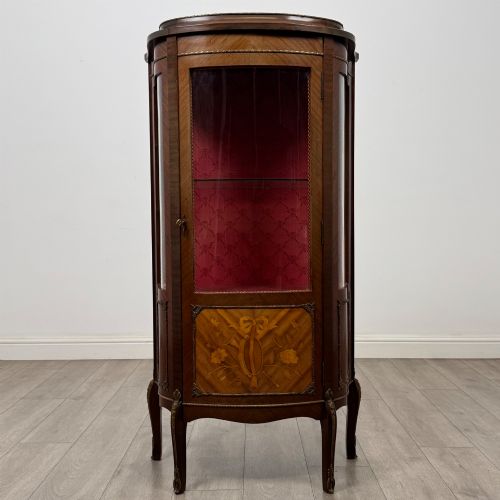
Cabinet makers built the internal carcases using mahogany, walnut, kingwood, and ebonised wood often applied as veneers over a secondary timber base. Artisans frequently integrated intricate marquetry patterns alongside brass stringing to decorate the exterior surfaces.
Metalworkers cast ormolu and gilt brass mounts to adorn the corners, cornices, and feet of each vitrine. Glaziers secured large glass panels into position using slender framing bars that maintained structural rigidity while maximising visibility.
The furniture forms span display tables, pier cabinets, bookcases, and comprehensive corner units originating primarily from French and English workshops.
Quality differences
The refinement of the cast ormolu mounts heavily dictates the overall standard of a piece, with finely chased brass detailing marking out superior examples. Hand-cut marquetry and tightly fitted door frames reflect greater time investment by the original cabinet maker.
Selected timbers display rich grain patterns and careful bookmatching across the doors and panels. Heavier carcass construction and original bevelled glass panes further distinguish higher grade items from standard commercial production.
François Linke·Paul Sormani·F. Sage and Co.·Edwards and Roberts·Siegel
The Brass Glazed Vitrine Glossary
- Ormolu
- Gilded bronze or brass mounts used extensively on nineteenth-century furniture for decorative effect. These metal ornaments highlight the structural lines of cabinets and tables.
- Marquetry
- Inlaid patterns of wood veneers applied to furniture surfaces to create pictorial or geometric designs. Craftsmen utilised contrasting timbers such as kingwood and rosewood.
- Boulle
- A form of marquetry employing tortoiseshell and brass inlaid in contrasting scrollwork patterns. This technique originates from French decorative arts of the seventeenth and eighteenth centuries.
- Veneer
- A thin layer of superior wood applied over a base of cheaper secondary timber. This method allowed craftsmen to display decorative grain figures efficiently.
- Pier cabinet
- A narrow cabinet designed specifically to stand against a wall pier between windows. These pieces often feature glass doors to display ornaments.
Brass Glazed Vitrine: Frequently Asked Questions
What is a brass glazed vitrine used for?
These cabinets serve to display delicate porcelain, silverware, and small collector items while keeping them protected from dust. The glazed panels allow light to enter from multiple angles to illuminate the contents.
Historically, households placed these items in drawing rooms and reception spaces to showcase family treasures to visiting guests.
How do I date a glass display cabinet?
Dating relies on examining the timber veneers, construction methods, and prevailing decorative styles such as French revival or Edwardian marquetry. Screw types, hinge patterns, and glass manufacturing characteristics also provide clues.
Comparing the decorative motifs against documented nineteenth and early twentieth-century design books helps narrow down the production period.
Where should I place a vitrine at home?
Positioning these cabinets away from direct sunlight prevents the internal wood veneers from fading and protects stored items from excessive heat. Placing them against stable interior walls avoids potential structural strain.
Allowance must be made for adequate clearance around doors and opening mechanisms depending on whether the unit uses single or double front panels.
How do I care for antique wood and brass?
Maintenance involves dusting timber surfaces regularly with a soft dry cloth and avoiding harsh liquid polishes or silicone sprays. Brass mounts benefit from gentle cleaning without abrasive materials that might damage the surface.
Maintaining stable room humidity prevents the timber carcase and veneered surfaces from cracking or warping over time.