


Brass Glass Display Case
These brass glass display case selections range from compact countertop vitrines to large shop counters designed to hold precious objects safely in clear view.
Brass Glass Display Case
A brass glass display case encompasses freestanding vitrines, countertop bijouterie tables, and commercial shop counters designed for holding collections, jewellery, and scientific instruments. The listings span periods from the Victorian era and the nineteenth century through Edwardian times and the 1920s, originating from English workshops and French cabinet makers.
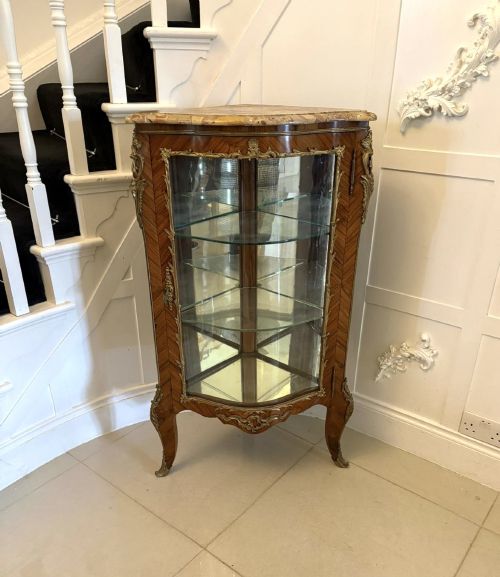
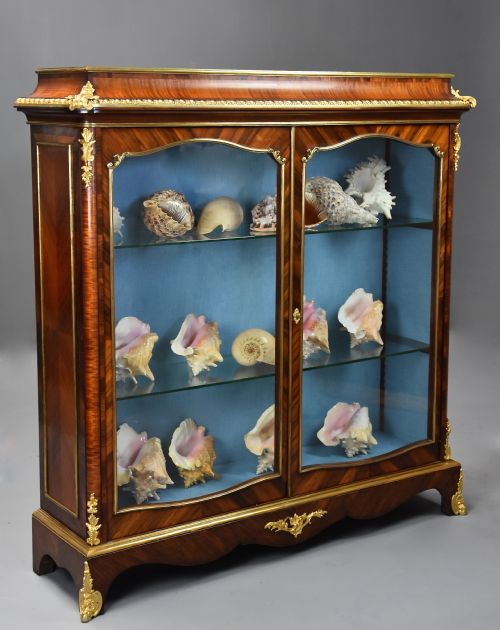
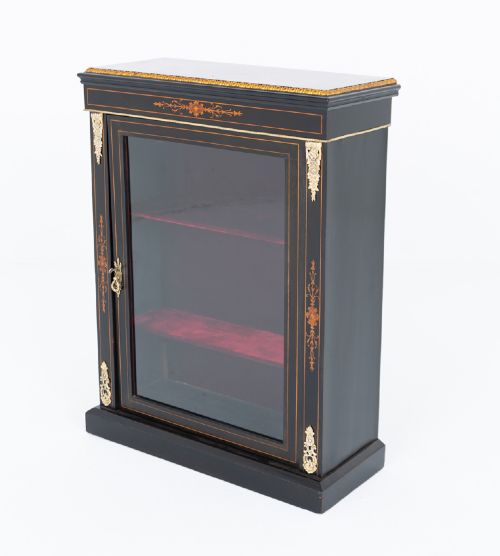
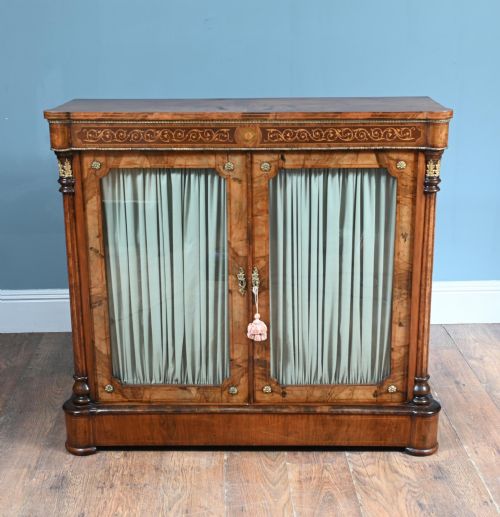
Domestic pieces often take the form of walnut, mahogany, or kingwood pier cabinets and serpentine corner display cabinets fitted with bevelled glass. Commercial examples include large shop counters and brass-framed display cabinets built by firms such as F. Sage & Co. and Siegel for retail environments.
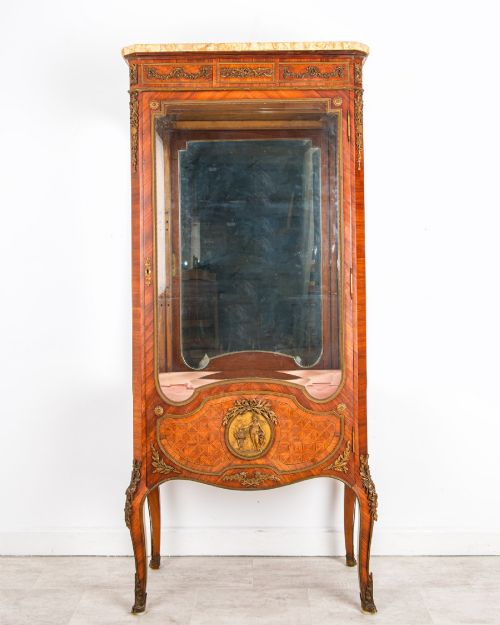
French pieces frequently display Louis XV style influences, ormolu mounts, marble tops, and Vernis Martin panels. English alternatives tend toward burr walnut, ebonised wood, and oak casings, sometimes incorporating velvet linings or mirrored interiors.
Materials and Construction
Frames combine structural timbers such as mahogany, walnut, rosewood, and kingwood with brass and ormolu mounts. Glazing relies on fitted glass panes, frequently bevelled, held securely within metal or wooden rebates.
Interiors often utilise velvet linings, mirrors, and fitted shelves to reflect light onto the displayed items. Marquetry, Boulle inlay, and ebonised finishes complete the decorative exterior surfaces of domestic vitrines and bijouterie tables.
Listings feature oak, walnut, mahogany, and kingwood timbers alongside brass, ormolu, and velvet.
Standards of Execution
Quality separates through the crispness of the ormolu mountings, the selection of figured wood veneers like burr walnut and kingwood, and the joinery of the cabinet carcase. Finer pieces show meticulous hand-chasing on the bronze mounts and seamless veneer matching across serpentine fronts.
F. Sage & Co.·Siegel·Saml. Elliott & Sons
The Brass Glass Display Case Glossary
- Vitrine
- A glass cabinet used for displaying fine objects and porcelain. These pieces often feature glazed sides and doors to maximise light penetration.
- Bijouterie table
- A low display table with a glazed top and velvet-lined interior for jewellery and small ornaments. They frequently stand on slender cabriole legs.
- Ormolu
- Gilded bronze mounts applied to the exterior of nineteenth-century furniture. The technique involves coating metal in a gold amalgam.
- Pier cabinet
- A narrow cabinet designed to stand against the wall space between windows. They typically incorporate glass doors and enclosed shelving.
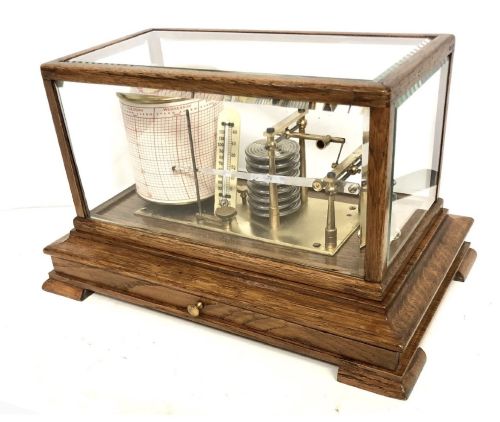
- Barograph
- A recording barometer housed in an oak or walnut case with bevelled glass panels. These scientific instruments chart atmospheric pressure onto paper drums.
Brass Glass Display Case: Frequently Asked Questions
What is a brass glass display case used for?
These cabinets serve to protect and exhibit collections of small artefacts, scientific instruments, jewellery, and silverware. The glazed panels and mirrored interiors allow viewers to inspect objects from multiple angles while keeping dust away.
Domestic versions suit living rooms and studies for personal collections, whereas larger commercial examples reflect retail display traditions from the Edwardian period and the 1920s.
How do I distinguish French and English vitrines?
French cabinets from the nineteenth century frequently employ kingwood veneers, marble tops, and elaborate ormolu mounts in the Louis XV style or Rococo revival. They often take serpentine or oval shapes.
English equivalents tend to feature walnut, mahogany, or ebonised wood with more restrained brass inlay or Boulle work, following Victorian and Edwardian tastes.
Are these cases suitable for delicate items?
Many interiors feature velvet linings and fitted glass shelves designed specifically to cushion and support fragile objects. Bijouterie tables keep items flat beneath glass lids.
Enclosed cabinets protect contents from accidental knocks while providing a secure environment for vulnerable collectables.
How do I care for the wood and brass?
Maintenance involves dusting timber surfaces with a soft cloth and avoiding direct sunlight to protect veneers like burr walnut and kingwood. Brass mounts and ormolu require gentle cleaning without abrasive polishes.
Maintaining stable room humidity preserves the integrity of the wooden carcase and the fitted glass joints.