

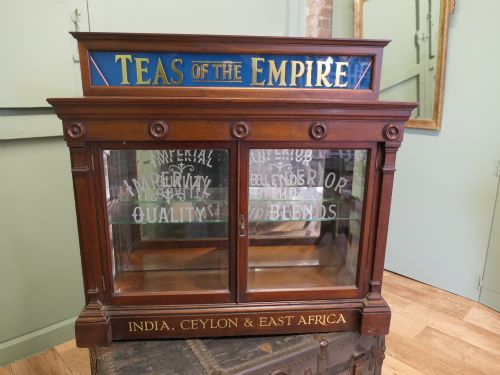
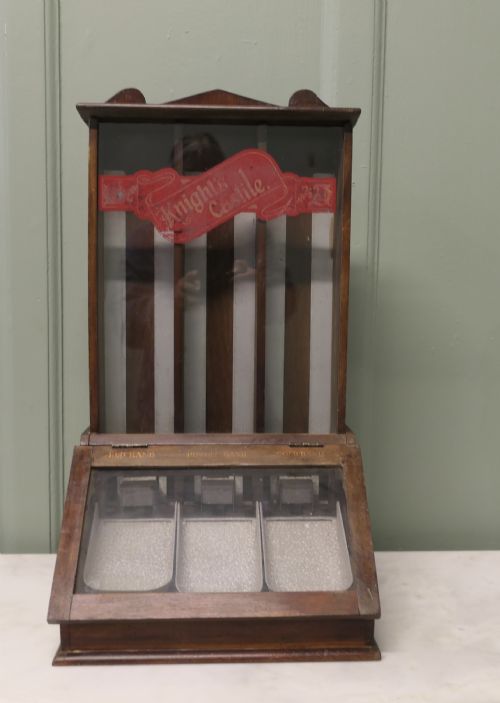


Glass Topped Shop Counter
Glass topped shop counter pieces are sturdy commercial display units designed to showcase small wares, and you want one for their honest proportions and practical glass viewing tops.
Glass Topped Shop Counter
When you search for glass topped shop counter items, you are looking at commercial display furniture originating from the Victorian period through to the 1930s. The selection on this page leans heavily towards Edwardian and early twentieth century examples designed for chemists, confectioners, and general retailers.
The dominant forms include large floor-standing display counters, table-top cabinets, and specialised showcases such as pencil dispensers or drapers fittings. Many incorporate glazed viewing surfaces to protect delicate merchandise while offering customers an immediate view of the stock.
Origins range from British commercial workshops to specific institutional uses, including pharmacy counters and branded chocolate display units. These pieces bring a distinct trade history into domestic or retail interiors through their original glazing and timber frames.
Assessing quality in commercial display
Quality rests in the integrity of the original timber framing, the clarity and thickness of the glass panes, and the survival of makers' details or branded lettering. Pieces retaining original brass fittings, working locks, and interior linings stand apart from heavily altered examples.
The proportion between timber structure and viewing glass dictates the visual balance of the counter. Finer specimens show careful mitre joints, well-seasoned hardwood construction, and intact rear access doors designed for serving staff.
Glass Topped Shop Counter Retail Price Guide 2026
Typical asking prices for glass topped shop counter among the pieces listed under this phrase on Sellingantiques today, from the lower quarter to the upper quarter. They describe what is for sale here now, not the wider market.
Some counters survive with original pencil dispenser hardware intact, ready to sell writing equipment just as they did around nineteen-ten.
Saml. Elliott & Sons·Quincy Showcase Works
The Glass Topped Shop Counter Glossary
- Counter top cabinet
- A smaller display case designed to sit upon an existing shop counter rather than stand independently on the floor. These units allowed retailers to place high-value items directly at eye level near the till.
- Bow end
- A curved glass or timber end panel on a display counter. This shaping softens the rectangular profile and provides panoramic viewing angles for the contents.
- Apothecary jar
- A glass vessel used by chemists to store ingredients or display specialist items. These jars frequently accompany pharmacy counter displays from the nineteenth century.
- Sign written
- Hand-painted lettering applied to glass or timber to advertise specific brands such as chocolates or stationery. This commercial marking indicates the original retail purpose of the cabinet.
Glass Topped Shop Counter: Frequently Asked Questions
What were glass topped shop counters used for?
Retailers used these counters to protect delicate goods such as confectionery, medicines, jewellery, and stationery while keeping them fully visible to customers. The glass top allowed shoppers to inspect merchandise directly from above without handling the stock.
Staff accessed the contents from the rear through sliding or hinged doors, making transactions efficient in busy Edwardian and Victorian shops.
How do I date a shop display counter?
Dating relies on timber choices, construction techniques, and hardware styles. Victorian examples often feature heavier oak frames, whilst 1920s and 1930s pieces may incorporate brass framing or cleaner geometric lines.
Original branding, sign writing, and maker plates provide the most reliable clues for narrowing down the exact decade of manufacture.
Can I use these counters in a modern home?
These units function well as kitchen islands, sideboards, or display surfaces in living spaces. Their glass tops and deep drawers or shelves offer practical storage for collections while adding historic character to contemporary rooms.
Placing them away from direct heat sources helps protect the original nineteenth and early twentieth century timber and glass.
How do I care for the glass and timber?
Maintenance involves dusting timber frames with a dry cloth and cleaning glass panels with standard glass cleaner applied to a cloth rather than sprayed directly near the wood. Checking brass hinges and locks periodically ensures the doors remain aligned.
Avoiding excessive moisture protects the older internal linings such as felt and velvet from deterioration.