


Brass Gallery Sideboard
These brass gallery sideboards combine generous storage with distinctive metal rails, offering both refined display space and practical service for the dining room.
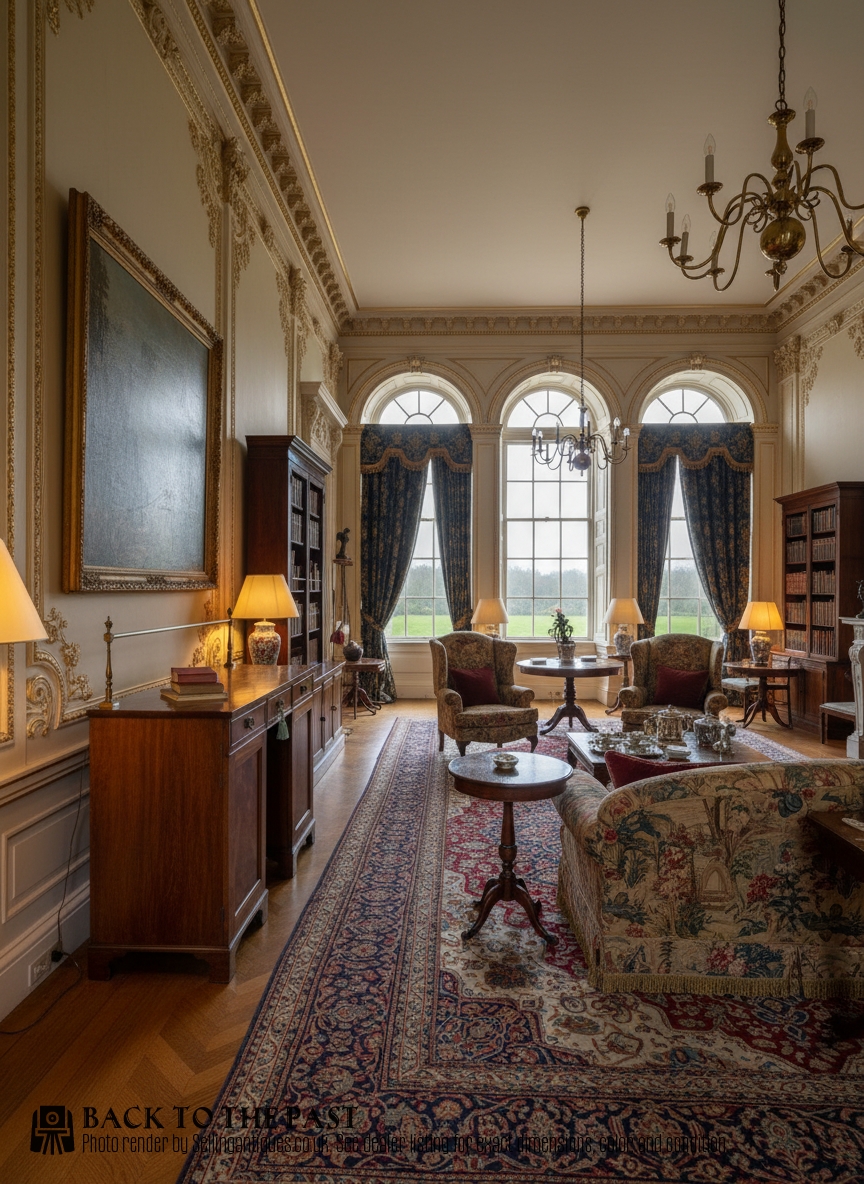
What a brass gallery sideboard is
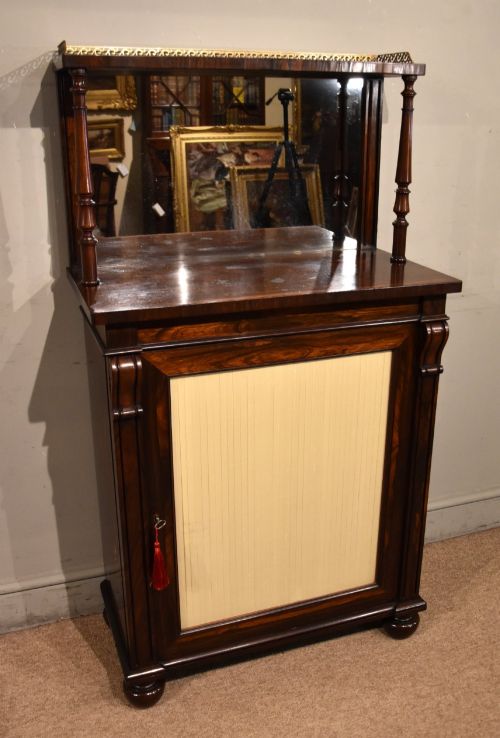
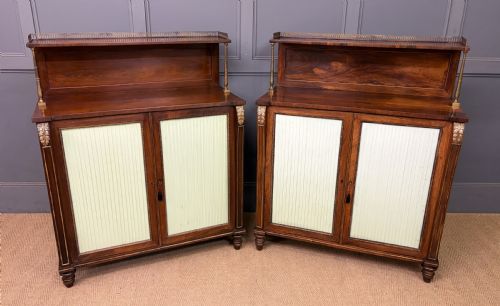
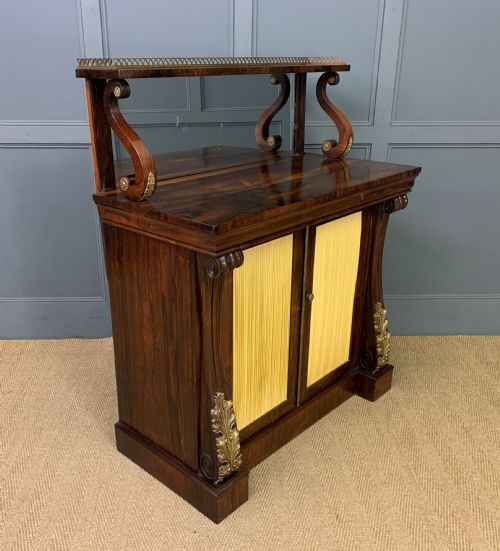
A brass gallery sideboard provides a substantial timber framework fitted with an elevated metal rail along the rear surface. Such pieces serve principally as dining room servers or side cabinets designed to hold plate and glassware.
The surviving examples range from the Georgian and Regency periods through to Edwardian interpretations. Most pieces encountered here utilise mahogany as the primary timber, occasionally enhanced by satinwood, rosewood, or amboyna veneer.
Forms include straight-fronted server cabinets, bowfront designs, and serpentine silhouettes. The brass gallery itself rises behind the top surface to keep serving dishes and vessels secure.
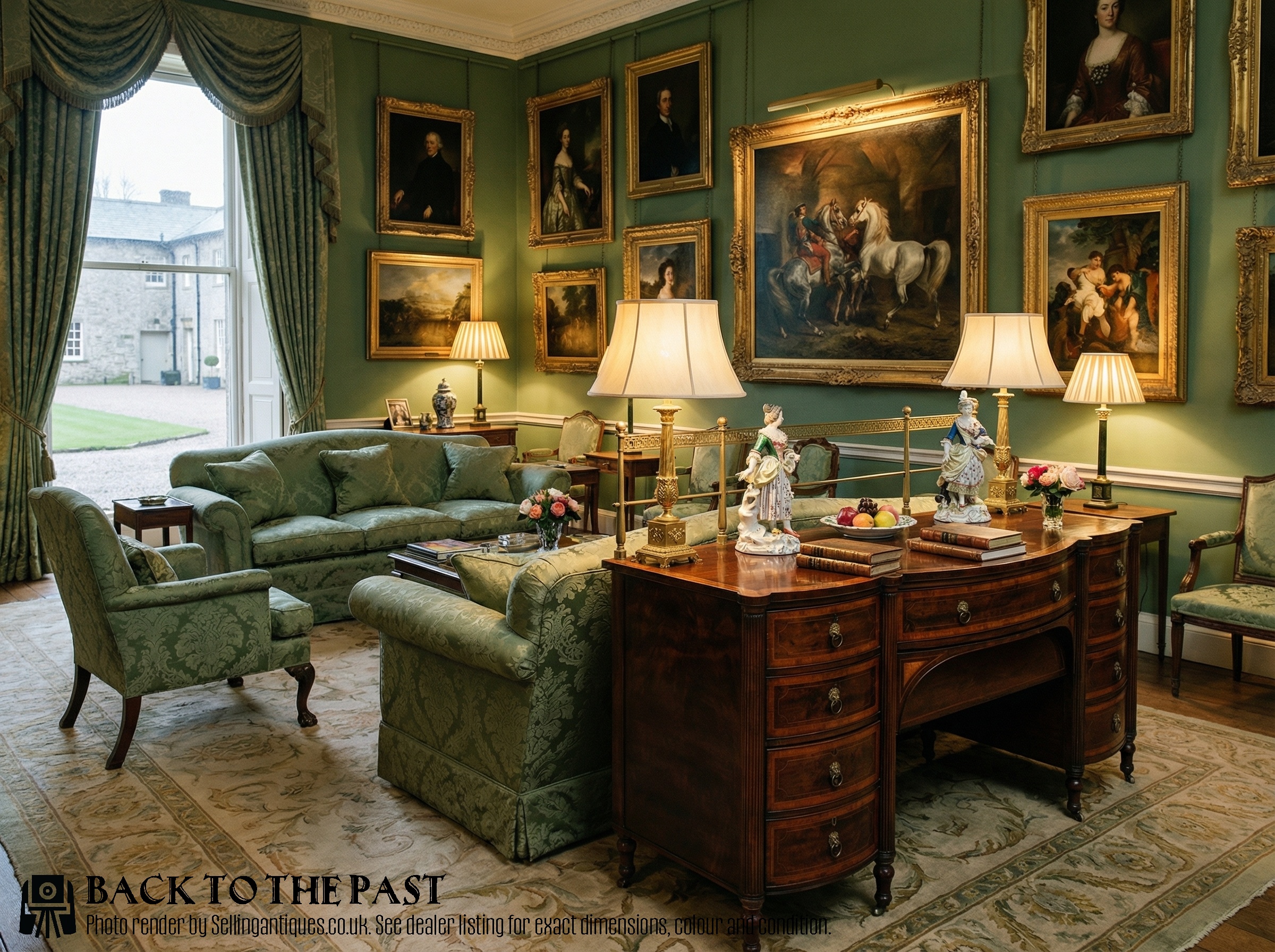
How they were made
Cabinetmakers constructed these frames using solid mahogany, oak secondary timbers, and delicate veneers of satinwood or amboyna. Individual boards are joined with traditional cabinet joints to accommodate the natural movement of the wood over centuries.
The characteristic brass galleries comprise cast or turned metal uprights supporting slender rails fixed securely to the rear timber top. Mirror glass panels occasionally feature within related side cabinet forms, reflecting light across the polished surfaces.
Retail Price Guide 2026
Typical UK retail prices for brass gallery sideboard, calculated from the Sellingantiques database of over a million retail prices indexed since 2003. This retail price guide relies exclusively on Sellingantiques data; no external sources or auction records are used, so the figures do not describe the wider market.
Listings feature four distinct periods: Georgian, Regency, 19th Century, and Edwardian.
What varies in quality
Quality rests in the precision of the timber selection and the crispness of the brass casting. Finer pieces demonstrate figured mahogany with harmonious grain patterns and substantial metalwork that remains firmly seated in the wood.
The sophistication of the secondary woods and the elegance of proportions distinguish standard workshop production from notable cabinet-making firms. Structural integrity in the gallery uprights indicates a higher standard of original construction.
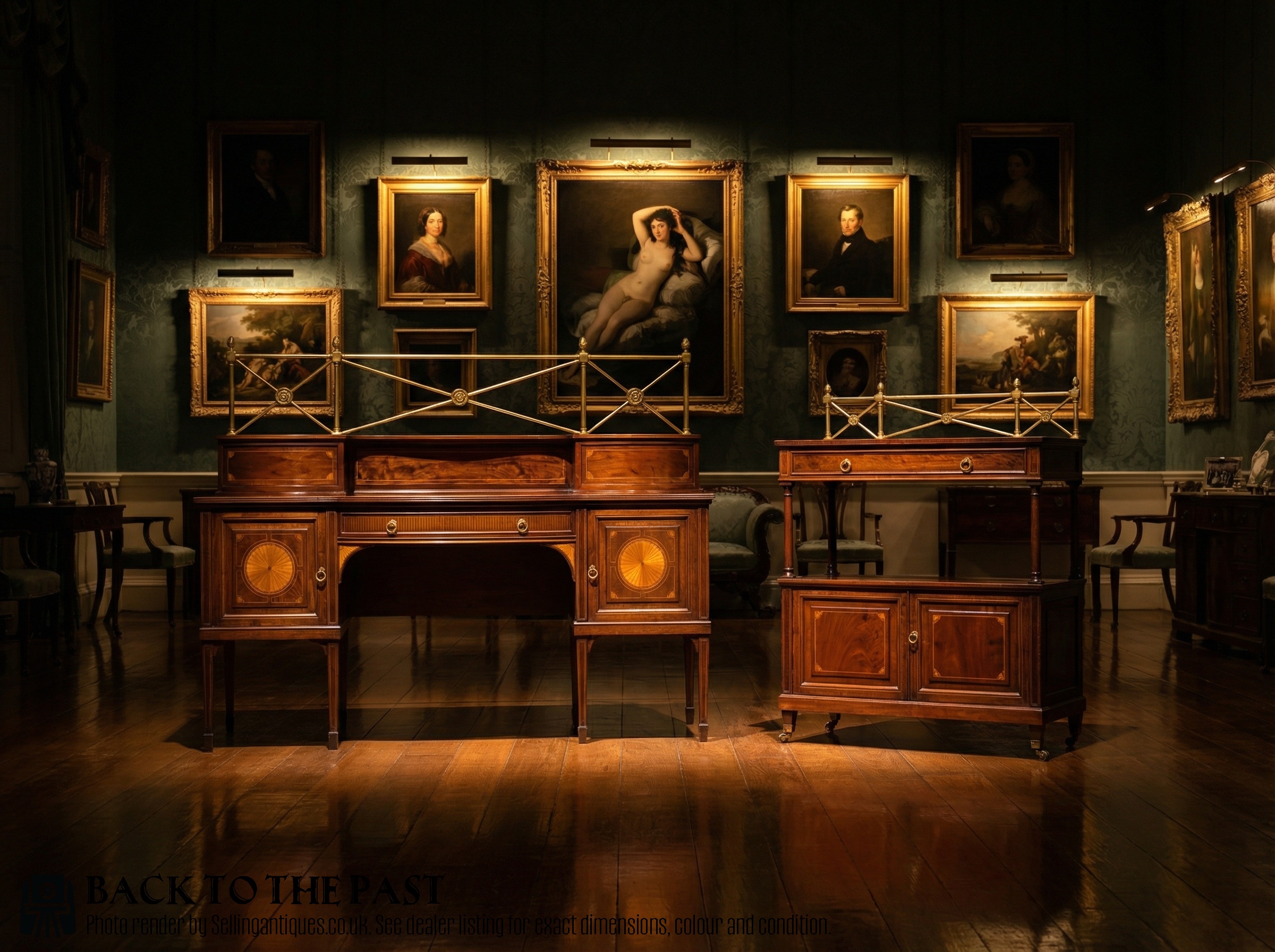
Gillows·Howard And Sons·H Mower And Stephenson
The Brass Gallery Sideboard Glossary
- Brass gallery
- A metal rail raised above the rear surface of a sideboard. It prevents serving items from sliding off the timber top.
- Bowfront
- A curved convex front profile popular on Georgian and Regency case furniture. This shape softens the room and increases internal depth.
- Amboyna veneer
- A highly figured exotic wood prized for its rich speckled grain pattern. Cabinetmakers applied thin slices of this timber to accent important surfaces.
- Serpentine
- A front outline that curves outward at the centre and inward toward the ends. This undulating contour demands exceptional skill from the maker.
Frequently Asked Questions
What is a brass gallery?
A brass gallery is the ornamental metal rail fixed along the back edge of the sideboard top. It acts as a barrier to keep serving platters and decanters stable during use.
These rails are typically secured through the timber top with threaded posts or sturdy fixings beneath. Their design ranges from simple turned spindles to elaborate cast brass patterns.
How were these sideboards used?
These pieces functioned primarily as serving stations in formal dining rooms during the Georgian and Regency eras. Servants placed dishes, cutlery, and glassware upon them before transferring them to the main dining table.
Cupboard spaces and drawers below stored table linens, spare silverware, and dining accessories. The top surface offered ample room for display during meals.
Which woods are most common?
Mahogany forms the structural core for the vast majority of these server cabinets. Its stability and rich warm tone made it the preferred medium for British dining furniture.
Some examples incorporate decorative veneers such as rosewood, satinwood, or amboyna to create contrasting borders and decorative panels.
How do I date a sideboard?
Dating relies upon evaluating the overall form, construction methods, and secondary timbers used inside the drawers. Georgian and Regency pieces exhibit hand-cut dovetails and specific leg configurations.
Later Edwardian revivals often adopt earlier styles like Sheraton or Hepplewhite while employing machine-assisted precision in their internal joinery.