



Brass Footed Clock
A brass footed clock brings heavy timber cases and refined metal mounts together, offering traditional timekeeping for a mantel or desk.
Brass Footed Clock
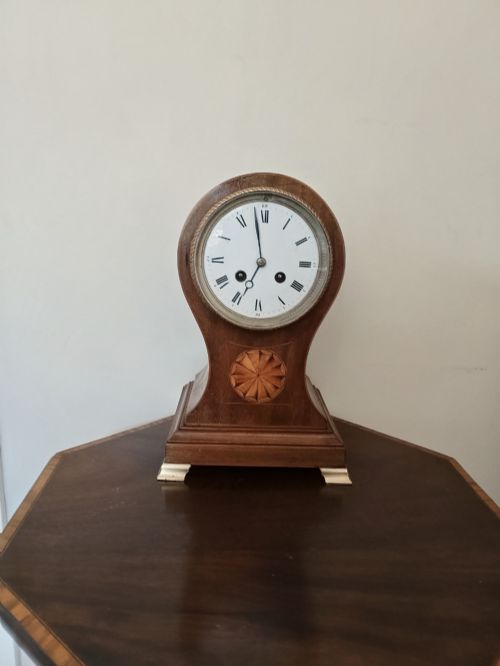
A brass footed clock typically appears as a mantel, table, or bracket clock housed in a substantial wooden case supported by cast metal feet. These timepieces span several distinct eras, drawing on Georgian, Regency, Victorian, and Edwardian design traditions.
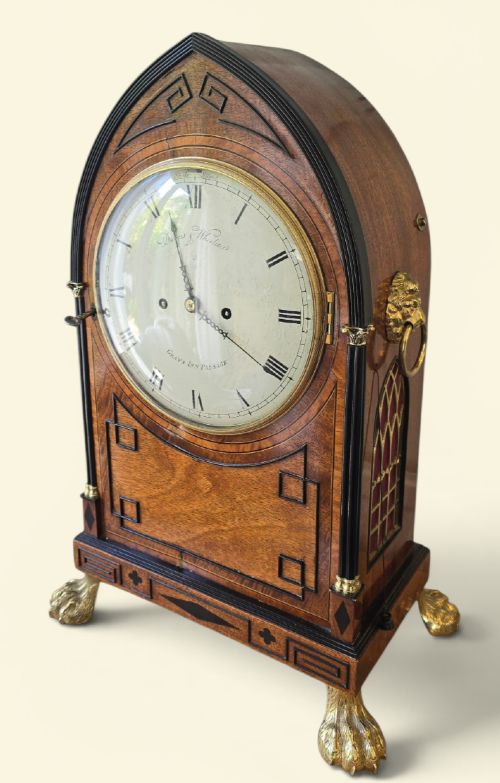
The version most commonly met on this page is a mahogany bracket or library clock, often featuring classical proportions and inlaid details. Examples range from provincial workshop pieces to signed London works by makers such as Bush of London and Louis Recordon.
How they were made
Cases rely on dense timbers like mahogany, ebony, and rosewood, frequently enhanced with satinwood inlay, glass panels, and delicate brass feet. Workshops constructed these housings to protect intricate mechanical movements driven by fusee or striking gear.
Enamel dials with careful hand-painted numerals sit behind glazed bezels, anchoring the front elevation of the clock. Metal components, from the visible feet to the internal escapements, reflect skilled foundry work and hand-finishing.
Many provincial makers signed their dials with local pride, ensuring a small town in Wiltshire sits proudly alongside the London trade.
What varies in quality
The refinement of the timber veneer and the precision of the case inlay set higher examples apart from simpler provincial items. Finer pieces demonstrate crisp carving around the break arch or lancet top, alongside well-proportioned brass feet that balance the heavy case.
Movement signature and complexity also define the grade of the piece, as signed London works by noted makers carry distinct mechanical execution compared to unmarked provincial clocks. The integrity of the enamel dial and the original glass further influence the standing of the clock.
Bush of London·Desbois and Wheeler·L Vick of Stroud·Hyde of Salisbury·Louis Recordon·Joseph Jump·Leplastrier of London·Plumbly and Tupman
The Brass Footed Clock Glossary
- Bracket clock
- A portable table clock originally designed to sit on a wall bracket. These pieces typically feature sturdy wooden cases with carrying handles or architectural tops.
- Fusee
- A conical pulley used in mechanical clocks to maintain even tension on the gear train as the mainspring unwinds. This mechanism improves timekeeping accuracy across the power reserve.
- Break arch
- An architectural clock dial shape featuring a rounded arch top above a square dial plate. This form appears frequently on Georgian and Regency mantel pieces.
- Lancet top
- A pointed, gothic-arch case silhouette resembling a lancet window. This style gained popularity during the Regency and early Victorian periods.
- Enamel dial
- A metal dial face coated with fused glass powder to create a smooth, white background for painted numerals. These surfaces require careful firing to prevent cracking.
Brass Footed Clock: Frequently Asked Questions
Where should I place a bracket clock?
These clocks suit sturdy mantelpieces, sideboards, or dedicated clock brackets where their weight and timber grain can be appreciated. Keep them away from direct sunlight and damp environments to protect the wood and internal movement.
Ensure the surface is completely level so the pendulum or balance wheel beats evenly. Proper placement also allows easy access for winding the movement through the dial or back door.
How can I tell a Regency clock from a Victorian one?
Regency clocks often display restrained classical lines, architectural brass mounts, and fine ebony or mahogany veneers that reflect earlier Georgian influences. Dial designs tend to be cleaner with distinct spade or moon hands.
Victorian pieces frequently introduce heavier proportions, bolder carving, and more ornate inlay work as manufacturing techniques evolved. Examining the case silhouette and secondary woods helps clarify the period of manufacture.
What is the purpose of brass feet on these clocks?
Brass feet elevate the heavy wooden case slightly above the furniture surface, preventing moisture transfer and absorbing minor vibrations. They also serve an aesthetic function, framing the base of the clock and balancing the dial proportions.
These feet are typically cast and turned individually, then fixed securely to the base corners of the timber housing.
Do these clocks require professional servicing?
Mechanical clocks with fusee or striking movements benefit from periodic cleaning and lubrication by a qualified horologist to remove old oil and dust. This maintenance prevents wear on the brass wheels and pivots over decades of use.
Avoid attempting internal repairs yourself, as the mainspring holds considerable tension that requires specialised tools to handle safely.