


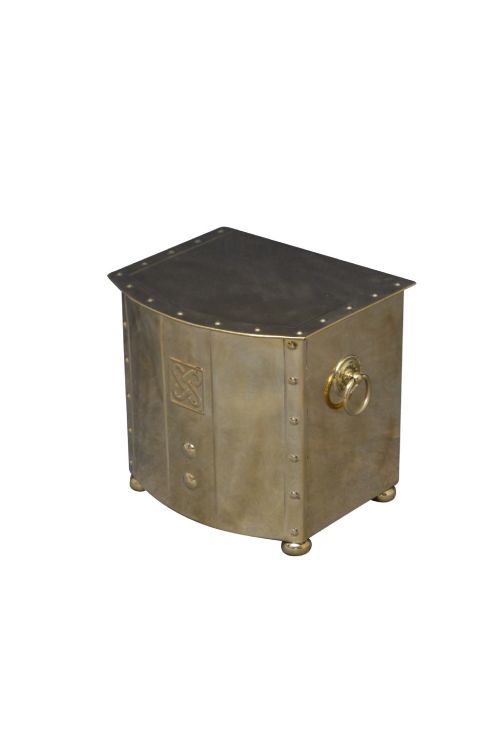


Brass Fireside Log Container
A brass fireside log container holds fuel beside the hearth, combining practical storage with the warm metallic sheen characteristic of period interiors.
Brass Fireside Log Container
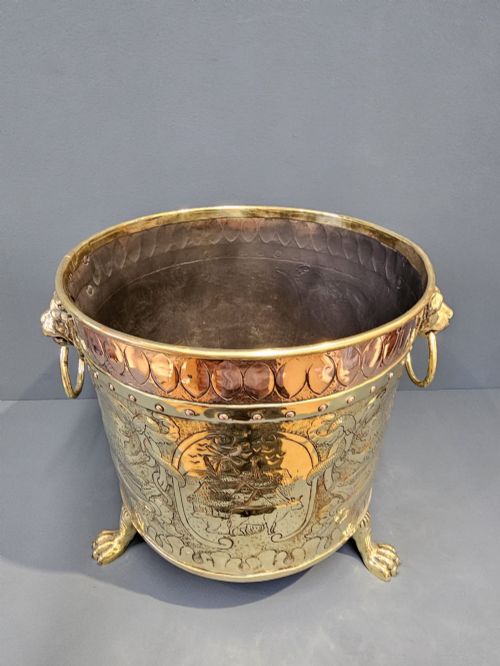
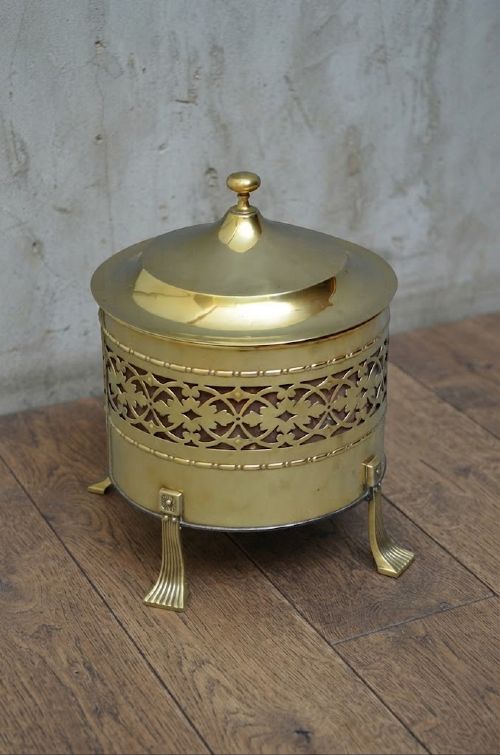
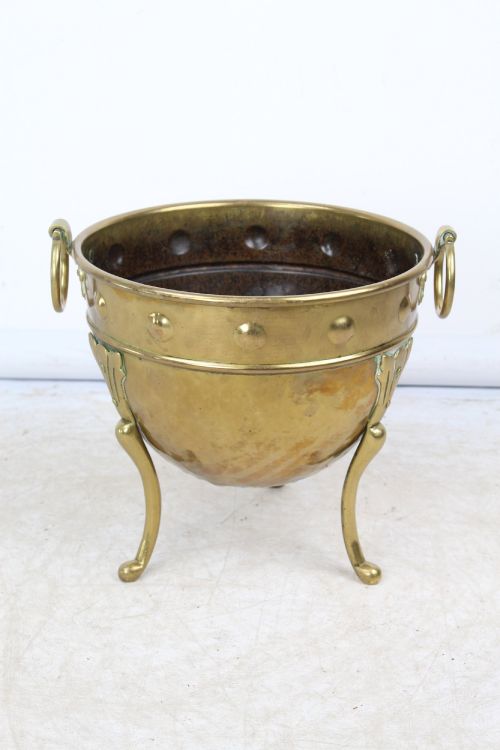
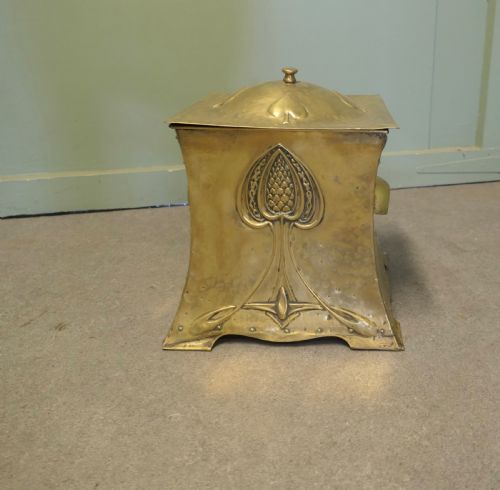
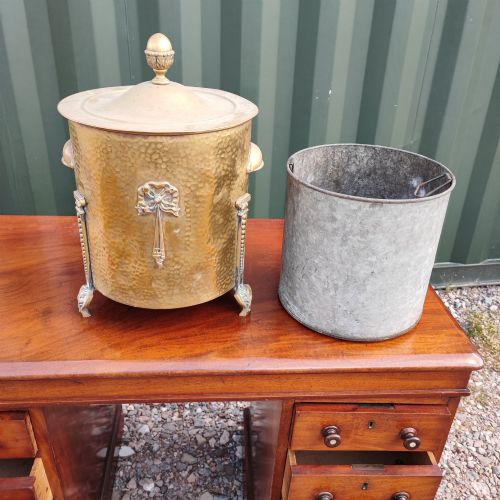
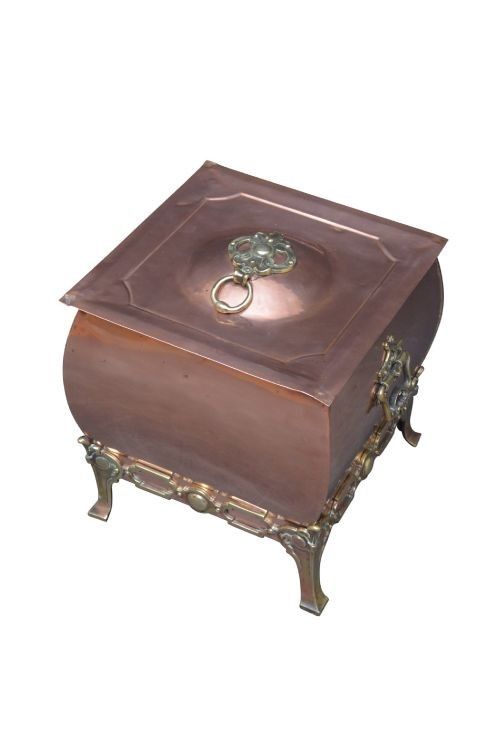
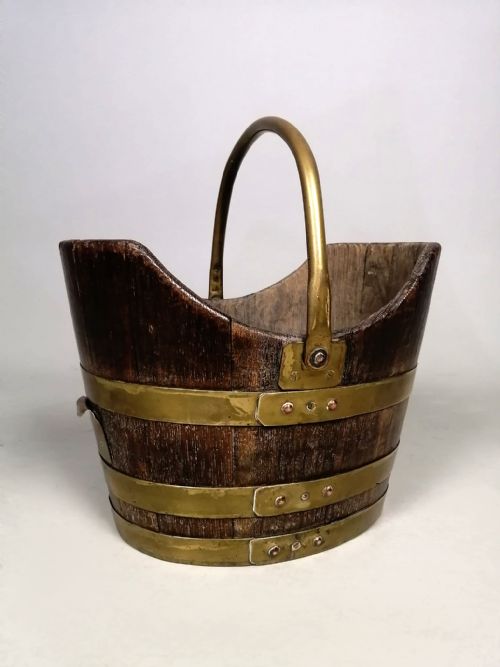
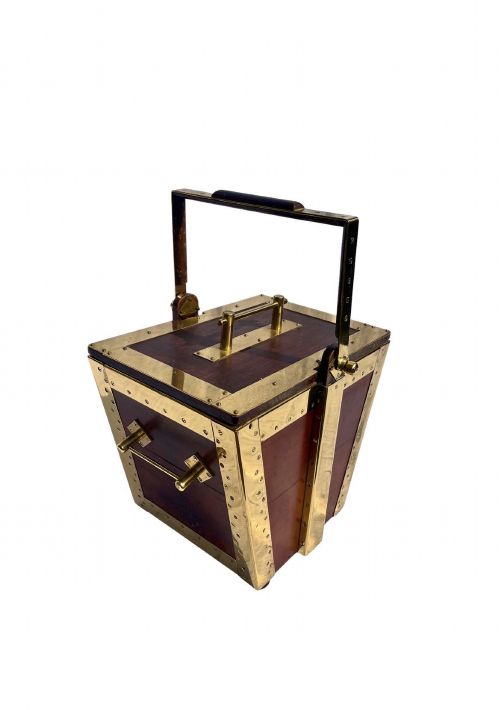
A brass fireside log container appears in several distinct forms, including cylindrical buckets, helmet-shaped scuttles, lidded boxes, and open bins designed to sit beside the hearth. These pieces serve the practical purpose of holding logs, coal, or kindling while adding a decorative metallic element to the fireplace.
The selection on this page spans the Victorian and Edwardian eras, alongside earlier Georgian examples and later Arts and Crafts or Art Nouveau interpretations. Most items meet the eye as gleaming brass or warm copper vessels, occasionally accented with iron fittings or wooden elements like oak and mahogany.
Makers and workshops across England and France produced these containers, ranging from plain functional coal receivers to elaborately decorated bins with embossed panels or fretwork designs. Buyers searching for a brass fireside log container will encounter both utilitarian fuel stores and highly ornamental hearth accessories.
Materials and construction
Metalworking techniques dictate the construction of these vessels, relying heavily on sheet brass and copper formed into rigid bodies. Many pieces utilise hand-beating, embossing, or riveting to secure seams and add decorative surface patterns.
Makers often combined metals by pairing a brass body with contrasting copper bands or iron handles, while other examples incorporate coopered wood such as oak and walnut held together with metal hoops. Liners made of metal or ceramic frequently protected the wooden or metallic bases from moisture and dirt associated with solid fuel.
Listings feature brass and copper frequently, alongside wooden elements such as oak, walnut, and mahogany.
Standards of craftsmanship
Quality in a brass fireside log container rests on the gauge of the metal, the integrity of the construction, and the crispness of any decorative work. Heavier gauge brass and thick copper resist denting and maintain their structural shape through decades of heavy domestic use.
Finer examples display careful hand-riveting, robust handles firmly attached to the body, and well-executed ornamentation such as embossed tavern scenes or pierced fretwork. Lesser pieces rely on thin gauge sheet metal that flexes easily and lacks the substantial weight expected of quality hearth furniture.
Henry Loveridge·Petrus Ramus
The Brass Fireside Log Container Glossary
- Coal scuttle
- A container designed for carrying and storing coal, often featuring a sloping hood and a handle at the back for tipping contents into the grate.
- Helmet bucket
- A coal bucket shaped like a traditional military helmet, featuring a flared rim and a swing handle arched over the top.
- Coopered
- Constructed from vertical staves of wood joined together with metal bands, similar to the method used for making barrels.
- Fretwork
- Ornamental design created by cutting patterns through the metal sheet, often seen on Edwardian coal buckets to allow ventilation.
- Arts and Crafts
- A design movement prioritising traditional craftsmanship and visible hand-working techniques over mass production.
Brass Fireside Log Container: Frequently Asked Questions
How do I clean antique brass and copper?
Cleaning depends on whether you wish to preserve the aged patina or restore a bright metallic shine. Gentle dusting and wiping with a soft, dry cloth maintain the surface without removing historical character.
If polishing is desired, use a mild, non-abrasive metal cleaner formulated for brass or copper, taking care to avoid harsh scrubbing that might damage embossed details or patination.
Were these containers made to hold logs or coal originally?
Makers produced these metal vessels for various solid fuels, adapting the size and shape to suit wood, coal, or briquettes. Many larger buckets served dual purposes, functioning interchangeably as coal hods or log stores depending on household needs.
Descriptions referencing fuel baskets or coal receivers reflect the primary domestic fuel of the period in which they were manufactured.
How can I tell a Victorian piece from an Edwardian one?
Victorian examples often display heavier, more robust construction with deep embossing, rich patination, and robust iron or brass handles. They tend towards ornate traditional motifs or sturdy utilitarian designs.
Edwardian pieces frequently introduce lighter forms, geometric fretwork, and influences from the Arts and Crafts or Art Nouveau movements, reflecting a shift towards airier domestic interiors.