
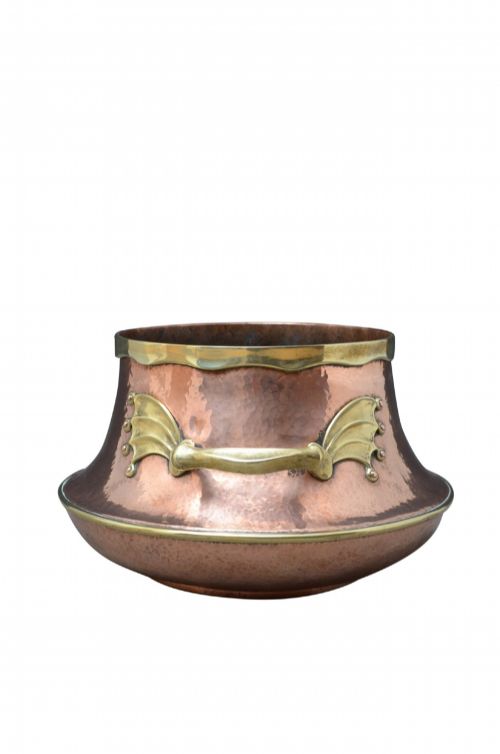


Decorative Brass Fireplace Bin
A decorative brass fireplace bin brings warmth and function to a hearth, offering a handsome way to store coal, logs, or peat beside the fire.
Decorative Brass Fireplace Bin
A decorative brass fireplace bin serves as functional fireside storage, holding coal, logs, or peat while enhancing the room with polished metal. These pieces appear across several periods, most commonly taking the form of Victorian coal scuttles, Edwardian inlaid wooden boxes with brass mounts, and larger planters or jardinieres.
The selection ranges from late nineteenth-century copper-plated log boxes to Art Nouveau containers and Regency-style baskets. Makers utilised various timber bodies alongside metal work, creating vessels that function equally well as newspaper stands or waste bins.
Materials and construction
Makers constructed these bins using a combination of metals and timbers, frequently pairing brass and copper with mahogany, walnut, rosewood, and general wood bodies. Metal elements range from plain sheeting to hammered dinanderie surfaces and intricate brass mounts.
Wooden coal boxes often feature marquetry inlay and carved details, while metal vessels utilise riveted or beaten techniques. Copper plating and mixed metal applications appear alongside sturdy timber framing to withstand daily hearth use.
Judging quality in fireplace bins
Quality reveals itself in the weight of the metal, the crispness of any hammered or dinanderie work, and the richness of the timber used for the body. Superior examples display careful joinery on wooden boxes and securely fastened brass mounts that withstand heavy loads of coal or logs.
The sophistication of decorative elements, such as marquetry inlay, carved mahogany, or distinct Art Nouveau styling, separates standard utility vessels from finer decorative pieces. Better construction ensures both durability at the hearth and longevity as an interior furnishing.
The Decorative Brass Fireplace Bin Glossary
- Dinanderie
- Brass or bronze ornamental wares produced by beating and engraving. This technique creates textured surfaces seen on large jardiniere and log vessels.
- Marquetry
- The art of applying pieces of veneer to a structure to form decorative patterns. This method appears on Edwardian and Victorian coal box lids.
- Jardiniere
- An ornamental pot or stand for plants. Many examples double as large fireplace bins for logs or peat.
- Coal scuttle
- A bucket or box specifically designed for holding coal near a fireplace. These frequently feature double lids and swing handles.
Decorative Brass Fireplace Bin: Frequently Asked Questions
What were brass fireplace bins used for?
These containers held fuel such as coal, logs, or peat directly beside the fireplace for easy access during cold weather.
Over time, many of these versatile brass and wooden vessels found new purposes as umbrella stands, newspaper holders, or large planters.
How do I clean a brass bin?
Dust the surface regularly with a soft cloth to prevent grime accumulation in engraved or hammered details. Avoid harsh chemical cleaners that strip the aged patina which collectors value on antique metalwork.
For wooden sections with brass mounts, use a mild furniture polish on the timber while protecting the metal from greasy residue.
Are these bins safe to use?
Most antique coal boxes and bins feature interior metal liners designed to contain dry fuel safely away from stray sparks. They function reliably for holding logs, kindling, or magazines near a modern hearth.
Care should be taken if loading damp or heavy materials directly into unlined wooden boxes to preserve the interior structure.
How do I date a fireplace bin?
Dating relies on observing the prevailing styles, materials, and construction techniques associated with periods like the Victorian, Edwardian, or Art Nouveau eras. Walnut and mahogany boxes with inlaid marquetry typically point towards the late nineteenth or early twentieth century.
Heavily hammered copper and brass vessels often reflect Arts and Crafts or dinanderie influences popular around nineteen hundred.