
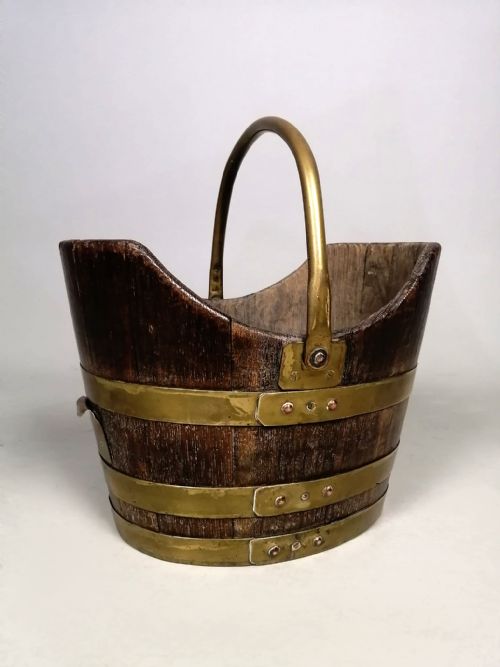


Brass Coal Hod Container
These brass coal hod container pieces are sturdy fireside vessels designed to hold fuel, combining practical utility with period decorative character.
Brass Coal Hod Container
A brass coal hod container provides a sturdy, decorative vessel for storing fuel near the hearth. When exploring this selection, buyers encounter functional fireside accessories dating from the eighteenth century through the Edwardian period, alongside Regency and Arts and Crafts examples.
The assortment on this page spans distinct historical periods, including George III, Victorian, and Edwardian eras. Forms range from traditional coal buckets and helmets to bins and planters fitted with liners.
Victorian and Edwardian versions appear frequently, often fashioned from polished brass or warm copper. Many pieces include accompanying shovels or feature double lids designed for neat fuel storage.
Materials and construction methods
Artisans constructed these vessels primarily using sheet brass and copper, sometimes pairing the metal with robust oak or iron components. Metal sheets were shaped into helmets, buckets, and cylindrical hods, often utilising banded reinforcements for structural strength.
Makers incorporated functional hardware such as swing handles, drop handles, and metal liners to ensure the vessels could bear the heavy weight of coal. Decorative elements aligned with prevailing styles like Arts and Crafts and Art Nouveau.
The inventory includes specialised forms such as coal helmets, double-lidded buckets, and Arts and Crafts bins.
Distinguishing quality across pieces
Quality in a brass coal hod container rests upon the thickness of the metal gauge and the integrity of the original construction. Finer examples retain their original brass shovels, sturdy iron or wood supports, and well-fitted liners without replacement parts.
Superior execution shows in crisp shaping, secure riveting, and hand-finished details that reflect George III, Regency, or Arts and Crafts standards. Lighter domestic pieces contrast with heavier, substantial vessels designed for larger hearths.
BENHAM AND FROUD
The Brass Coal Hod Container Glossary
- Coal hod
- A portable container designed for holding coal beside a fireplace. These vessels often feature a sloping mouth or a helmet shape for easy pouring.
- Coal helmet
- A specific style of coal scuttle featuring a flared rim resembling a classical helmet, which aids in tipping fuel onto the fire.
- Arts and Crafts
- A design movement prioritising handcraftsmanship and simple forms over mass-produced ornamentation. Pieces from this style often display honest construction and understated metalwork.
- Liner
- A removable internal vessel fitted inside a bucket or bin to contain debris and moisture. Liners protect the outer brass or copper structure from direct contact with fuel.
Brass Coal Hod Container: Frequently Asked Questions
What is a brass coal hod container used for?
These vessels served to store and transport coal directly to the fireplace for daily heating needs. Their robust metal construction easily handled the weight and abrasive nature of solid fuel.
Today, they function as practical fireside accessories or decorative containers for logs, kindling, and even large indoor plants.
How do I date a brass coal hod container?
Dating relies on stylistic clues, construction methods, and material choices associated with periods like George III, Regency, or Victorian eras. Examining the handles, rivets, and overall silhouette helps connect the piece to specific manufacturing decades.
Makers' marks or stamps, when present, offer definitive proof of a workshop's active period and origin.
Are these containers made entirely of brass?
Many examples combine brass with complementary materials such as copper, oak, iron, and wood. Some pieces pair a copper body with brass banding and iron swing handles.
Interior metal or protective liners also feature in several designs to preserve the primary structure from fuel wear.
How do I care for antique brass and copper?
Maintenance involves dusting regularly with a soft cloth to prevent particulate buildup on the metal surface. Avoid abrasive cleaners that strip away historical patinas built up over decades.
Gentle cleaning preserves the warm glow characteristic of nineteenth and early twentieth-century fireside metalwork.