



Brass Fireplace Coal Hod
A brass fireplace coal hod sits beside the hearth to hold fuel, combining sturdy metal construction with decorative presence for the fireside.
Brass Fireplace Coal Hod
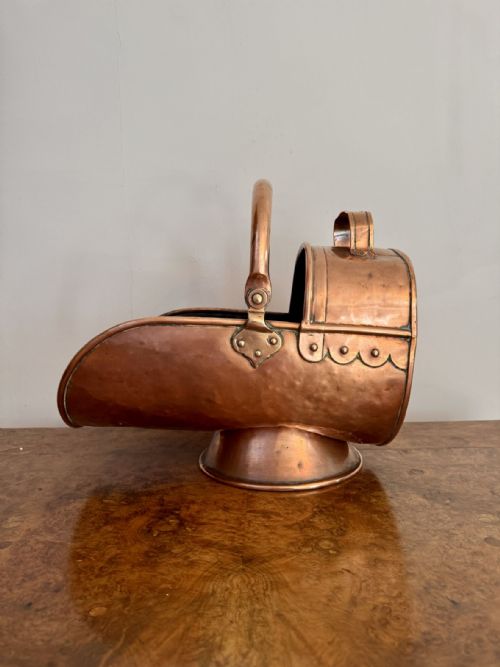
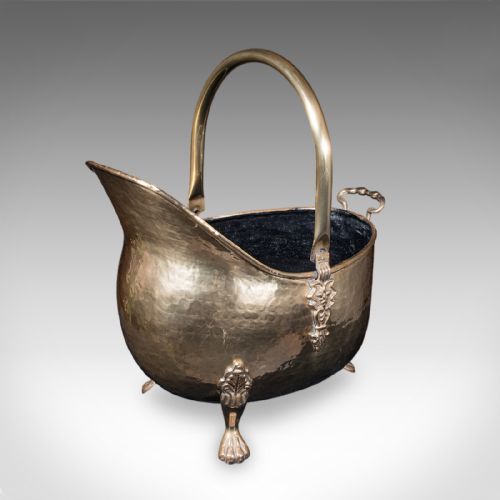
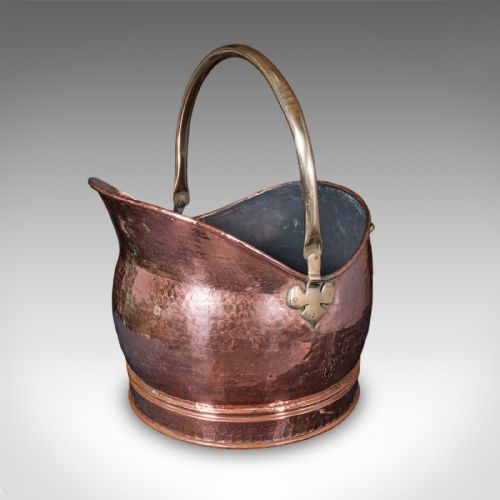
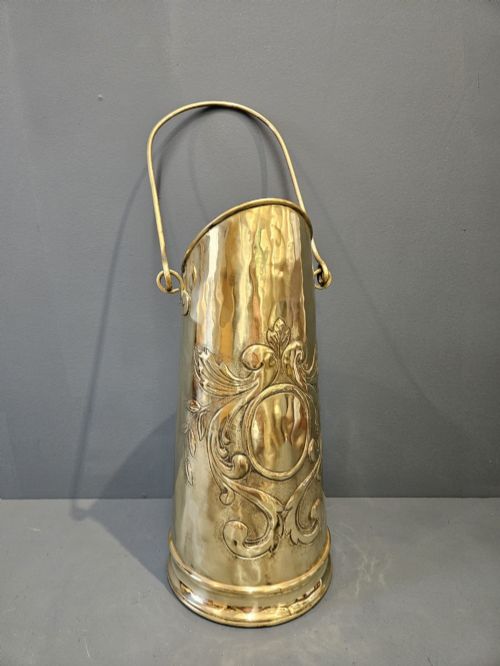
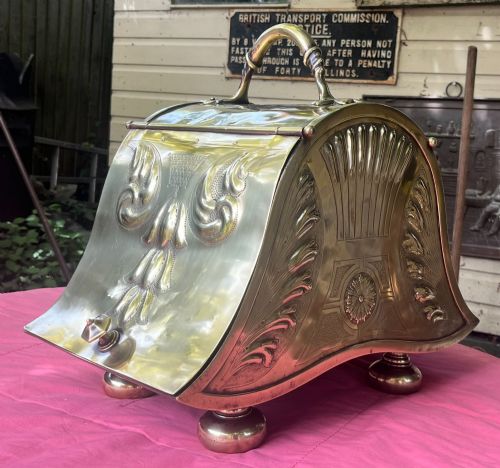
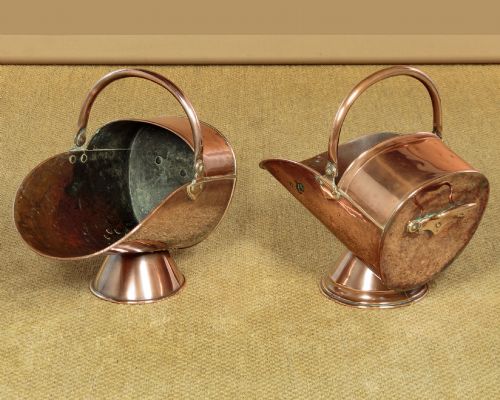
A brass fireplace coal hod is a practical fireside container designed to hold solid fuel close to the hearth. These pieces appear in forms such as coal scuttles, buckets, helmets, bins, and purdoniums.
The selection ranges from George III and Regency examples to Victorian, Edwardian, Arts and Crafts, and Art Nouveau periods. Most pieces meet here as Victorian or George III copper and brass vessels.
Buyers encounter traditional helmet shapes alongside double-lidded buckets, wooden boxes with metal fittings, and lidded scuttles. Many include liners or original shovels.
Materials and construction
Makers utilised sheet brass and copper for the bodies of these vessels, frequently combining both metals on a single piece. Iron, steel, and silver plate appear in structural components and fixings.
Wood elements such as oak, mahogany, walnut, and general timber form bodies or handles, while metal liners protect the interiors from moisture and fuel dust.
Listings feature brass and copper alongside oak, walnut, and mahogany, spanning the George III, Regency, Victorian, Edwardian, and Art Nouveau eras.
Judging quality and finish
Quality shows in the weight of the metal and the precision of the hand-finishing on seams, handles, and fixings. Better examples retain original brass shovels, liners, and matching lids.
Stylistic detail distinguishes standard utilitarian vessels from refined pieces featuring Art Nouveau or Arts and Crafts ornamentation, dovetailed joints, and robust handles.
Benham and Froud
The Brass Fireplace Coal Hod Glossary
- Coal scuttle
- A container designed for carrying and storing domestic coal near a fireplace. These often feature a sloping body and a hinged handle for tipping fuel.
- Coal helmet
- A specific scuttle shape featuring a flared rim and high back that resembles a traditional helmet. This form became popular during the George III and Victorian periods.
- Purdonium
- A domestic cabinet or box specifically built to store coal indoors. They typically incorporate a hinged front flap and an internal metal liner.
- Liner
- The removable inner bucket, usually made of metal, that sits inside a wooden or metal outer hod to contain coal dust and debris.
- Helmet shaped
- A descriptive term for vessels featuring an expanded top edge that funnels coal outwards when poured onto the fire.
Brass Fireplace Coal Hod: Frequently Asked Questions
How were coal hods used?
These vessels served to carry solid fuel from an outdoor store to the indoor fireplace. They sat by the hearth so the household could replenish the fire without constant trips outside.
The inclusion of shovels and removable liners made transferring coal and cleaning out ash straightforward.
How do I date a brass coal hod?
Dating relies on stylistic markers, construction methods, and materials associated with periods like George III, Regency, and Victorian. Georgian and Regency pieces often show hand-hammered details, while Victorian and Edwardian examples utilise machine rolling and specific decorative motifs.
Art Nouveau and Arts and Crafts pieces display characteristic linear or organic ornamentation unique to the late nineteenth and early twentieth centuries.
What materials are used in these pieces?
The primary materials are brass and copper, often paired together on the same vessel for contrast. Iron and steel provide internal structure and fixings.
Some examples incorporate woods such as oak, walnut, and mahogany, particularly in purdoniums and box-style hods.
Do coal hods come with accessories?
Certain examples include their original brass shovels designed to scoop fuel from the container into the grate. Removable metal liners are also found inside many scuttles and buckets.
These surviving accessories complete the functional set for fireside use.