



Brass Decorative Tray
A brass decorative tray brings metallic warmth and intricate surface work to a room, functioning equally well as a polished catchall or a wall-mounted charger.
Brass Decorative Tray
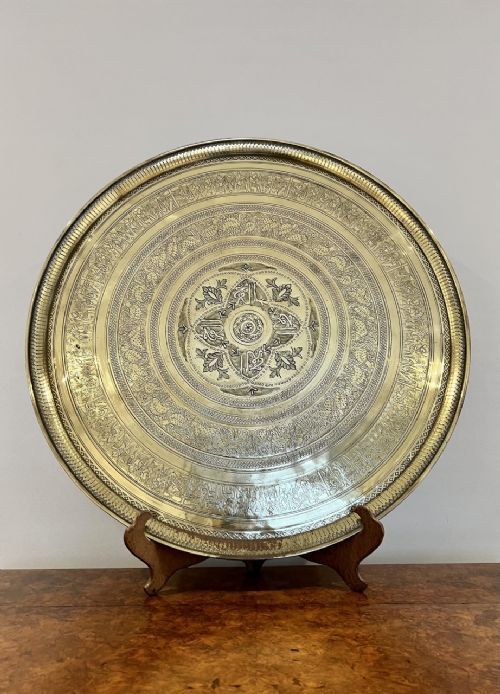
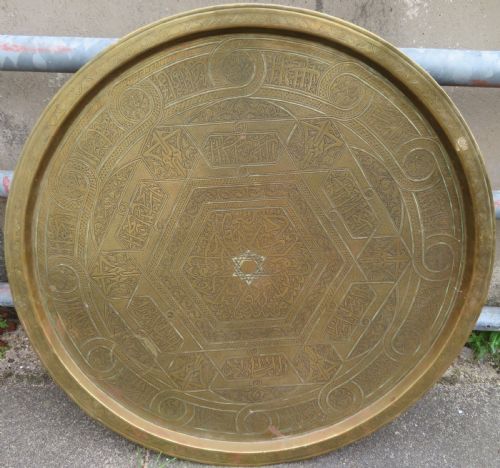
Buyers will most commonly encounter circular and oval brass trays featuring hand-engraved patterns, raised rims, or applied decorative elements. These range from heavy English domestic brassware to elaborate Middle Eastern and Anglo-Indian imports brought back during the height of global trade and travel.
The category extends beyond flat serving vessels into related decorative forms that utilise the same metalworking traditions. Alongside standard platters, collectors frequently find specialised desk trays, chambersticks, and occasional display pieces sharing period aesthetics from the late nineteenth century.
How they were made
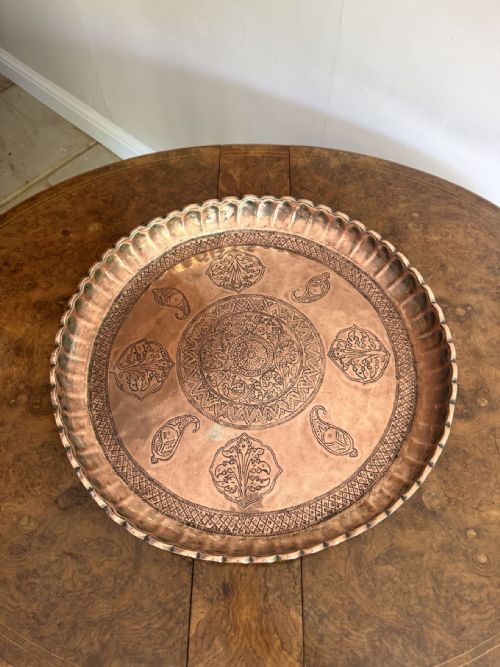
Makers utilised sheet brass, copper, and bronze as the primary structural bases, often combining metals to create contrasting surface tones and visual depth. Hammering, casting, and hand-piercing formed the core fabrication techniques, allowing artisans to shape heavy metal sheets into rigid trays and deep chargers.
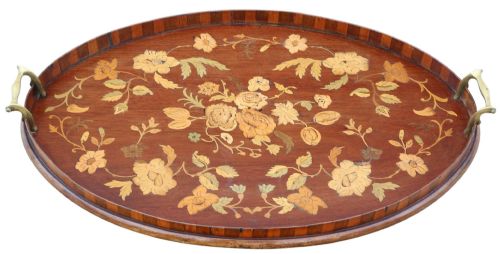
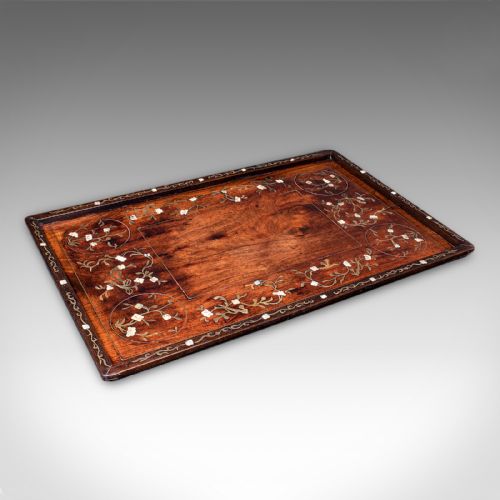
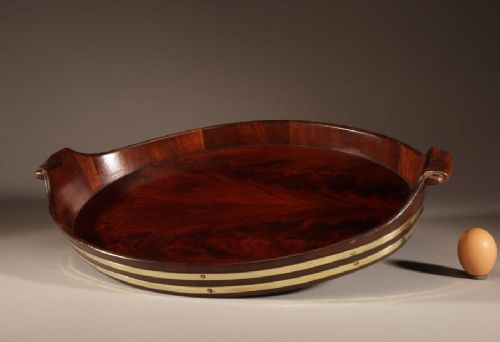
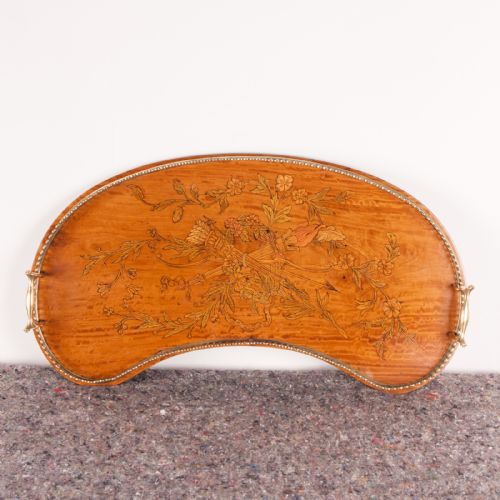
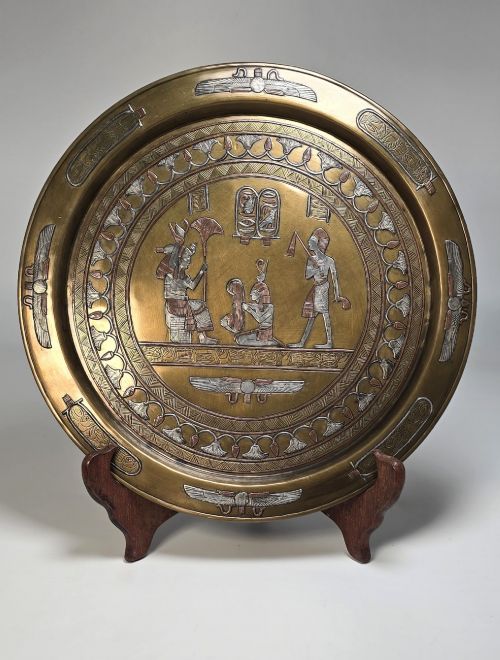
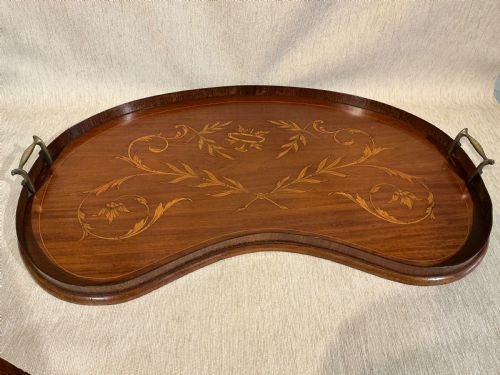
Surface enrichment relied heavily on detailed engraving, chasing, and metal inlay work such as silver and copper detailing seen in Cairo Ware and Persian pieces. Some examples incorporate contrasting organic elements like mahogany, satinwood, coromandel, glass, enamel, and agate mounts to frame the central metalwork.
The listings span multiple centuries, incorporating brass, copper, bronze, and exotic hardwoods alongside specialised Japanese cloisonne and Middle Eastern inlay techniques.
What varies in quality
Quality rests upon the depth, precision, and clarity of the hand-engraving or piercing across the metal surface. Superior examples display crisp, purposeful chisel work and well-balanced geometric or figurative motifs, whereas lesser pieces exhibit shallow, hasty stamping that lacks definition.
The choice of materials and construction methods further distinguishes the tier of a piece. Trays that combine mixed metals, secure riveted or dovetailed joints, and genuine inlaid secondary woods stand apart from mass-produced utilitarian stampings of the later period.
The Brass Decorative Tray Glossary
- Charger
- A large decorative plate or tray intended primarily for display rather than active service at the table. These substantial pieces frequently hang on walls or sit upon dedicated stands.
- Cairo Ware
- Nineteenth-century metalware originating from Egypt, typically constructed from brass or bronze and heavily inlaid with contrasting silver and copper geometric calligraphic designs.
- Chasing
- A metalsmithing technique where designs are hammered into the front surface of the metal using punches to displace material rather than cut it away.
- Alms dish
- A shallow, traditionally ecclesiastical basin used for collecting donations, often featuring deeply embossed central religious or heraldic motifs.
- Cloisonne
- An ancient decorative art technique where enamel paste is applied within compartments created by soldering flat metal wire to a metal base.
Brass Decorative Tray: Frequently Asked Questions
How were antique brass decorative trays used?
These metal trays served both functional and decorative roles in nineteenth-century interiors, acting as calling-card receivers in hallways, dressing-table organisers, or tea-serving surfaces in formal reception rooms.
Larger chargers and pierced platters were frequently hung on walls or displayed on specialised folding stands to showcase intricate regional metalworking techniques to visiting guests.
How do I clean and polish an antique brass tray?
Maintenance requires minimal intervention to preserve the historic patina and darker recessed areas that highlight the engraved details. Gentle dusting with a soft, dry cloth is usually sufficient for regular upkeep.
Harsh chemical dips and aggressive metal polishes should be strictly avoided because they strip away the age-acquired oxidation and can permanently damage delicate silver or copper inlay work.
Are these trays suitable for serving food?
Most antique brass and mixed-metal trays are intended purely for decorative display or dry accessory storage rather than culinary use. Many older brass alloys and applied patinas are unsuited for direct contact with wet or acidic foods.
If utilised during modern entertaining, they function best as stable bases for carrying bottled drinks, glassware, or decorative objects rather than unwrapped provisions.
How can I tell the difference between English and Middle Eastern pieces?
English domestic brassware from the Victorian and Edwardian eras tends to feature clean geometric borders, heraldic motifs, or heavy cast construction with simple turned feet and handles. These pieces often align with arts and crafts or industrial production standards of the time.
Middle Eastern, Persian, and Cairo Ware items are instantly identifiable by dense, all-over Islamic calligraphy, intricate floral scrollwork, and contrasting silver or copper wire inlays hammered directly into the dark patinated brass base.