





Brass Clock Under Glass
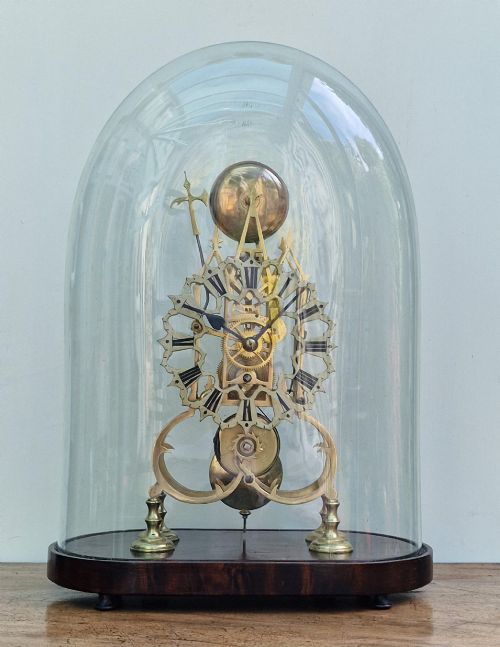
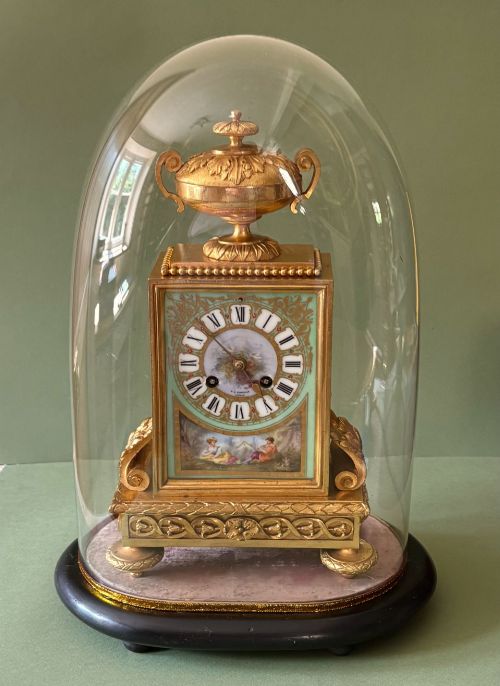
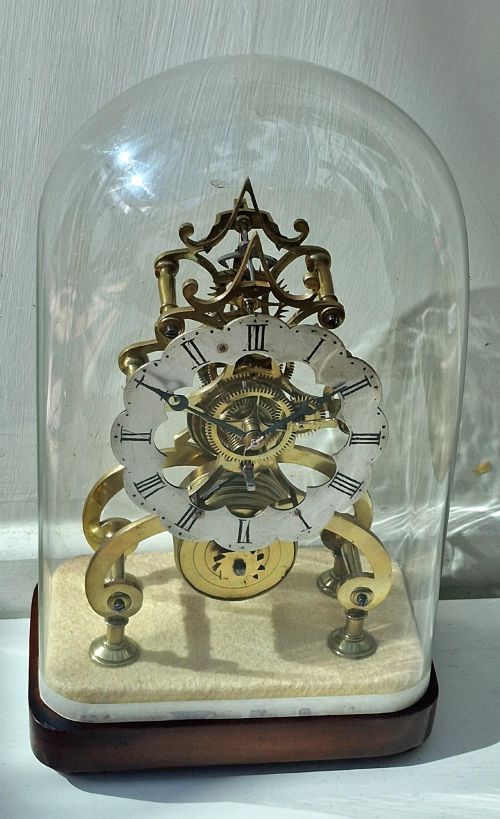
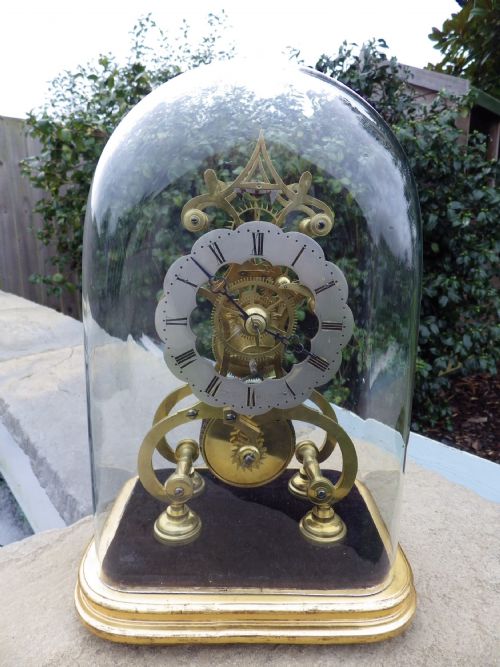
These brass clock under glass assemblies combine delicate exposed skeleton movements or ornate mantel pieces protected by clear covers, offering both timekeeping and visual intrigue.
Brass Clock Under Glass
Makers often pair polished brass with wood, ormolu, porcelain, and ebonised bases to highlight the mechanical complexity within. You will find miniature English Gothic designs alongside grand French portico and ormolu pieces.
Most examples rely on fusee movements or passing strikes, preserved under hand-blown glass. These configurations protect delicate brass wheels and steel arbours from dust while putting the mechanics on permanent display.
How they were made
Makers constructed these timepieces using heavy cast brass and ormolu mounts, frequently housing them above mahogany or ebonised wooden bases. The protective covers consist of hand-blown glass domes that fit flush over the clock body.
Movements incorporate intricate steel wheel work, such as six-spoke designs, driven by fusee or bell-striking mechanisms. Porcelains, carved alabaster, and Sevres-style panels often decorate the frames of French and Italian variants.
Brass Clock Under Glass Retail Price Guide 2026
Typical asking prices for brass clock under glass among the pieces listed under this phrase on Sellingantiques today, from the lower quarter to the upper quarter. They describe what is for sale here now, not the wider market.
Listings feature periods from the 1850s to the 1950s, utilising brass, glass, mahogany, ormolu, and carved alabaster.
What varies in quality
The sophistication of the wheel work separates basic timepieces from exceptional skeleton clocks, particularly the complexity of the brass framing and the presence of double fusee mechanisms. Original hand-blown glass domes add significantly to the integrity of the piece compared to later replacements.
The artistry of the surrounding materials dictates the upper tier of the range, seen in fine ormolu mounts, hand-painted porcelain panels, and carved alabaster stands. Finer English and French examples demonstrate superior finishing on every exposed brass tooth and steel pinion.
The Brass Clock Under Glass Glossary
- Fusee
- A conical pulley used with a cord or chain to maintain equal power as the mainspring unwinds. This mechanism ensures more accurate timekeeping throughout the duration of the wind.
- Skeleton clock
- A timepiece designed with an open brass frame that exposes the gear train and escapement to view. These designs allow light to pass right through the mechanism.
- Ormolu
- Gilded bronze ornamentation applied to the brass and wooden bases of nineteenth-century mantel clocks. The technique involves fusing a gold-mercury amalgam to a bronze base.
- Passing strike
- A clock mechanism that strikes a single bell on the hour or half-hour without counting the exact time. It provides an audible chime to mark the passage of time.
- Portico clock
- A monumental clock style shaped like a classical building with pillars supporting the movement. These architectural pieces often sit beneath tall glass domes.
Brass Clock Under Glass: Frequently Asked Questions
What is a fusee movement?
A fusee movement uses a conical pulley connected to a chain or cord to regulate the power delivered from the mainspring. This ingenious device compensates for the dropping tension as the spring unwinds.
In practice, it helps the clock maintain a consistent rate throughout its running cycle, marking high craftsmanship in nineteenth-century timepieces.
Why do these clocks have glass domes?
Glass domes protected delicate brass mechanisms and exposed gear trains from household dust, smoke, and oxidation. They were hand-blown to fit securely over the wooden or brass base.
Keeping the movement sealed reduced the need for frequent cleaning and preserved the polished finish of the brass and ormolu components.
How do I tell English and French clocks apart?
English makers frequently produced minimalist fusee skeleton clocks with precise six-spoke wheel work and understated wooden plinths. French workshops tended toward ornate ormolu mounts, portico architectures, and decorative porcelain panels.
French models also frequently incorporated bell-striking movements or Sevres-style ornamentation directly into the mantel design.
How do I safely display a glass dome clock?
Place the clock on a stable, level surface away from direct sunlight and heavy vibrations that could disturb the delicate pendulum or balance wheel. Ensure the wooden base supports the weight evenly before lowering the glass cover into place.
Handle the hand-blown dome with both hands by the lower edges, and lift it straight up rather than sliding it across the base.