



Brass Clock Marble Base
A brass clock marble base combines heavy stone and warm metal to anchor a room.
Brass Clock Marble Base
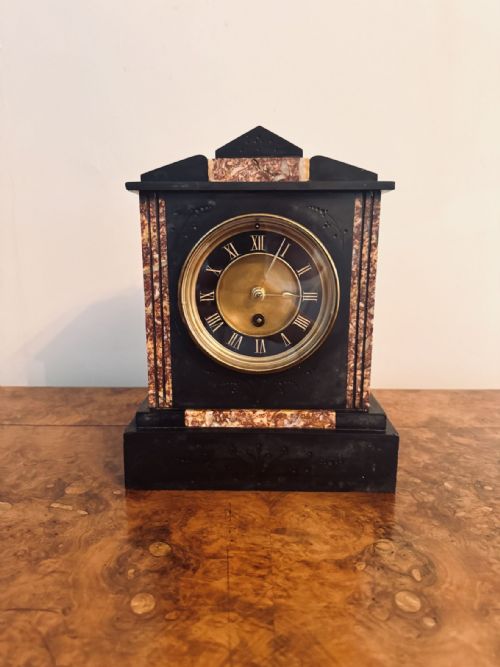
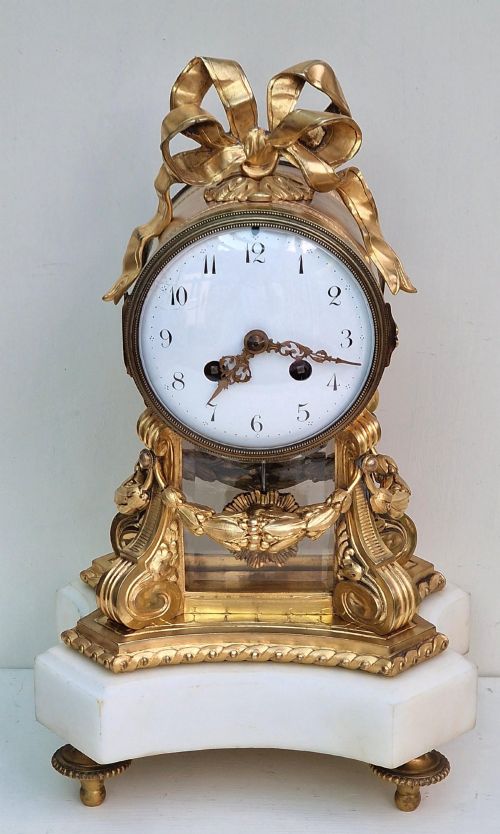
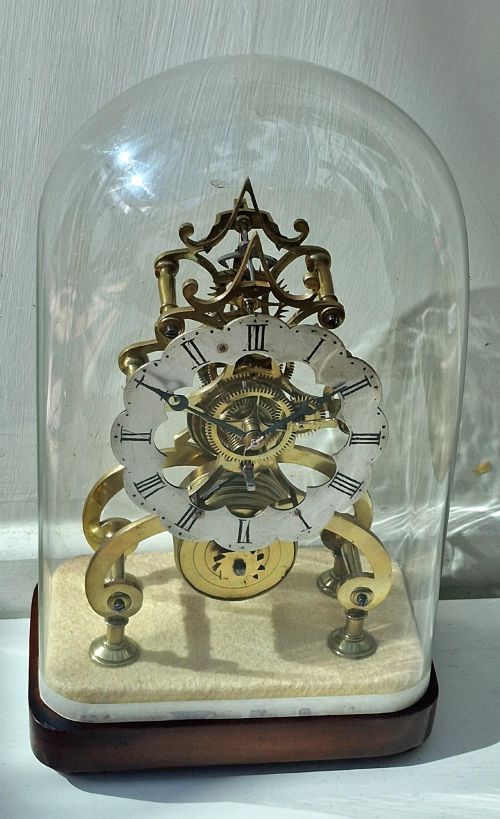
A brass clock marble base is a timekeeper set into stone, appearing frequently in Victorian, Regency, and Louis XVI styles on this page. These pieces range from monumental mantel clocks and desk clocks to intricate skeleton clocks under glass domes.
Makers such as Thwaites of London, William Hardy London, and E White of Manchester appear alongside French ormolu designs. Buyers frequently encounter white marble bases supporting gilt bronze, brass, and enamel dials.
Forms span from nautical industrial series pieces to grand architectural fusee clocks. Each object balances the cool weight of stone against polished metalwork.
How they were made
Clockmakers cast heavy marble for the foundational bases and shaped brass and ormolu for the movements and decorative mounts. Enamel provided durable, legible faces for the Roman or Arabic numerals.
Gilt bronze and gilt brass coatings added rich surface shine to the underlying metal structures. Glass domes often protected delicate skeleton movements from dust and damage.
Brass Clock Marble Base Retail Price Guide 2026
Typical asking prices for brass clock marble base among the pieces listed under this phrase on Sellingantiques today, from the lower quarter to the upper quarter. They describe what is for sale here now, not the wider market.
Several pieces include delicate cherubs keeping watch over the ticking gears.
What varies in quality
Quality rests in the crispness of the brass casting and the refinement of the marble cutting. Finer examples display meticulous engraving on the movement plates and substantial, unblemished stone plinths.
Signed London or provincial makers distinguish standard production from superior workshop output. The complexity of the fusee movement and the presence of original gilding elevate the piece significantly.
Thwaites of London·William Hardy London·E White Of Manchester·Henry Berkeley Square London·Allen Colyer·Payne of London
The Brass Clock Marble Base Glossary
- Skeleton clock
- A clock with an open framework that exposes the gear train and movement to view. These are often protected by glass domes.
- Fusee
- A conical pulley used in spring-driven clocks to maintain even power as the mainspring unwinds. This mechanism improves timekeeping accuracy.
- Ormolu
- Finely ground high-carat gold applied to a bronze or brass object using a mercury-gilding technique. It creates a rich, matte yellow finish.
- Mantel clock
- A portable clock designed to sit on the shelf above a fireplace. They frequently feature heavy stone or metal cases.
Brass Clock Marble Base: Frequently Asked Questions
How do I wind a fusee clock?
Use the appropriate key to turn the winding square slowly until resistance increases. Avoid over-winding to protect the delicate internal mechanism.
Ensure you turn the key in the correct direction specified for that particular maker's movement.
Where should I place a marble base clock?
Position the clock on a sturdy, level surface away from direct sunlight and dampness. Heavy marble bases require stable furniture to support their substantial weight safely.
Keep them clear of busy hallways where vibrations might disturb the pendulum or escapement.
What is a skeleton clock movement?
A skeleton clock exposes the wheels, gears, and escapement between two brass plates rather than hiding them behind a solid dial. This design showcases the intricate mechanical artistry of the maker.
Many of these open movements require a glass cover to keep dust away from the oiled pivots.
How do I identify a Regency period clock?
Regency clocks typically feature restrained classical proportions inspired by ancient Greek and Roman forms. They often incorporate dark woods, ormolu mounts, and clean architectural lines.
Maker signatures on the dial or movement backplate help confirm this early nineteenth-century origin.