


Brass Charger Platter
A brass charger platter brings heavy metalwork and intricate surface decoration to a wall or table.
Brass Charger Platter
A brass charger platter is a broad circular dish or tray intended primarily for display rather than service at table. When looking for a brass charger platter, the choice spans plain and patterned metal alongside mixed metal compositions from various centuries.
The selections on this page draw from periods ranging from the sixteenth century through the twentieth century, with nineteenth-century pieces appearing frequently. Forms include wall plaques, alms dishes, and decorative trays displaying motifs from multiple design traditions.
Origins represented in the current selection reach across Britain, Europe, the Middle East, and Japan. Makers and workshops worked in brass, copper, bronze, and silver inlay to produce items designed to catch the eye in a hallway or principal room.
How they were made
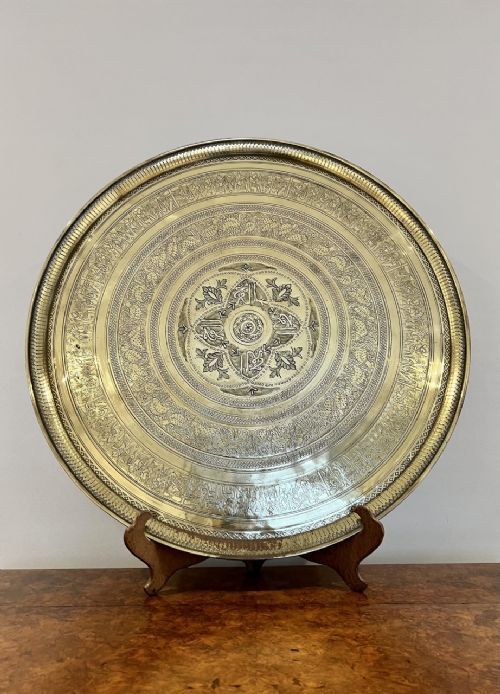
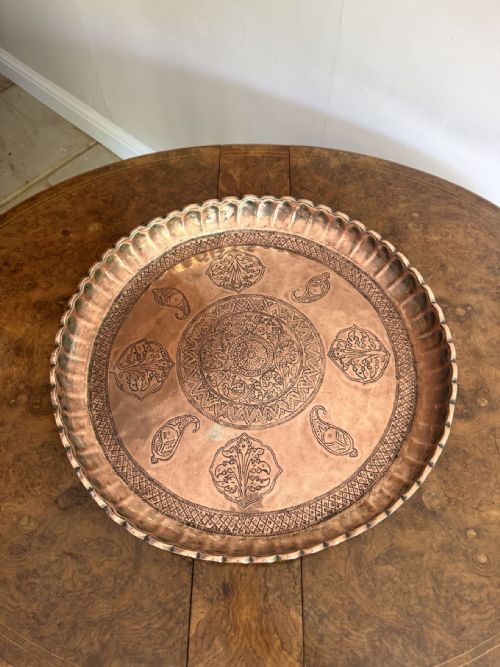
Metals such as brass, copper, and bronze form the physical body of these items, often shaped by hammering and repoussé work to raise patterns from the reverse. Engraving and chasing then define details on the surface, cutting crisp lines into the metal.
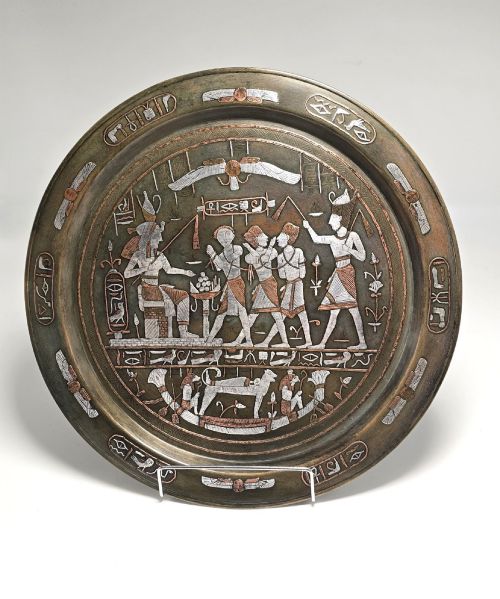
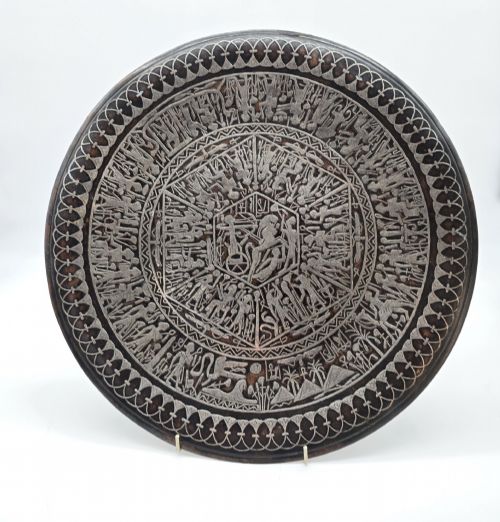
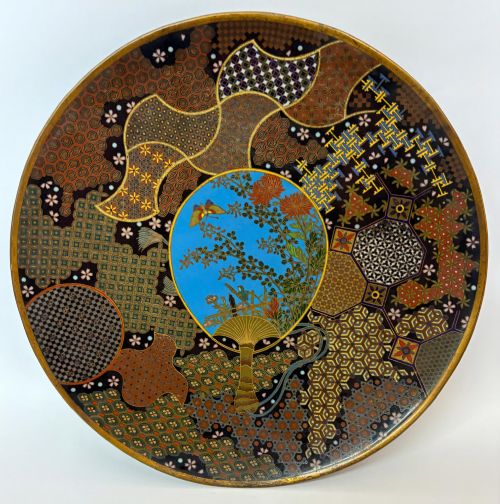
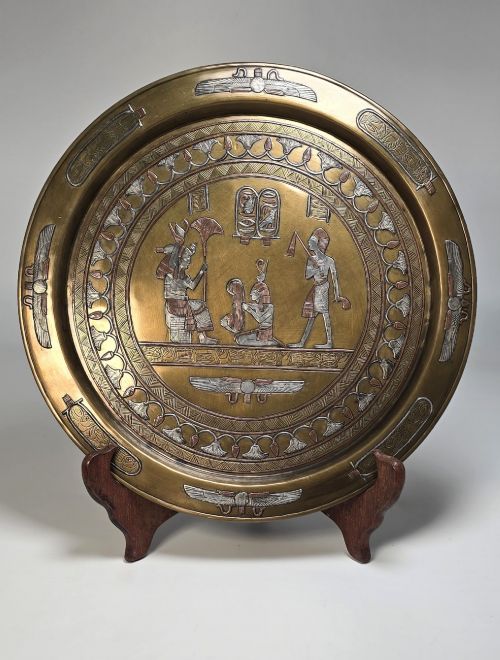
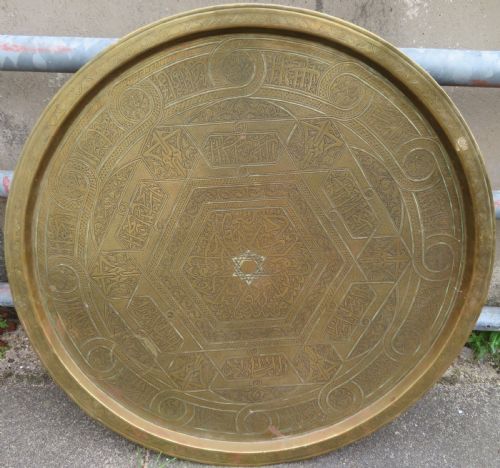
Silver and copper inlay provides contrast on Middle Eastern and Cairo Ware vessels, while Japanese examples utilise cloisonne enamel with wire cells to hold coloured pastes. Mixed metal constructions combine distinct alloys within a single composition.
Current listings feature items in brass, copper, bronze, and silver inlay spanning the nineteenth and early twentieth centuries.
What varies in quality
The depth and clarity of the hammer work and engraving set the standard for these metal objects, separating mechanical repetition from skilful hand execution. Sharp relief in repoussé and precise placement of inlaid wires show the maker's control over the medium.
Integration of design elements across the surface determines the visual balance of a piece, whether depicting animals, coats of arms, or geometric motifs. Condition of the original patina and any enamel work also influence the character of the object.
The Brass Charger Platter Glossary
- Alms dish
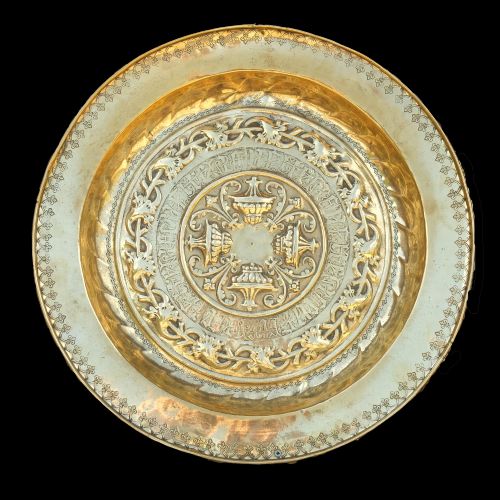
- A shallow metal bowl traditionally used in churches to collect offerings. Many surviving examples date from the sixteenth and seventeenth centuries and carry embossed religious or heraldic designs.
- Cairo Ware
- Metalwork produced in Egypt during the late nineteenth and early twentieth centuries, typically constructed from brass or bronze with heavy silver and copper inlay. These pieces catered to European travellers on the Grand Tour.
- Cloisonne
- A technique where thin metal wires are soldered to a metal base to create compartments, which are then filled with enamel paste and fired. Japanese examples from the Meiji period frequently employ this method on large plates.
- Repoussé
- A metalworking method where the artisan hammers a design from the reverse side to form a raised relief on the front. Finishing details are subsequently added from the front using chasing tools.
- Latten
- A durable yellow metal alloy similar to brass, widely used in medieval and early modern Europe for domestic vessels and church plate.
Brass Charger Platter: Frequently Asked Questions
How were brass charger platters used originally?
These large dishes served primarily as decorative wall plaques or display pieces on sideboards rather than dining tableware. Alms dishes had a specific ecclesiastical function for collecting charitable donations in churches.
Secular examples displayed wealth, travelled tastes, or familial coats of arms in domestic interiors. Their broad rims provided an ideal canvas for elaborate narrative scenes and decorative borders.
How do I hang a wall charger safely?
Displaying a heavy metal platter on a wall requires a specialist spring-loaded brass hanger that grips the rim securely without damaging the metal. Ensure the fixing enters solid masonry or locates directly into a wall stud.
Avoid thin picture wire threaded through a single soldered loop on the reverse, as the weight of nineteenth-century brass or bronze can cause sudden failure. Check the stability of the rim before committing the piece to vertical display.
What is Cairo Ware?
Cairo Ware describes nineteenth and early twentieth-century metalwork manufactured in Egypt for the Western export and Grand Tour market. Artisans inlaid brass, bronze, and copper vessels with intricate silver and copper calligraphy and geometric patterns.
These pieces reflect the Victorian and Edwardian fascination with Islamic design. They range in form from large chargers to vases and bowls.