
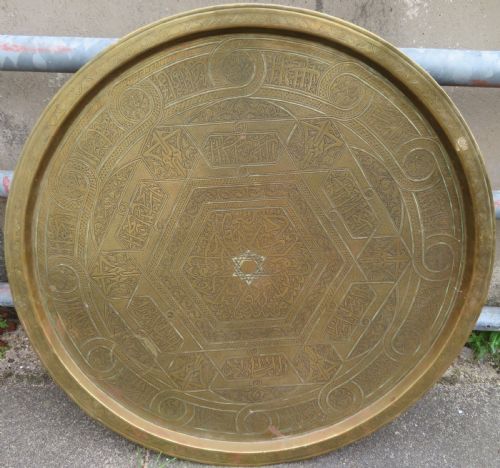


Middle Eastern Brass Tray
A middle eastern brass tray brings centuries of intricate engraving and rich metallic warmth directly into a modern interior.
Middle Eastern Brass Tray
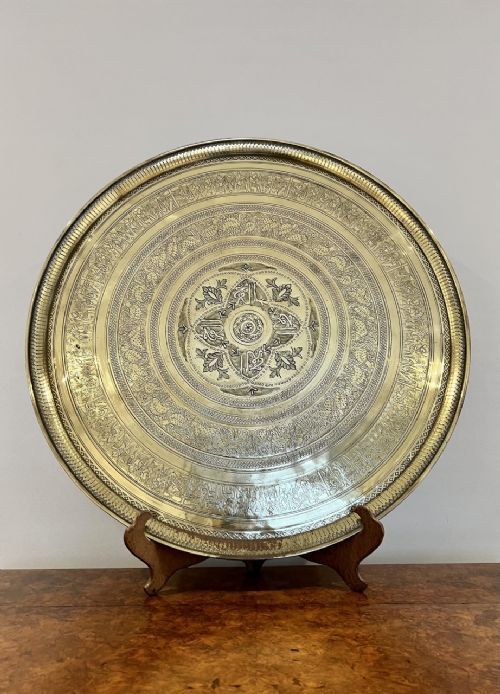
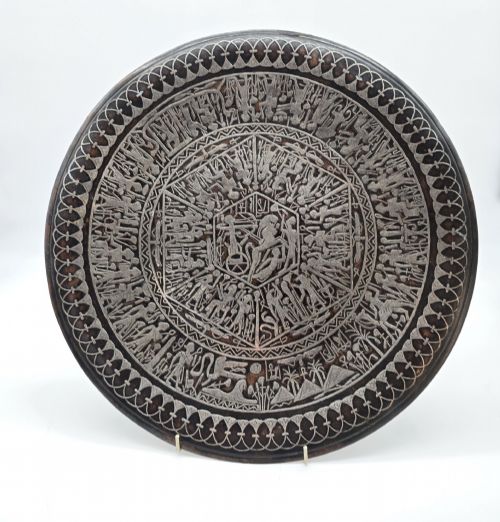
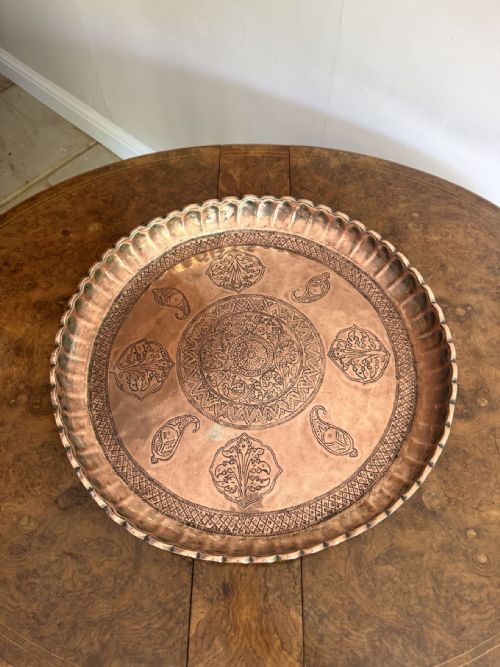
A middle eastern brass tray takes several distinct shapes, appearing primarily as large decorative chargers, wall plates, and removable tops designed to sit upon folding wooden stands.
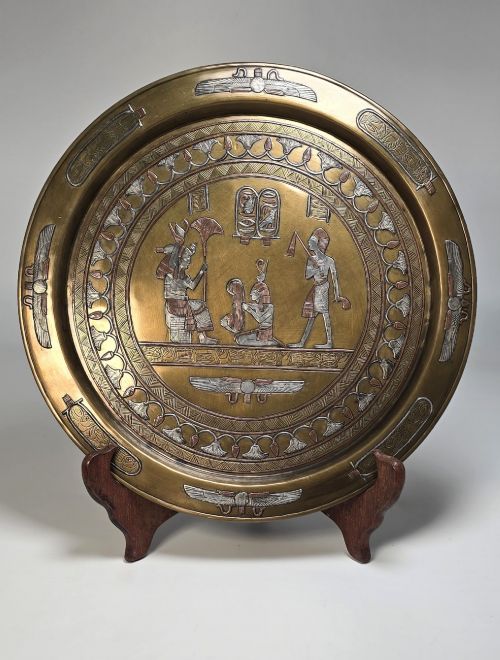
The pieces on this page span the late nineteenth and early twentieth centuries, drawing upon regional traditions that include Persian, Egyptian Cairo Ware, and Mamluk Revival styles.
Many examples function simultaneously as wall display items and as low coffee tables when paired with their original or associated collapsible bases.
Materials and construction
Makers shaped heavy sheets of brass, copper, and bronze, often applying a patinated finish to deepen the tone of the metalwork.
Decoration relies heavily on hand engraving alongside contrasting inlay work in silver and copper to articulate complex geometric and figurative motifs.
Current listings feature materials spanning brass, patinated copper, and mixed metal alongside wood folding stands.
Distinctions in quality
The distinction between standard production and exceptional work rests upon the depth, precision, and density of the hand engraving across the surface.
Advanced pieces utilise mixed metal inlays, combining silver and copper wire to create intricate calligraphy or detailed zodiac imagery within the design.
The Middle Eastern Brass Tray Glossary
- Cairo Ware
- Metalware produced in Egypt during the late nineteenth and early twentieth centuries, often featuring dense silver and copper inlay.
- Charger
- A large ornamental plate or tray intended primarily for display on a wall or sideboard rather than for service.
- Mamluk Revival
- A nineteenth-century design movement emulating the opulent inlaid brasswork of the medieval Mamluk Sultanate.
- Patinated copper
- Metal that has developed a controlled surface darkening and aged tone through chemical treatment or natural oxidation.
Middle Eastern Brass Tray: Frequently Asked Questions
How do I clean a middle eastern brass tray?
Maintenance requires only a soft, dry cloth to remove dust and preserve the existing patina on the metal surface.
Abrasive polishes and chemical cleaners should be avoided because they strip away the dark recessed details that define the engraved design.
Can these trays be used as coffee tables?
Many examples are designed specifically as removable trays that rest securely upon collapsible wooden folding stands.
Using them in this way provides a practical surface for living rooms while maintaining the ability to store the base flat when necessary.
Are these pieces purely decorative or functional?
The heavier chargers and wall plates are built primarily for visual impact, featuring complex imagery and hanging loops or flat backs.
Other formats served practical roles in hospitality, functioning as serving vessels or portable table tops for tea service.
How do I identify Cairo Ware?
Cairo Ware typically dates from the late nineteenth or early twentieth century and originates from workshops operating in Egypt.
These pieces are easily recognised by their distinctive use of contrasting silver and copper metal inlays set into dark brass or bronze.