
Brass Centre Table
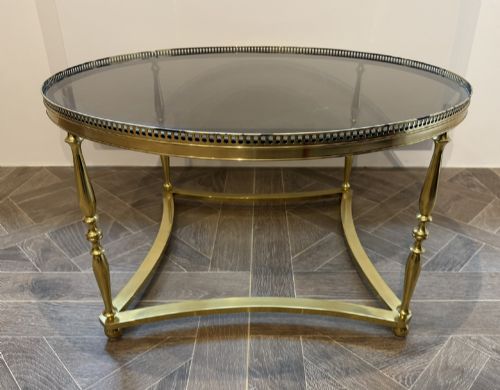
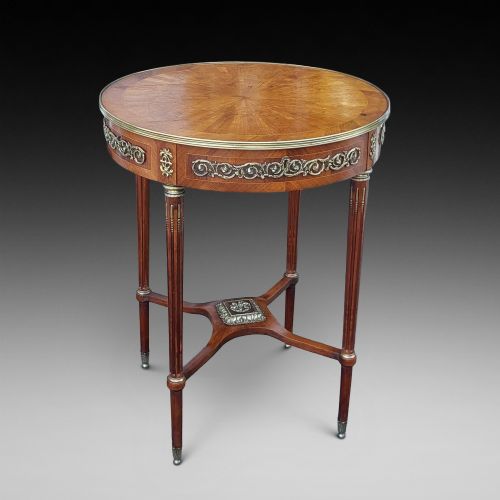
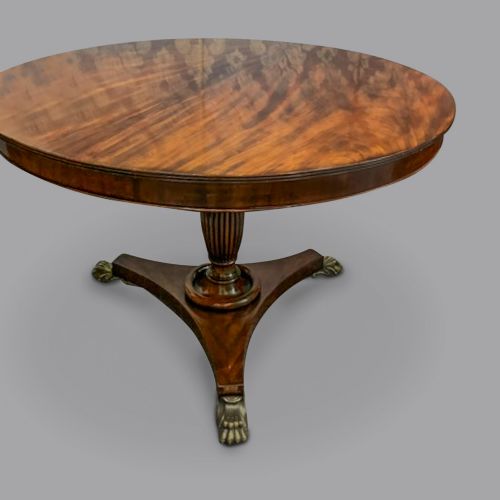
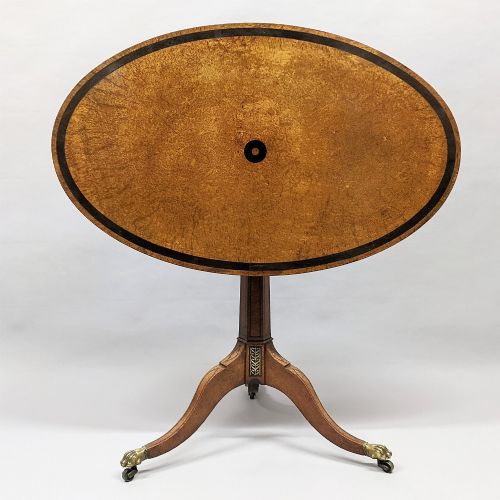
A brass centre table sits freely in a room, combining rich timber with polished metal mounts or inlaid brass lines.
Brass Centre Table
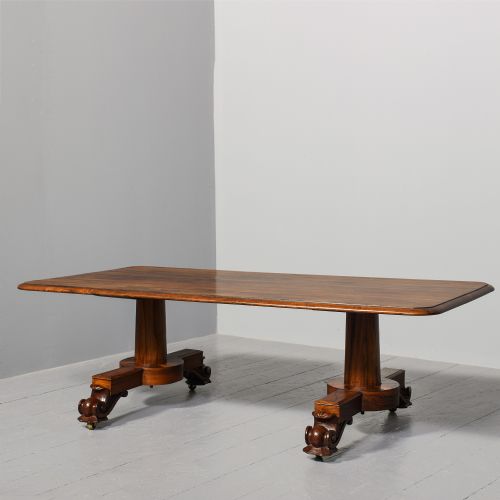
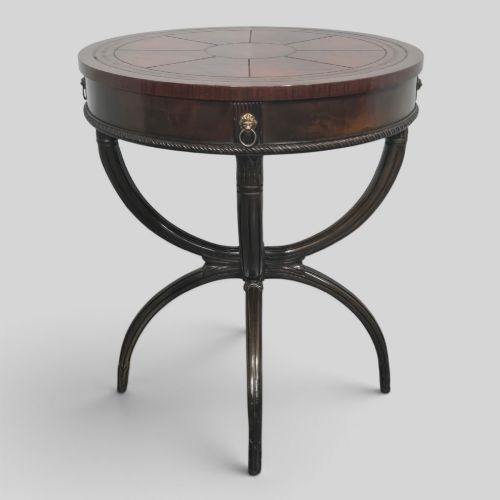
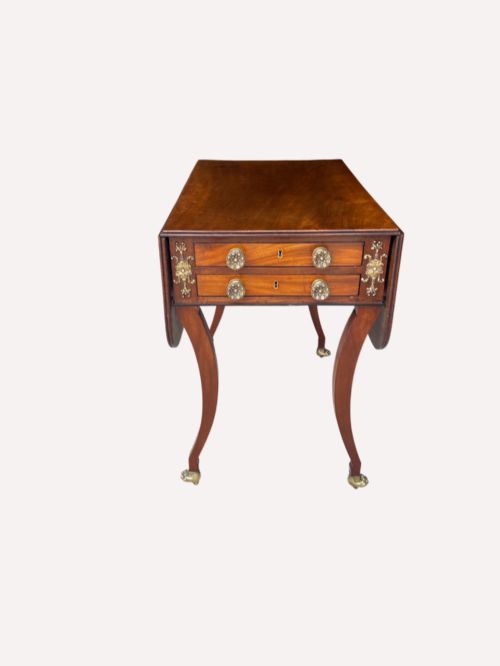
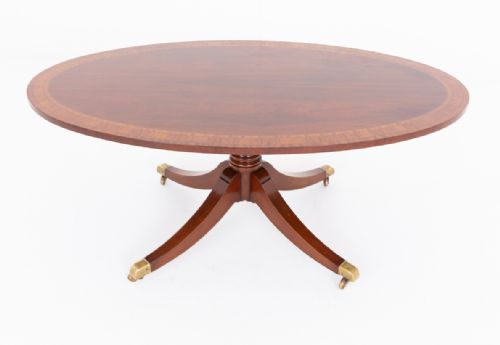
A brass centre table is designed to be viewed from all sides rather than pushed against a wall, frequently serving as a focal point in a reception room or grand hallway. The brass element appears either as delicate inlay set directly into the wooden top, or as structural mounts, galleries, and castors.
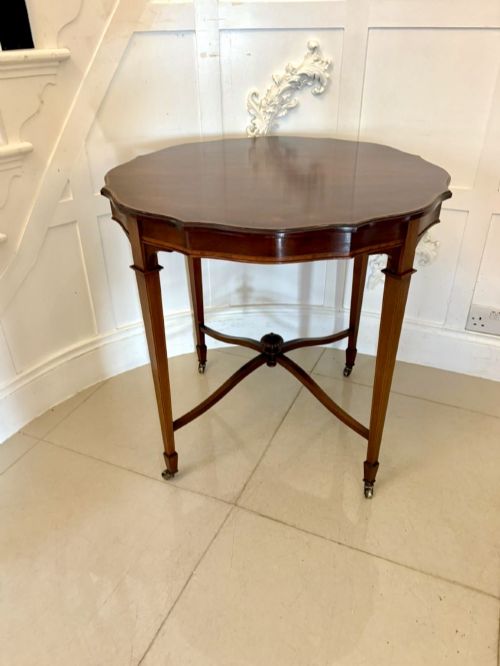
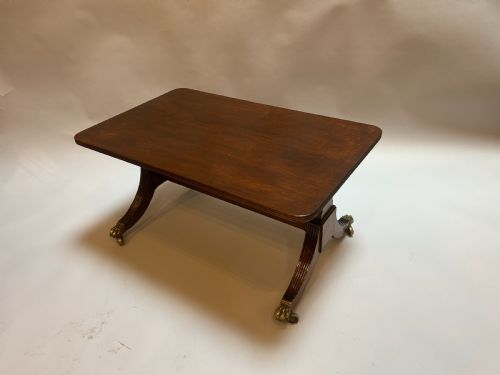
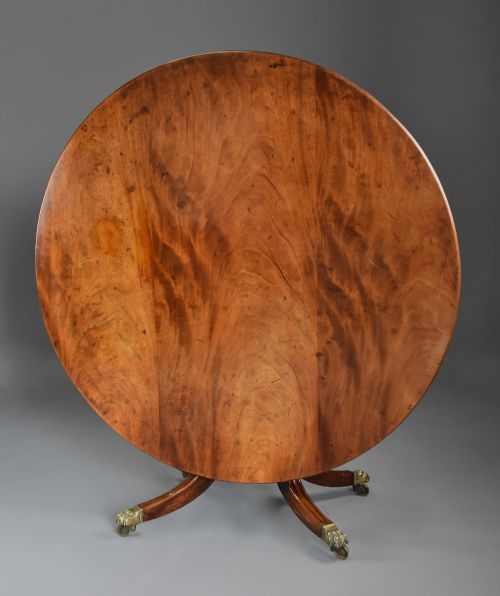
The pieces seen here span the eighteenth, nineteenth, and early twentieth centuries, with a strong representation of Regency and French Empire designs alongside later revivals. Common formats include circular breakfast tables, rectangular sofa tables, and smaller occasional or lamp tables.
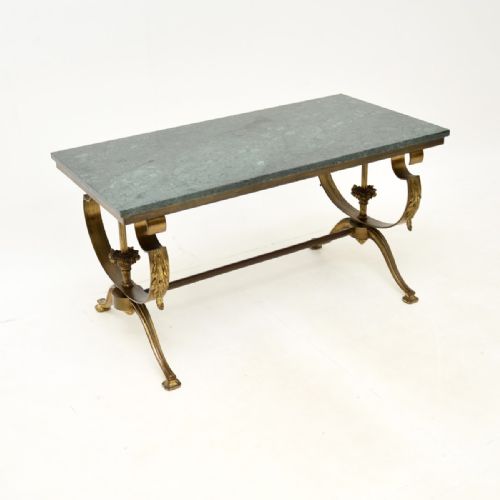
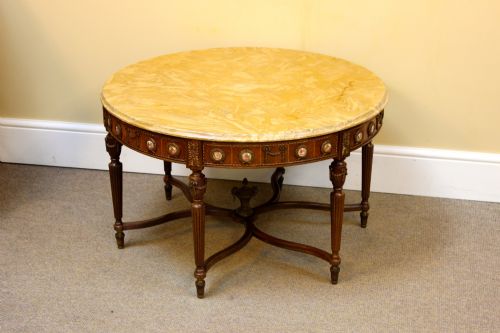
Makers often utilised secondary woods like mahogany and rosewood as a dark ground to contrast with bright brass stringing or ormolu mounts. Buyers will also encounter marble-topped variants, particularly among French tables designed with heavier classical detailing.
Materials and construction
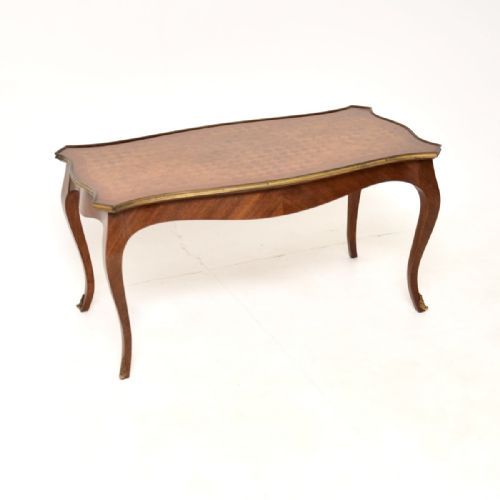
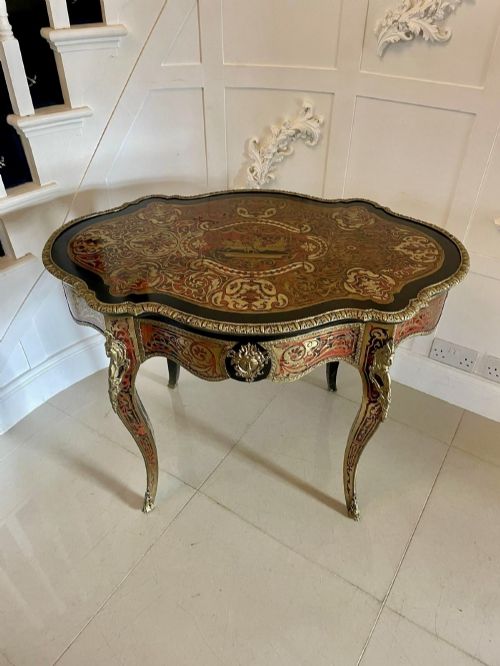
Cabinetmakers built these tables using dense hardwoods such as mahogany, rosewood, and kingwood, often laid as veneers over stable subframes to allow for elaborate parquetry and marquetry patterns. Brass was meticulously channelled into the timber surfaces as fine stringing, or cast and chased into sculptural mounts, gilt-bronze ormolu, and supportive gallery rims.
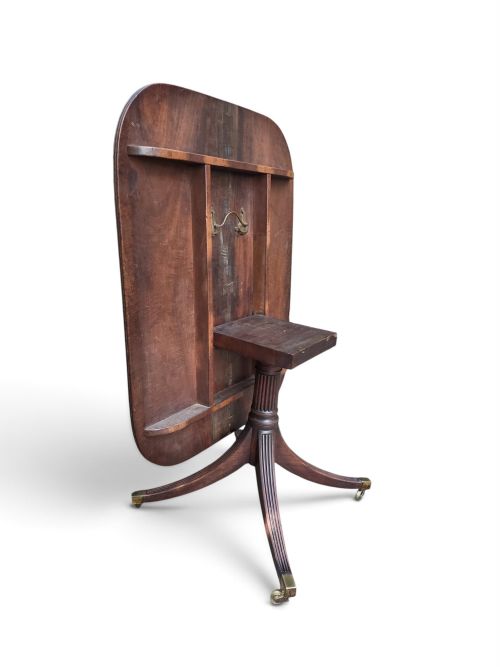
Many Regency and Victorian examples employ tilt-top mechanisms supported by central pedestals resting on tripartite or quadrupartite cabriole legs, frequently fitted with original brass castors. French gueridons and occasional tables often feature inset white or coloured marble tops secured within cast brass bezels.
Listings feature woods including rosewood, mahogany, kingwood, and ebonised wood alongside marble tops and cast brass mounts across several centuries.
Assessing quality and execution
The distinction between standard production and top-tier workshop output lies in the crispness of the brass inlay and the hand-chasing of the cast mounts. Superior pieces display seamless integration of metal into timber without visible gaps, alongside finely figured timbers chosen for natural depth and grain movement.
Structural integrity also separates the grades, visible in the stability of the central pedestal joinery and the survival of original brass hardware rather than later replacements. Tables attributed to prominent makers exhibit refined proportions and sophisticated secondary framing beneath the top.
Gillows of Lancaster·François Linke·Maison Millet
The Brass Centre Table Glossary
- Orsc
- Finely cast and gilded bronze mounts used extensively on French furniture to accent corners, legs, and aprons.
- Stringing
- Thin strips of contrasting wood or brass inlaid into channels cut into the surface of the table top or legs.
- Gueridon
- A small French round occasional table, typically supported by a central column or three legs, often featuring a marble top.
- Tilt-top
- A tabletop hinged to a central pillar so it can be tipped vertically against a wall when not in use.
- Marquetry
- Decorative patterns formed by the insertion of pieces of wood, ivory, or shell into a veneer-coated surface.
Brass Centre Table: Frequently Asked Questions
What is a centre table?
A centre table is a freestanding piece designed to occupy the middle of a room, finished with detail on all four sides rather than meant to stand against a wall.
Historically, these tables held lamps, books, or decorative objects in principal rooms, functioning both as useful surfaces and architectural focal points.
How do I spot a Regency table?
Regency tables typically date from the early nineteenth century and feature classical architectural motifs, dark mahogany or rosewood timbers, and precise brass inlay.
Look for robust central pedestals, sabre legs with brass castors, and restrained use of gilt-metal mounts influenced by ancient Greek and Roman design.
Are brass inlaid tables fragile?
Brass inlay sits flush with the surrounding wood, but extreme shifts in household humidity can cause the timber to expand or contract and occasionally lift the metal.
Routine care involves maintaining stable indoor temperatures and applying microcrystalline wax to protect both the wood finish and the exposed brass.
What distinguishes French tables?
French tables from the nineteenth century often incorporate ormolu mounts, rich kingwood or walnut veneers, and inset marble tops with cast brass galleries.
They tend to embrace fluid serpentine lines or neoclassical symmetry, contrasting with the heavier architectural forms found in many English designs.