
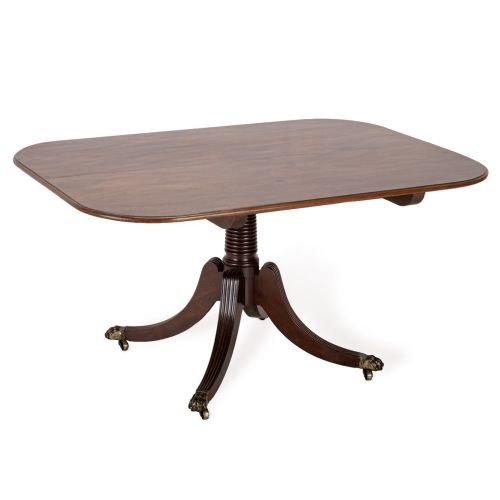
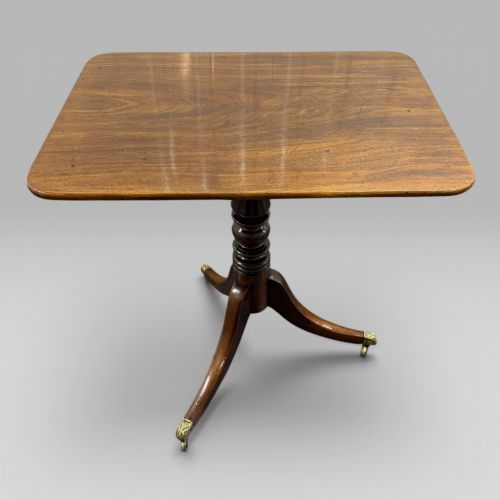


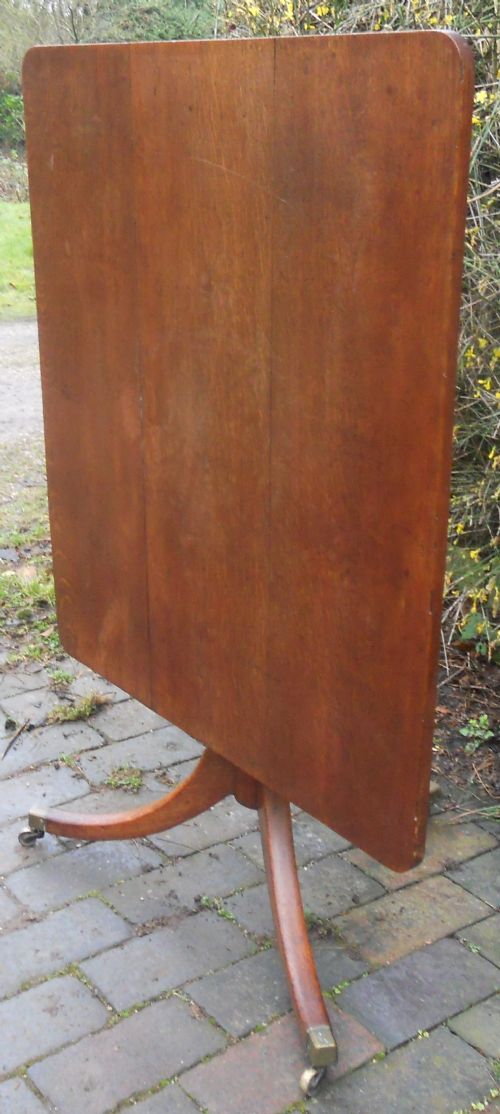
Brass Castor Tripod Table
These pieces of furniture bring together timber and metal with steady balance, offering a firm surface raised on three legs.
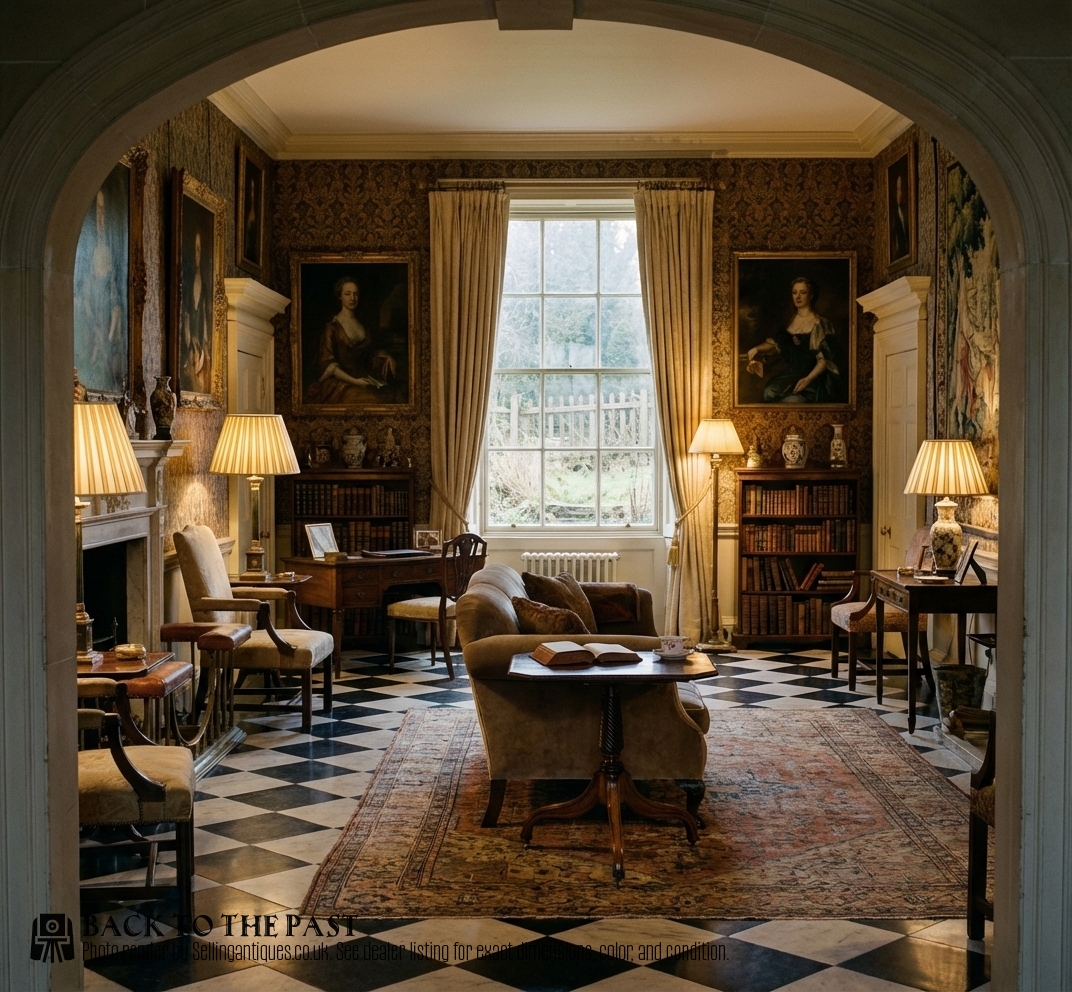
Brass Castor Tripod Table
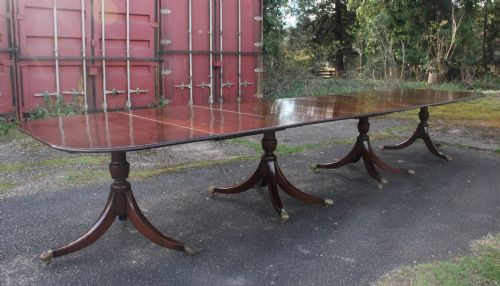
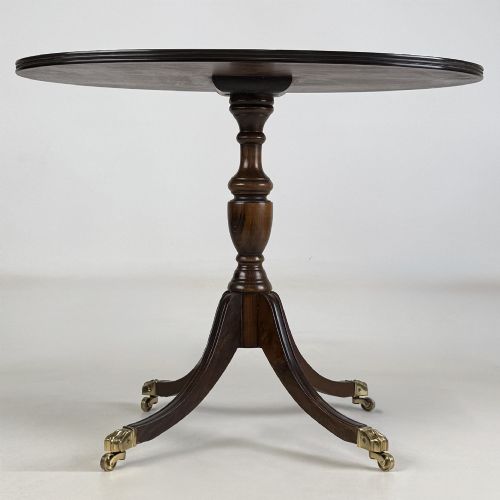
A brass castor tripod table brings together a central pillar supporting a circular or multi-sided top, carried on three legs that terminate in metal wheels. When you search for this phrase, you find small occasional pieces alongside grander dining formats.
The selections span the Georgian, Regency, and Victorian eras, stretching into Edwardian and early twentieth century revivals. Mahogany forms the backbone of these pieces, alongside oak, rosewood, and satinwood.
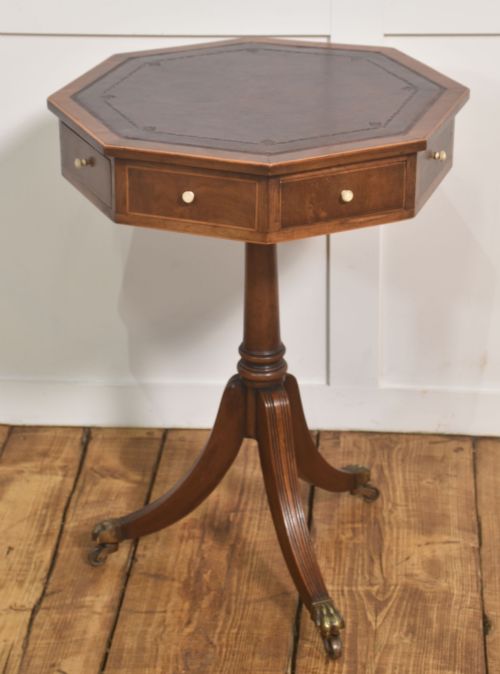
Forms vary from tilt-top breakfast tables and supper tables to drum tables, writing tables, and side tables. The three-legged base provides a stable footing on uneven floors while allowing feet to tuck underneath easily.
Materials and construction
Cabinet makers built these pieces using solid timbers like mahogany and oak, often applying veneers of burr oak or rosewood to prominent surfaces. Crossbanding and inlay add decorative borders to table tops, particularly on drum and occasional forms.
The central column connects the top to three sweeping legs, which frequently feature reeded carving or sabre shaping. Cast brass fittings, including paw castors and capped feet, allow the table to move across floor coverings without dragging.
Materials recorded across the selection include mahogany, oak, rosewood, satinwood, burr oak veneer, and leather.
Distinguishing quality
Quality rests in the crispness of the timber grain, the depth of the finish, and the integration of the brass hardware. Finer examples show thoughtful selection of figured mahogany or satinwood, paired with heavy, well-cast brass castors that turn smoothly.
Construction details such as dovetailed drawers in drum tables and solid block mechanisms for tilt-top actions separate standard pieces from superior work. Proportions remain balanced, ensuring the three-legged base supports the top securely without feeling heavy.
Gillow
The Brass Castor Tripod Table Glossary
- Castor
- A small wheel mounted on a swivel at the foot of a leg. It allows heavy furniture to be moved across a room with minimal effort.
- Tripod
- A three-legged support structure beneath a central pillar. This arrangement ensures steady contact on uneven historical flooring.
- Tilt-top
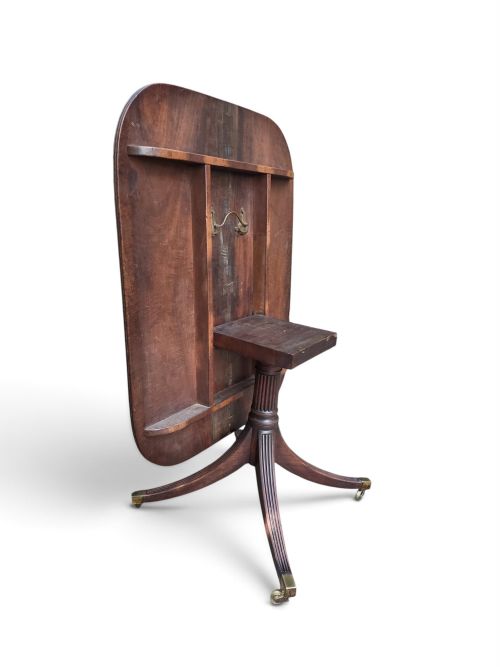
- A hinged table top that pivots to a vertical position when not in use. This mechanism allowed tables to be stored flat against a wall to save floor space.
- Drum table
- A circular library or occasional table with a deep frieze containing drawers. It typically sits on a single turned pedestal with tripod legs.
- Crossbanding
- A border of veneer laid around the edge of a table top with the wood grain running perpendicular to the centre. It creates a neat framing effect.
Brass Castor Tripod Table: Frequently Asked Questions
What is a tripod table used for?
These tables served various domestic purposes depending on their size and height. Smaller versions functioned as tea or occasional tables beside seating.
Larger formats acted as supper tables or breakfast tables, while drum variants provided surfaces for writing and holding books.
How do I maintain a mahogany surface?
Wood surfaces respond best to regular dusting with a soft cloth and occasional applications of traditional beeswax. Avoid placing them in direct sunlight or near heat sources to prevent the timber from drying out.
Keep brass castors clean so they roll freely without marking floorboards.
How do I spot a tilt-top mechanism?
Look underneath the top where the central pillar meets the surface. You will see a wooden block and a brass catch or wooden pin that locks the top horizontal.
When released, the surface tilts upward on its hinge for storage against a wall.
What distinguishes Regency style?
Regency design draws inspiration from classical antiquity, featuring clean lines and dark timbers like mahogany. Details often include reeded legs, brass inlay, and animal paw castors.
Revival pieces from later periods replicated these classic proportions.