





English Tilt Table
An English antique tilt table combines a clever pivoting mechanism with steady tripod or pedestal supports for versatile daily use.
English Tilt Table
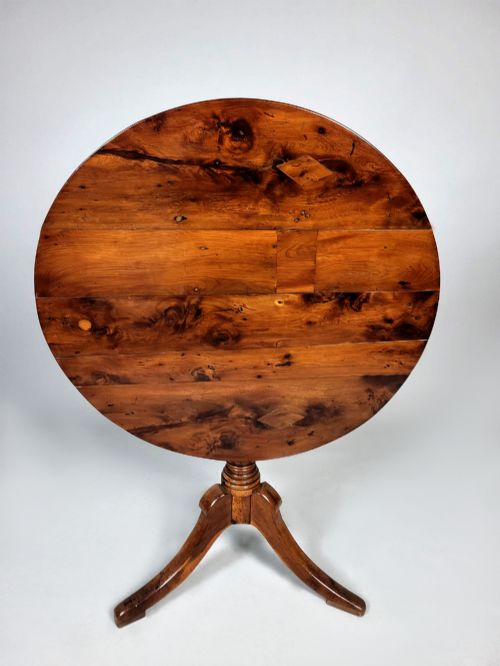
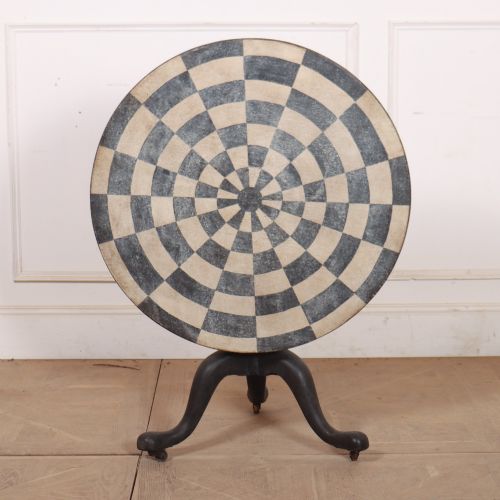
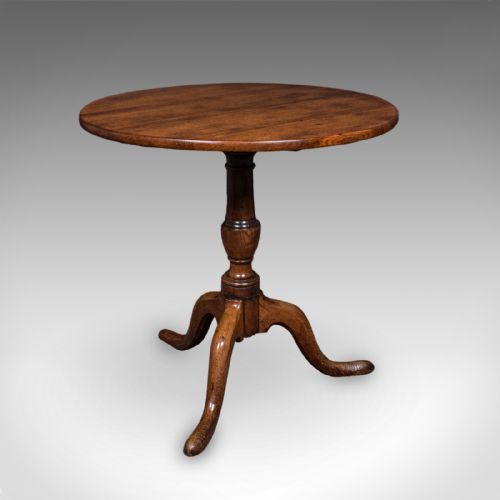
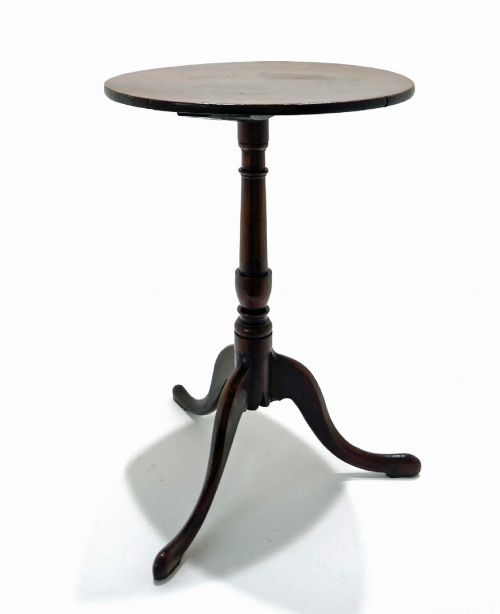
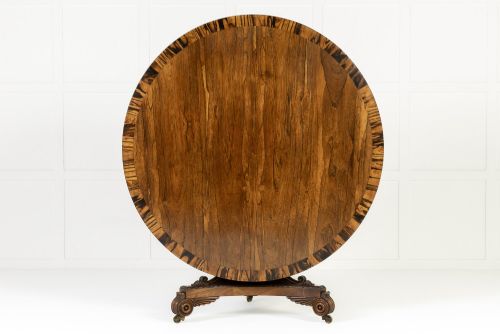
An English antique tilt table serves primarily as an occasional, wine, breakfast, or centre table designed to fold flat when not in use. You will frequently encounter compact tripod wine tables from the eighteenth century alongside larger pedestal breakfast and loo tables from the Regency and Victorian eras.
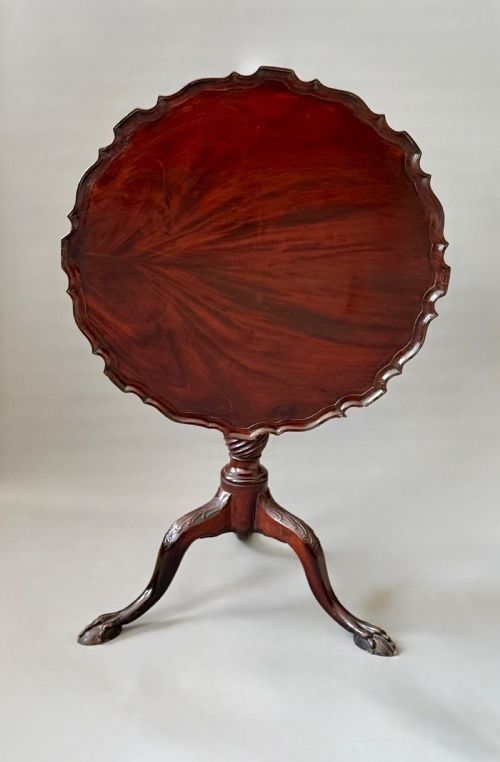
The format ranges from small circular surfaces intended for a lamp or afternoon tea to substantial four-seat dining tables. Common variations include pie crust edges, rectangular tops, and specialised forms like metamorphic fire screens.
Originating largely from English workshops across the Georgian, William IV, and Victorian periods, these pieces bridge practical domestic furniture and decorative craftsmanship.
How They Were Made
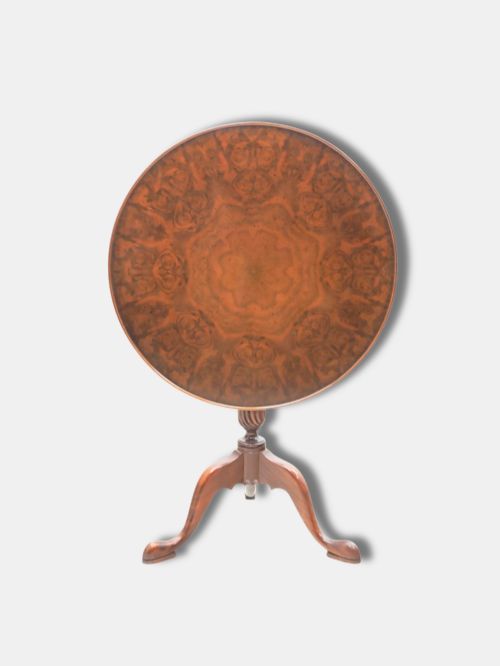
Cabinet makers utilised a rich palette of timbers including mahogany, oak, walnut, rosewood, yew wood, and fruitwood, often selecting figured veneers and burr walnut for enhanced visual depth.
The distinctive tilting action relies on specialised wooden or brass catches and birdcage mounts fixed beneath the tabletop to allow smooth pivoting and locking.
Supports take the form of slender turned columns rising from three-legged tripod bases or substantial central pedestals resting on platform feet.
Some Victorian tables doubled as tarot parlours with zodiac carvings.
What Varies in Quality
Superior examples display exceptional timber selection, such as densely figured flame mahogany or finely matched burr walnut veneers, paired with crisp hand-carving along the edges and pedestals.
The engineering of the tilt mechanism and birdcage mount dictates daily functionality, where tighter tolerances ensure the top locks securely without wobbling when horizontal.
Proportion and stability separate utilitarian pieces from finer parlor and dining versions, with well-balanced column heights and robust leg joints defining the better tier.
The English Tilt Table Glossary
- Tilt-top
- A tabletop hinged to a central pivot allowing the surface to rotate into a vertical position for storage.
- Tripod base
- A three-legged support structure commonly found beneath smaller occasional and wine tables.
- Birdcage mount
- A timber framework beneath the tabletop that permits both rotation and tilting of the surface.
- Pie crust edge
- A raised, decoratively carved and scalloped rim shaped from the solid wood of the tabletop.
- Loo table
- A large Victorian pedestal table used for evening games and breakfast, named after the card game loo.
English Tilt Table: Frequently Asked Questions
Why did tables have tilting tops?
Tables were designed with tilting mechanisms primarily to save floor space in domestic rooms when not actively in use for dining or writing.
Once folded upright, the tables could be pushed neatly against a wall or stored in a corner.
Can I use a tilt table daily?
These tables adapt easily to modern living as lamp tables, side surfaces, or small breakfast dining spots.
The tilting mechanism remains functional, though care should be taken with historical friction catches and polished wood surfaces.
What is a birdcage mechanism?
A birdcage is a small wooden framework situated between the tabletop and the central column that allows the top to both pivot and tilt.
This construction represents a hallmark of finer eighteenth-century cabinet making.