
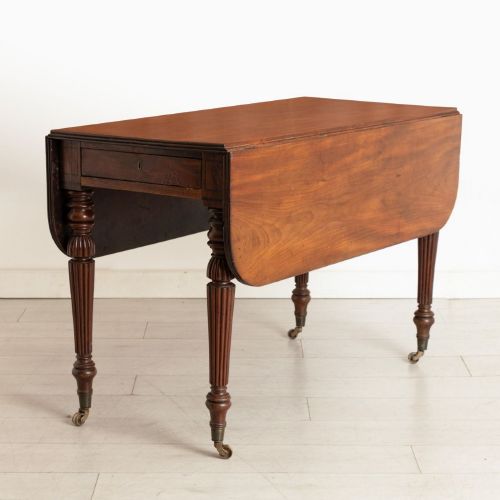
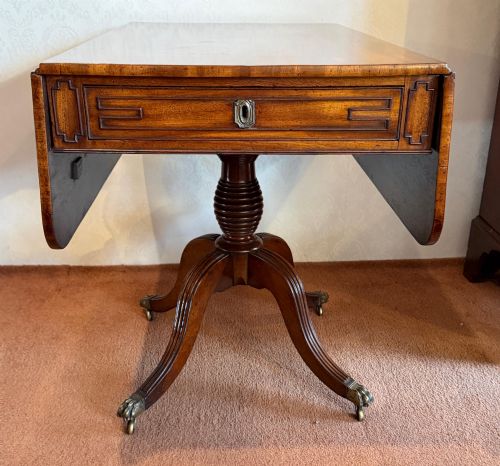


Brass Castor Drop Leaf
A brass castor drop leaf table brings flexibility to a room, offering expandable surfaces raised on metal wheels.
Brass Castor Drop Leaf
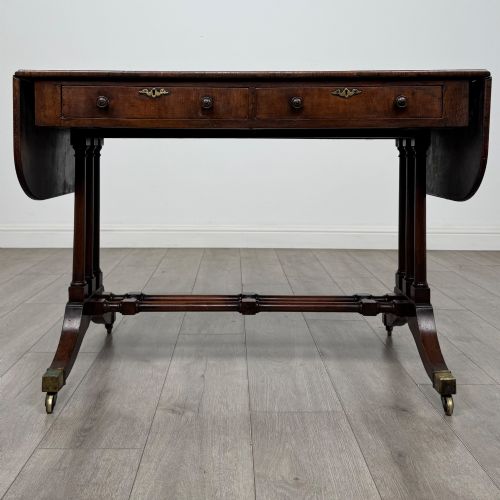
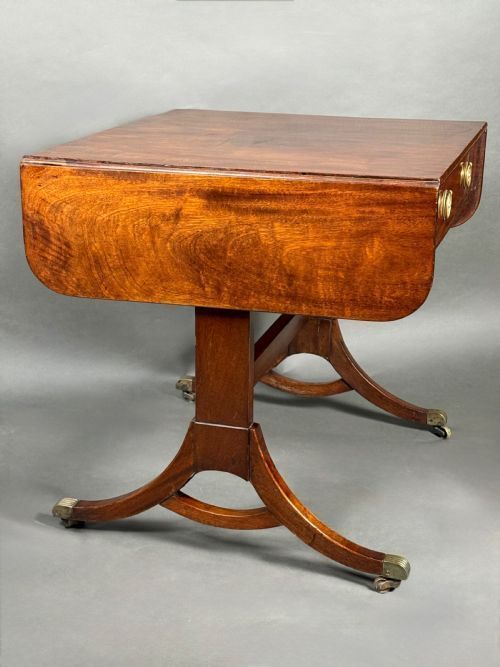
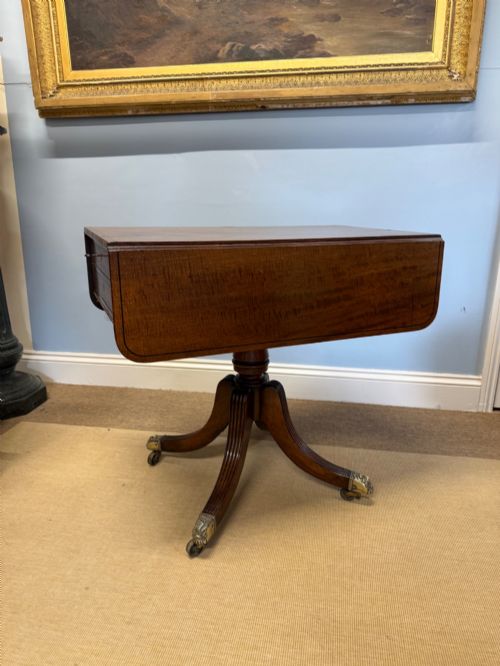
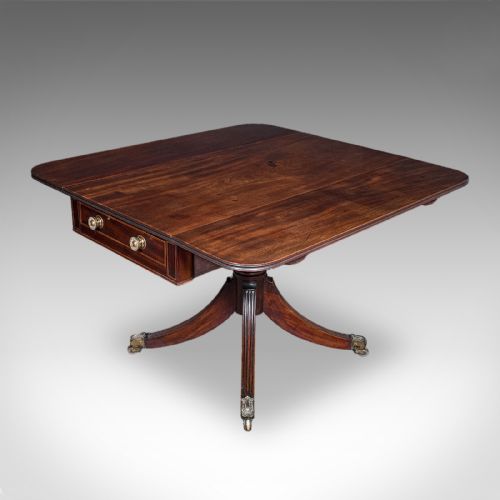
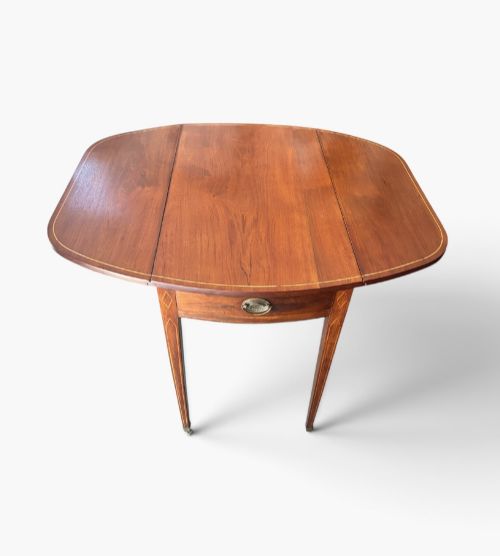
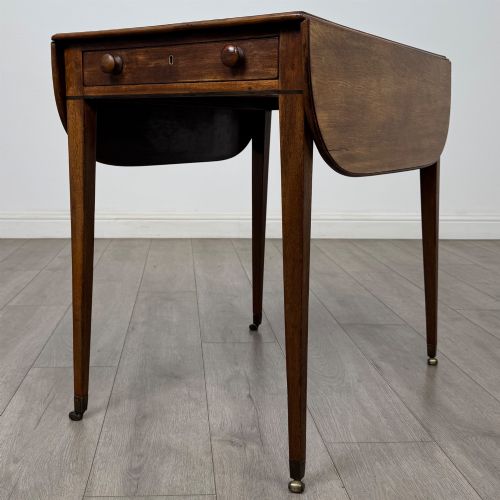
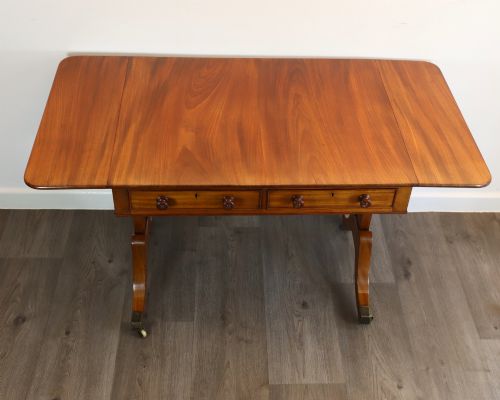
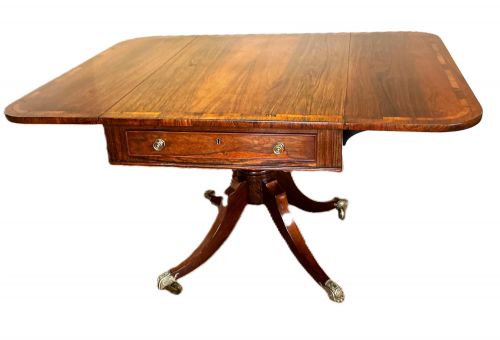
A brass castor drop leaf table combines hinged flap sides with wheeled supports, designed for easy movement across a room. These pieces appear primarily as sofa tables, pembroke tables, and occasional tables spanning the Georgian, Regency, and Victorian periods.
Buyers seeking a brass castor drop leaf will frequently encounter mahogany and rosewood constructions, often detailed with boxwood inlay or flame grain patterns. The selection ranges from compact pedestal breakfast tables to large freestanding library and dining furniture.
Originating to serve versatile domestic functions, these tables adapt from narrow side pieces to expanded dining surfaces with simple leaf adjustments. Their integration of brass castors reflects a period priority of mobility within formal interiors.
Materials and construction methods
Cabinet makers utilised dense hardwoods such as mahogany, rosewood, and yew wood, frequently selecting flame mahogany veneers for prominent surfaces. Boxwood and satinwood provide contrasting inlay lines along borders and pedestals.
Metal components play a structural and decorative role, with brass castors fitted to the base of legs or pedestals to facilitate movement. Hinges secure the drop leaves to the main table tops, allowing flaps to lower smoothly when not in use.
Many tables retain their original brass wheels, ready to roll across the floor just as they did two centuries ago.
Distinctions in quality and execution
The sophistication of timber selection dictates visual standing, with matched flame grain and intricate boxwood stringing marking superior examples. Grain alignment across the drop leaves and fixed centre top demonstrates the skill of the cabinet maker.
The integration and finish of the brass castors and structural joints separate standard utility pieces from finer salon furniture. Robust pedestals and well-fitted hinging ensure stable leaf support when extended.
Andrew Thomson And Sons
The Brass Castor Drop Leaf Glossary
- Drop leaf
- A table with a fixed central section and hinged flaps that fold down to reduce the overall footprint.
- Castor
- A small wheel fitted to the base of a furniture leg to allow smooth rolling across flooring.
- Pembroke table
- A small rectangular table featuring two hinged drop leaves on opposing sides, often fitted with drawers.
- Sofa table
- A low, elongated table traditionally placed in front of a sofa, equipped with drop leaves and pedestal supports.
- Stringing
- A narrow inlay of contrasting wood, such as boxwood, used to outline panels and borders on table tops.
Brass Castor Drop Leaf: Frequently Asked Questions
What is a brass castor drop leaf table?
It is a movable timber table with folding side flaps raised on small metal wheels.
These pieces allow users to expand surface space quickly while maintaining the ability to reposition the furniture.
How were these tables used originally?
They served as flexible furniture for dining, writing, or needlework in domestic rooms.
Servants easily wheeled them into different positions or cleared floor space by dropping the side leaves.
Which woods are most common?
Mahogany and rosewood appear frequently across the surviving inventory.
Cabinet makers also used yew wood, satinwood, and boxwood for decorative highlights and inlay.
How do I identify the period?
Period markers include leg shapes, wood choices, and decorative inlay styles.
Georgian and Regency pieces often feature figured mahogany and delicate stringing, while later Victorian versions display heavier pedestals.