

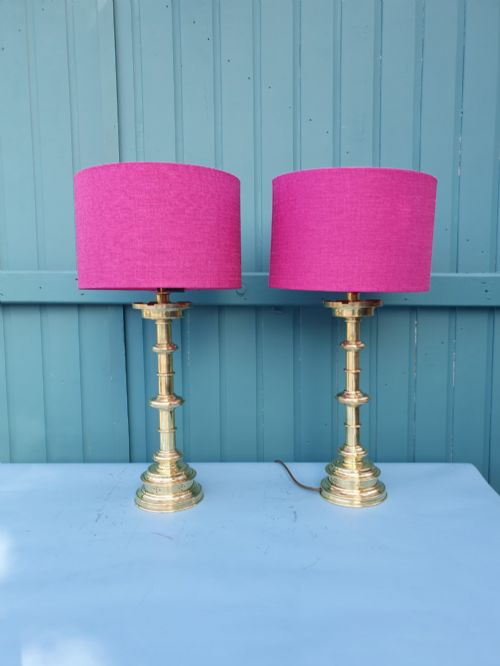
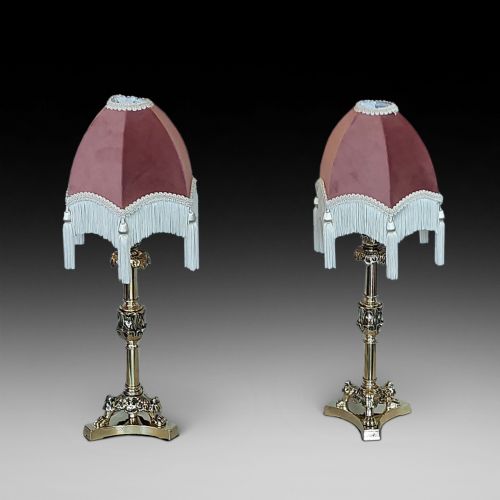
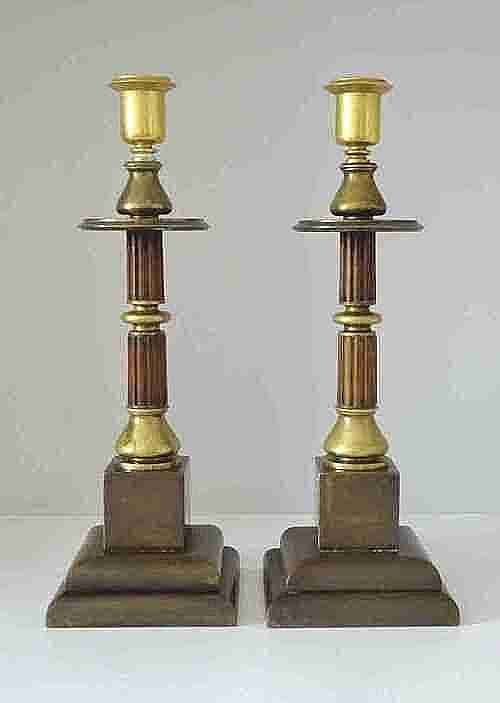
Brass Candlestick Desk Light
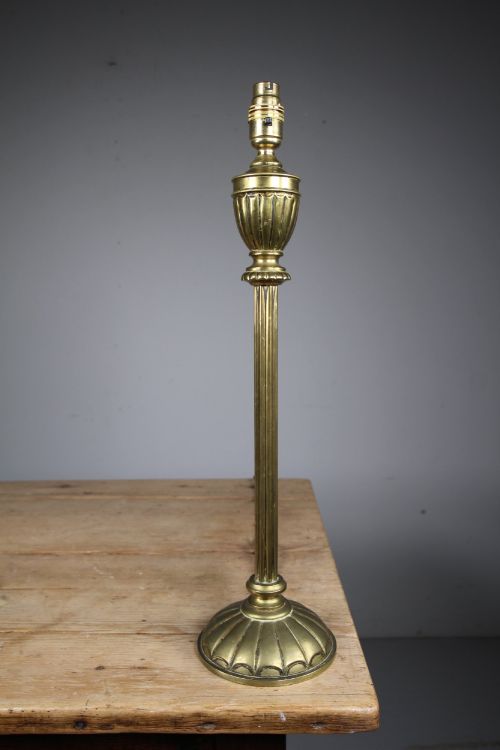
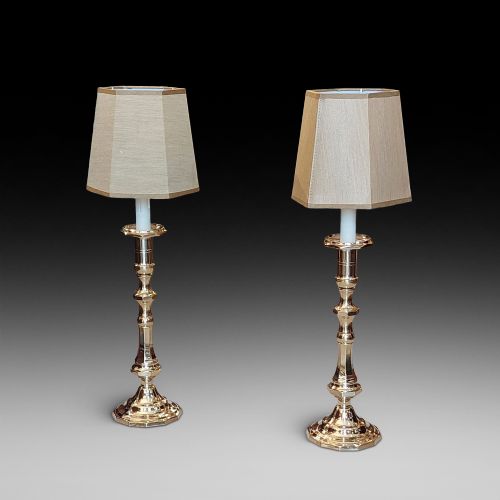
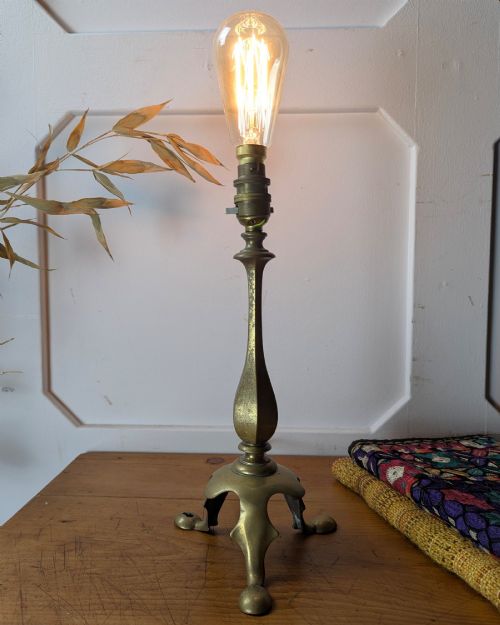
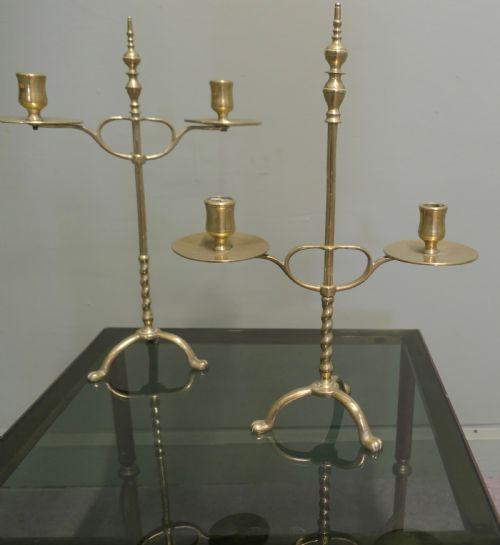
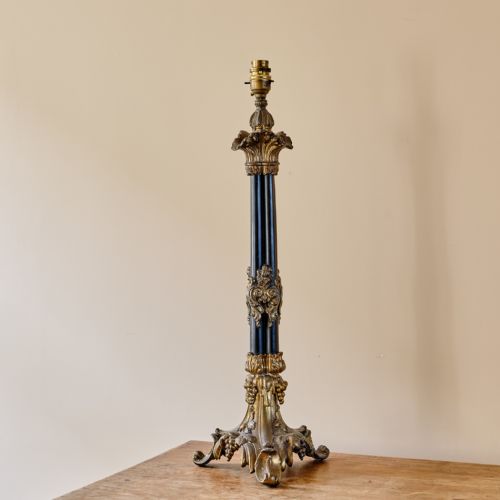
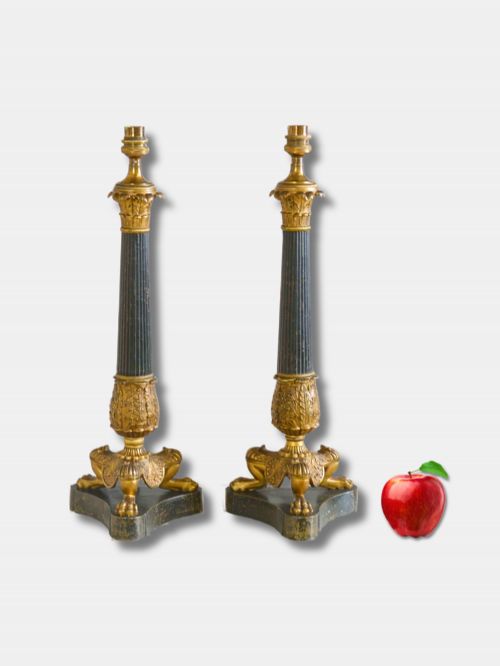
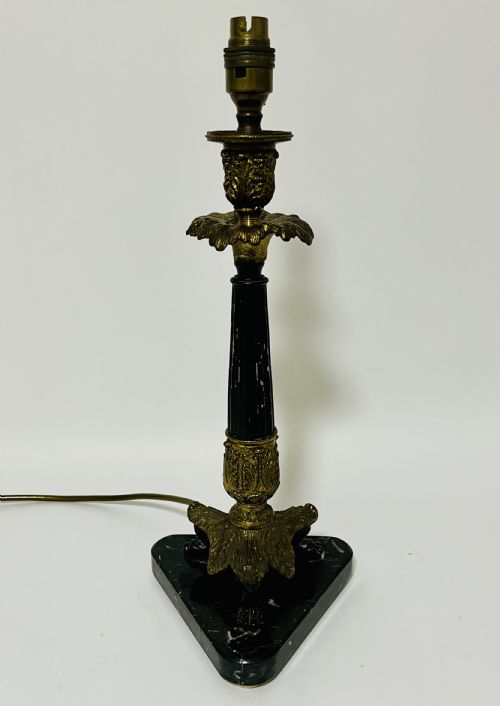
A brass candlestick desk light brings warm illumination and period character to a workspace.
Brass Candlestick Desk Light
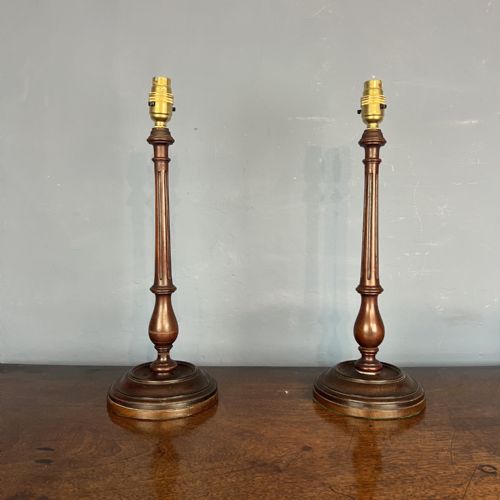
A brass candlestick desk light combines traditional lighting supports with functional illumination for writing surfaces. These pieces emerge from the 19th Century, Victorian, and Edwardian periods, alongside early 20th century examples.
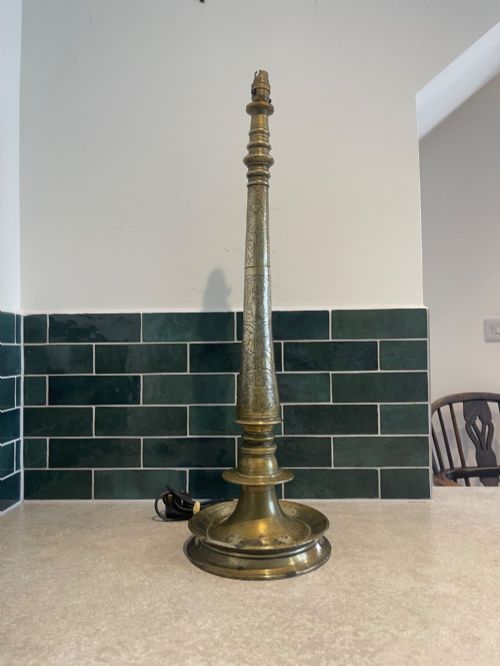
The selections on this page encompass converted candlesticks, student lights, and adjustable reading lamps. Makers adapted original pillar, column, and baluster shapes to hold electrical fittings or adjustable shades.
Origin points span English workshops, French ateliers, and Indian production. Common stylistic influences include French Empire, Gothic Revival, Louis XV style, and neoclassical designs.
Materials and construction techniques
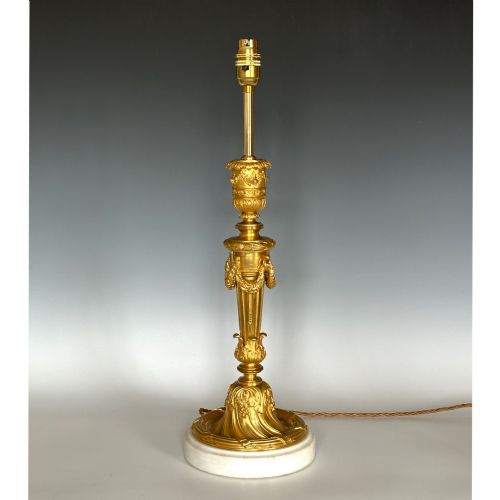
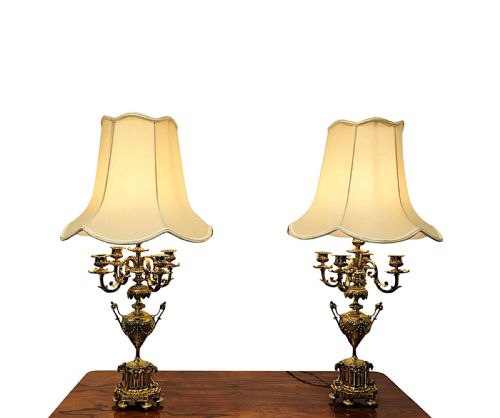
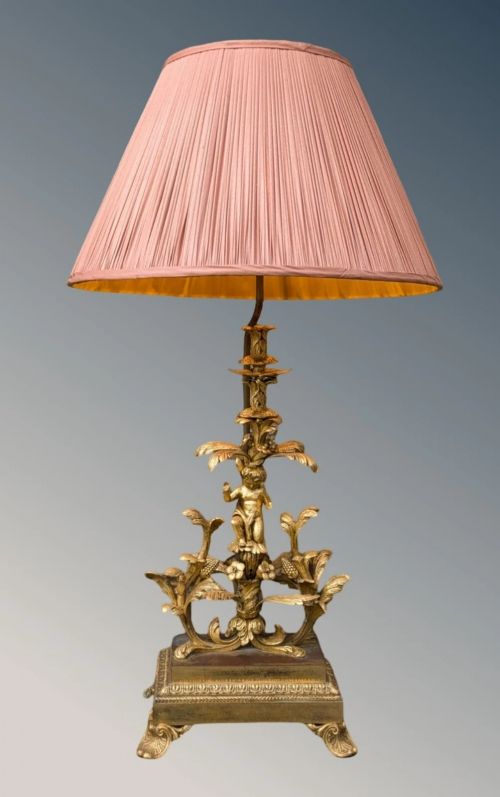
Foundry workers cast brass, bronze, and ormolu into structural columns, bases, and decorative mounts. Artisans combined these metal components with marble plinths, cut glass, and wooden elements such as mahogany and treen walnut.
Many items originated as manual candleholders or altar sticks before conversion to desk lamps. Metalworkers incorporated adjustable arms, swivel joints, and weighted bases to suit reading tasks.
Listings feature brass, gilt bronze, marble, and cut glass spanning the 19th century to the Edwardian era.
Distinctions in quality and finish
Finishes separate standard production from superior examples through the depth of gilt bronze, ormolu, or patinated brass. Heavier castings with crisp chasing on rams heads, lions paw feet, and acanthus leaves indicate higher workshop standards.
Structural integrity depends on the precision of threaded joints, the stability of marble or weighted metal bases, and the original quality of mechanical adjustments on student lights.
The Brass Candlestick Desk Light Glossary
- Ormolu
- Gilt bronze produced by applying a mercury and gold amalgam to bronze objects. This technique creates a rich golden surface found on French desk lights.
- Student light
- An adjustable desk lamp designed to direct illumination downwards for reading. These fixtures often feature movable arms and specialised shades.
- Baluster
- A moulded architectural column with a swelling lower portion. This shape frequently forms the central stem of brass candlestick desk lights.
- Treen
- Small domestic wooden objects turned or carved by hand. Examples include wooden chamber sticks incorporating brass candle sockets.
- Gothic Revival
- An architectural and decorative style popular during the 19th century. Pieces in this aesthetic adopt pointed arches and medieval motifs.
Brass Candlestick Desk Light: Frequently Asked Questions
How do I date a brass desk lamp?
Dating relies on stylistic clues, manufacturing techniques, and materials associated with specific decades. Victorian and Edwardian examples often display characteristic column forms or registration marks.
Changes in wiring methods and switch types also help establish the timeline of electrical conversions.
Were these always electric lamps?
Many examples began life as manual candlesticks, altar sticks, or oil lamps before later conversion to electricity. Workshop adaptations retained the original metal stems while adding modern internal wiring.
Some specialised reading lamps were designed from the outset with adjustable shades for desk use.
How do I clean antique brass safely?
Dusting with a soft, dry cloth preserves the historic patina and protects aged metal surfaces. Avoid harsh chemical polishes that strip away centuries of oxidation.
Gentle cleaning maintains the subtle colour variations characteristic of nineteenth-century brass and bronze.
Where should I place a desk light?
Position these lamps on writing desks, side tables, or reading nooks where focused illumination is required. Their compact footprints suit smaller surfaces.
Pairing them with period furniture enhances the historical aesthetic of a study or library.