

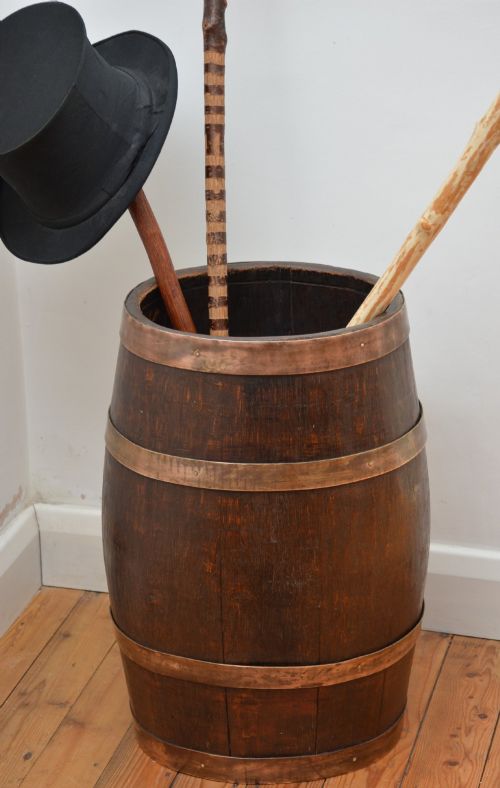
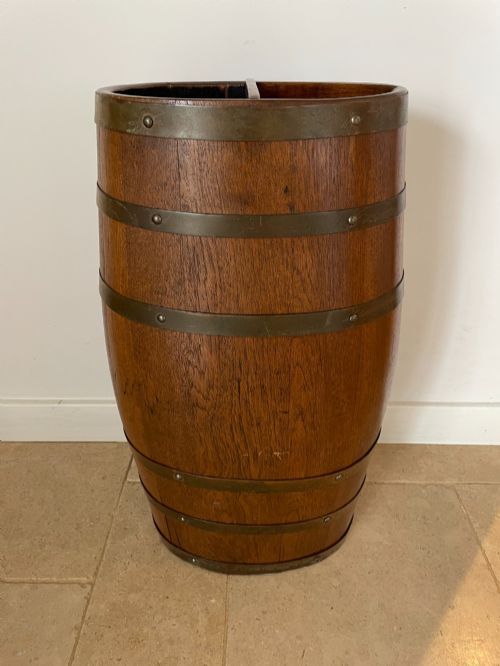

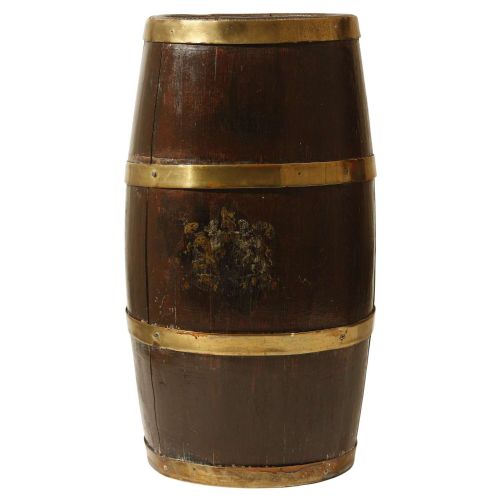


Brass Bound Oak Barrel
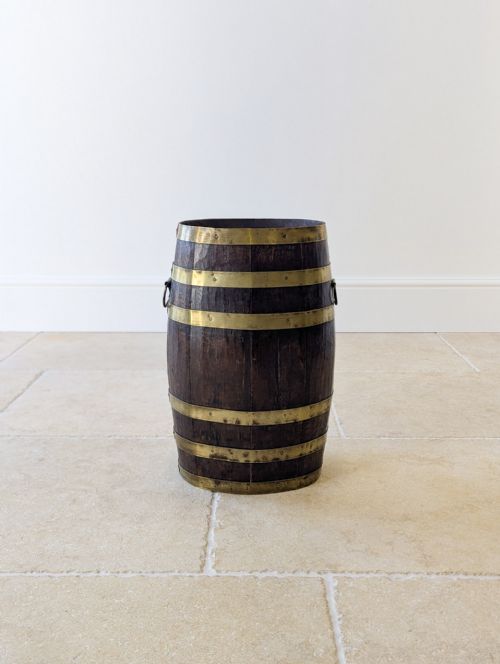
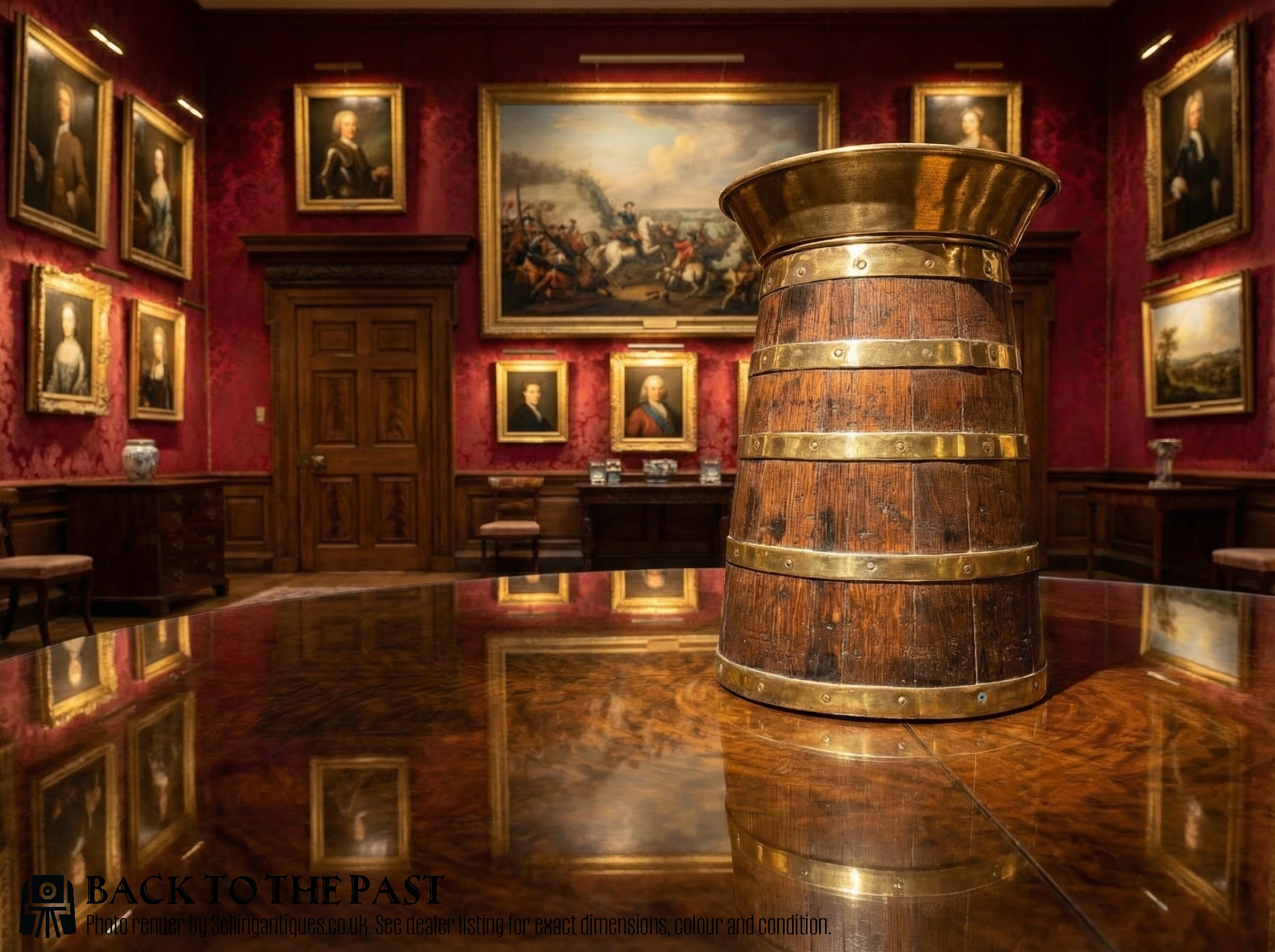
A brass bound oak barrel brings robust utility and rich grain into a room, offering both historical character and practical storage.
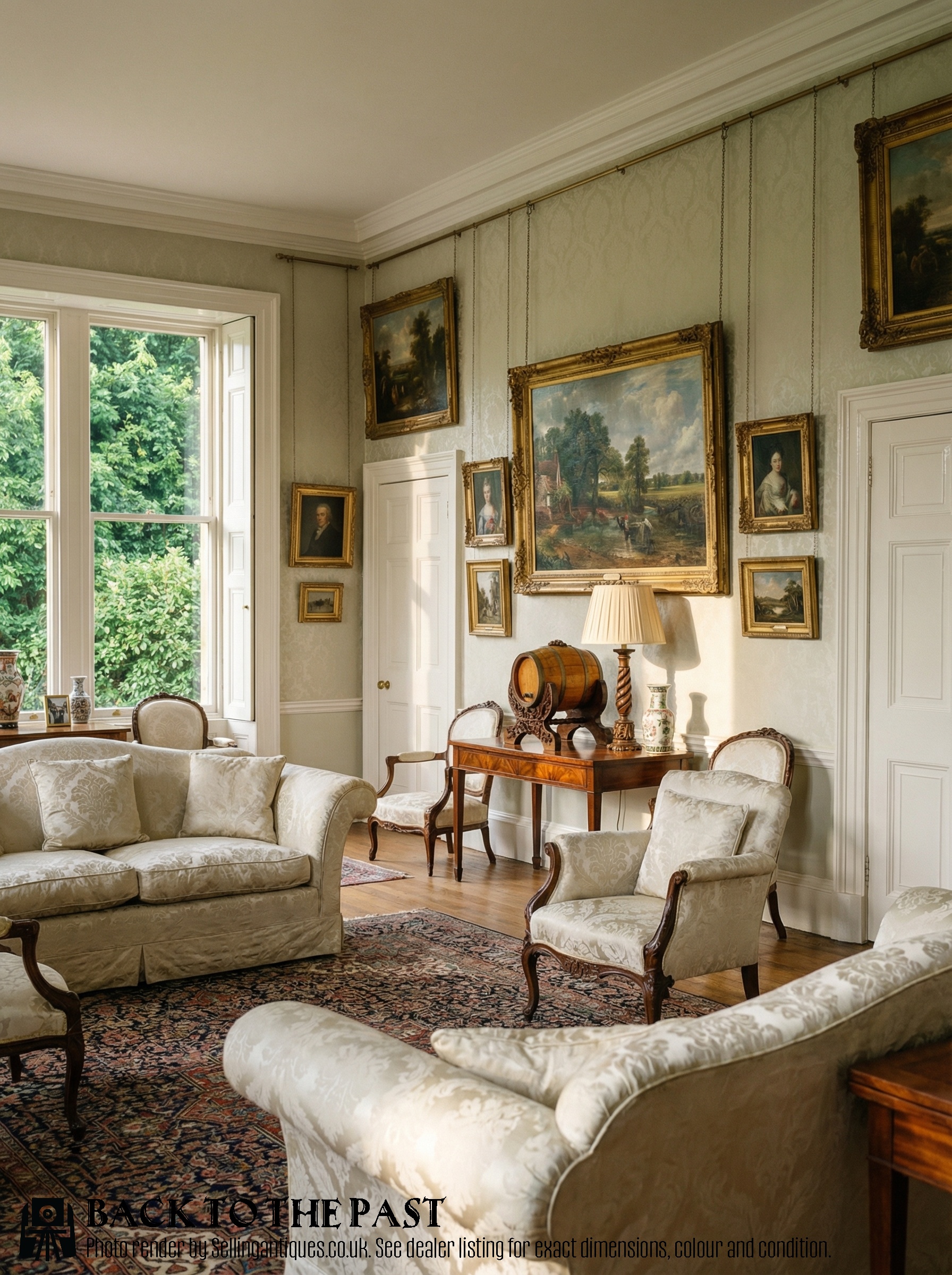
Identifying a brass bound oak barrel
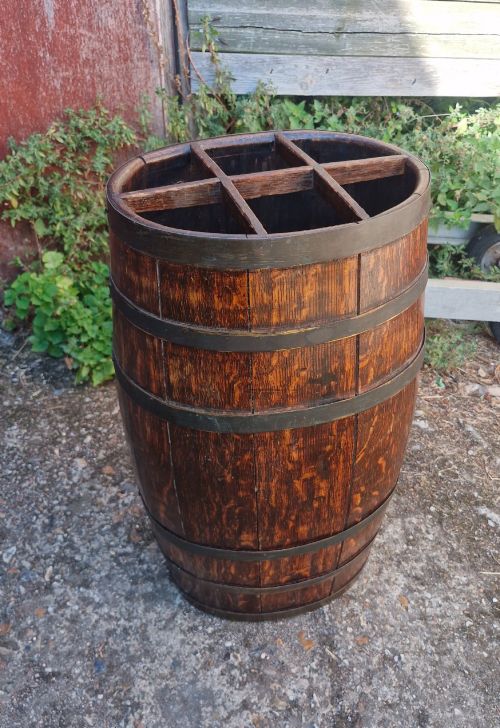
Buyers searching for a brass bound oak barrel encounter robust vessels originally constructed for practical storage, holding powder, flour, logs, butter, or liquids. These stout pieces transition easily into domestic spaces as umbrella stands, stick stands, plant stands, and log barrels.
The versions most commonly met on this page date from the nineteenth century, including Victorian examples, alongside occasional twentieth-century iterations. They range from simple staved cylinders to elaborate designs featuring carved coats of arms or specialised stands.
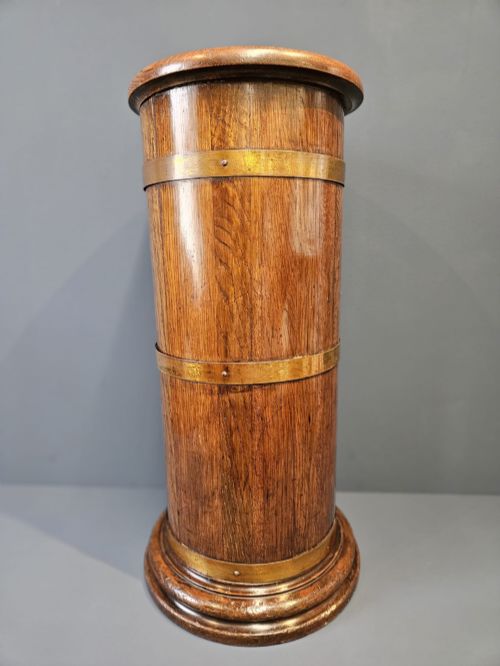
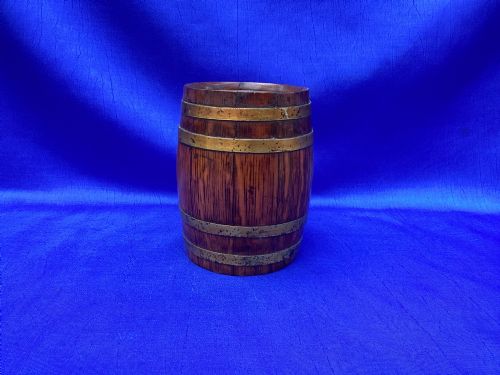
Forms vary from tall stick stands suited for hallways to low butter barrels and lidded flour vessels. Each piece displays the functional heritage of cooperage adapted over time for interior display.
Construction and materials
Maker construction relies on traditional cooperage techniques using staved oak or hardwood held tightly together by fitted brass bands or braces. The metal components provide structural integrity while creating a distinct visual contrast against the dark timber.
Selected pieces incorporate painted elements or carved details, such as coats of arms or specialised Black Forest stands. The integration of brass fittings with wooden staves required precise carpentry to ensure durability and water resistance.
Retail Price Guide 2026
Typical UK retail prices for brass bound oak barrel, calculated from the Sellingantiques database of over a million retail prices indexed since 2003. This retail price guide relies exclusively on Sellingantiques data; no external sources or auction records are used, so the figures do not describe the wider market.
Listings feature nineteenth century Victorian pieces alongside twentieth century examples, utilising oak, hardwood, paint, and brass.
Evaluating quality in coopered vessels
Quality separates the everyday utility vessel from the exceptional decorative object through the precision of the cooper's stave work and the thickness of the brass bands. Superior examples maintain tight joints and heavy gauge metal that age gracefully together.
The presence of heraldic decoration, carved heraldry, or a fitted stand distinguishes more ambitious commissions from standard utilitarian barrels. Condition of the timber grain and the original patina on both the oak and the brass dictate the visual impact of each piece.
R. A. Lister and Co
The Brass Bound Oak Barrel Glossary
- Coopered
- Assembled from curved wooden staves bound together with metal hoops. This traditional method formed strong vessels capable of holding liquids or dry goods.
- Stave
- One of the narrow vertical strips of oak that form the sides of a barrel. Tapered edges ensure the cylinder closes tightly when hooped.
- Treen
- Small handmade wooden household objects and utensils. Early examples include small barrels and domestic containers fashioned from local hardwoods.
- Black Forest
- A style of intricate wood carving originating from the European region of the same name. Pieces often feature naturalistic motifs and sculptural stands supporting barrels.
Frequently Asked Questions
What were brass bound oak barrels used for originally?
These vessels served various domestic and military purposes, including storing gunpowder on naval vessels, keeping dry goods like flour, or holding butter.
Over time, many of these robust containers were repurposed in hallways and parlours to hold walking sticks, umbrellas, and fireplace logs.
How do I date a nineteenth century barrel?
Dating relies on examining the construction methods, the thickness of the brass bands, and the style of any applied decoration or crests.
Nineteenth-century examples often exhibit hand-coopered staves and heavy brass bracing that reflect the period's manufacturing standards.
Can I use an antique barrel as an umbrella stand?
Many of these pieces were specifically adapted or originally constructed as stick and umbrella stands during the Victorian era.
Placing a modern liner inside the base protects the historic timber from moisture while allowing functional daily use in an entryway.
What is the difference between a stick stand and a log barrel?
Stick stands are generally taller and narrower, designed to corral long items like umbrellas and walking sticks without tipping over.
Log barrels tend to be wider and lower, providing a stable opening for stacking firewood beside a hearth.