



Brass Ball Feet
Brass ball feet anchor some of the finest period furniture, clocks, and hearth hardware you will encounter.
Brass Ball Feet
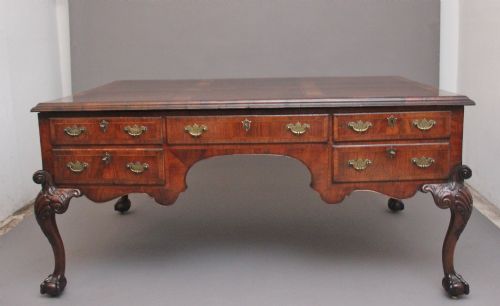
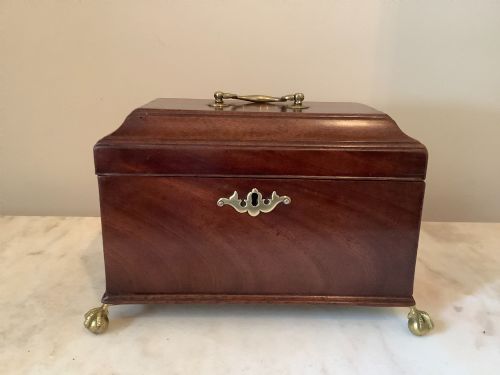
Brass ball feet appear on a variety of substantial forms across multiple centuries, most frequently supporting case furniture such as chests of drawers, desks, and tea caddies. When you search for brass ball feet, you are tracking the small yet defining metallic terminals that lift heavy timber pieces off the floor.
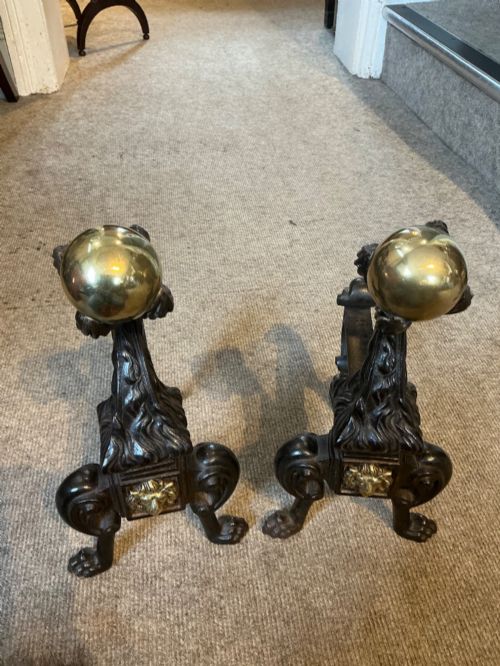
The pieces on this page span several distinct periods, with nineteenth century items and Regency examples appearing alongside Georgian and Edwardian works. Alongside case furniture, these mountings support bracket clocks, mantel clocks, and desk accessories, as well as hearth fixtures like andirons and firedogs.
Proportions vary considerably depending on the object, ranging from simple spherical turnings on small boxes to cast and chased claw and ball formations on large mahogany chests. Most items you meet here utilise traditional cabinet woods such as mahogany and walnut, paired with solid brass mounts.
Materials and construction
Makers combined dense cabinet timbers like mahogany, walnut, and rosewood with cast brass components, fixing the metal feet directly to the base of the piece. Some examples incorporate secondary woods and applied brass mounts, utilising the contrast between dark timber and bright metal.
Casting and turning defined the production of these metal supports, whether shaped as simple spheres or detailed into claw and ball motifs. Joinery on the accompanying furniture relied on period techniques, with timber cases housing secret drawers, twin fusee clock movements, and inlaid veneers.
Listings feature eighteenth-century walnut chests alongside nineteenth-century bracket clocks and Edwardian mahogany furniture.
Assessing quality and execution
Quality rests in the crispness of the metal casting and the integration between the brass foot and the timber base. Superior pieces display careful finishing on the metalwork and appropriate timber selection, such as figured mahogany or rich walnut veneers.
The distinction between standard production and finer work lies in the hand-finishing of the details, from chased mounts on jewellery caskets to the precise movement housed within a bracket clock. Original mounts that match the age and wear of the timber carry more authority than later replacements.
Muirhead Moffat & Co·Hyde of Salisbury·Leplastrier of London
The Brass Ball Feet Glossary
- Bracket clock
- A portable pendulum clock designed to sit on a bracket or table. These timepieces frequently feature brass carrying handles and rest upon small feet.
- Twin fusee
- A mechanical clock movement driven by two spring barrels connected via chains to cone-shaped pulleys. This mechanism maintains even tension as the mainspring unwinds.
- Lowboy
- A small side table with drawers, typically raised on four legs. Georgian and Edwardian examples often employ fine timber and detailed corner brasswork.
- Andirons
- Supports for logs in an open fireplace, also known as firedogs. They often feature decorative brass or iron standards.
Brass Ball Feet: Frequently Asked Questions
Are brass ball feet original?
Determining originality requires looking at the seating marks, the wear patterns on the metal, and the compatibility of the fixing screws with the period of the piece.
Older furniture and clocks sometimes received replacement feet during later repairs, so matching the patina of the brass to the rest of the hardware provides a reliable guide.
How do I date a bracket clock?
Clock dating relies on the style of the timber case, the complexity of the dial, and the mechanical movement inside. Regency and nineteenth-century examples often display distinct mahogany veneers and brass inlay.
Maker signatures inscribed on the dial or backplate offer another direct indicator of the manufacturing period.
What is a military chest?
Military chests were constructed in sections so officers could transport their belongings during campaigns. They typically feature flush brass handles and removable feet for packing.
These pieces prioritise sturdy construction and practical disassembly without sacrificing polished cabinetwork.
How should I clean brass feet?
Maintenance involves removing dust with a soft, dry cloth rather than applying harsh chemical polishes. Preserving the natural aged surface maintains the historical character of the metalwork.
Avoid getting cleaning agents onto the surrounding wood or leather surfaces during upkeep.