




Brass Balance Scale Set
A brass balance scale set brings mechanical precision and nineteenth-century utility directly to a modern desk or shelf.
Brass Balance Scale Set
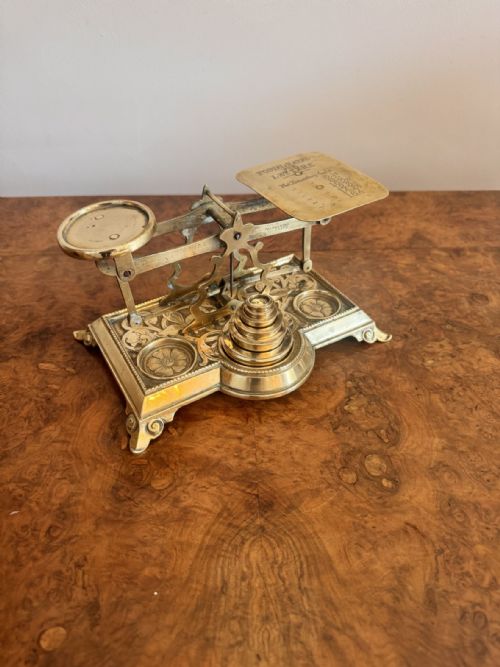
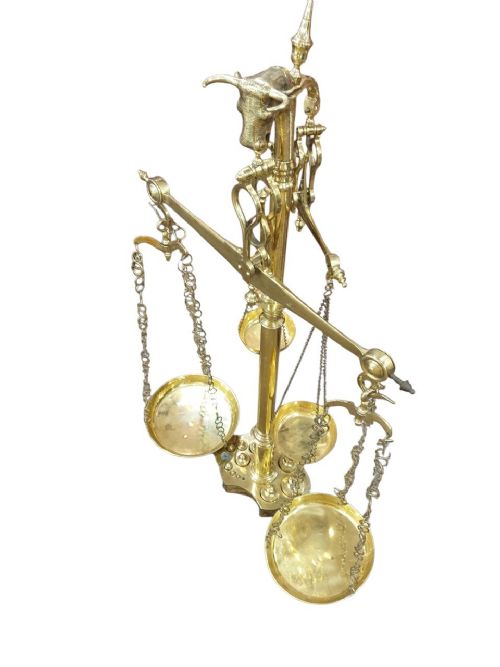
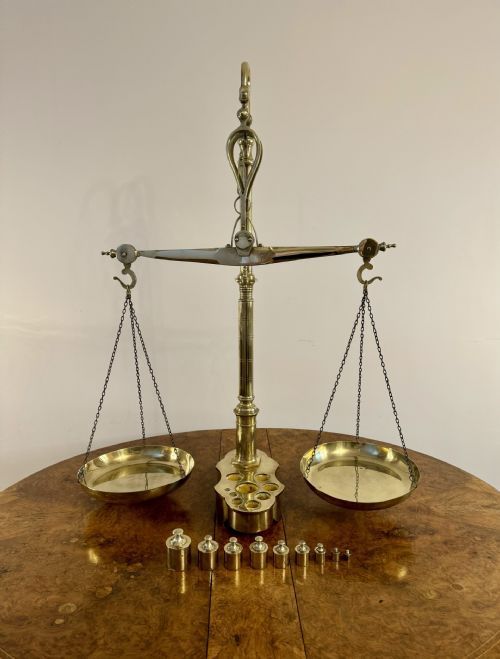
A brass balance scale set comprises matching components designed for weighing letters, postal items, groceries, or pharmaceutical goods, anchored by a central fulcrum and balancing beams. When you search for a brass balance scale set, you encounter postal scales mounted on wood bases, heavy grocers and butcher scales, and delicate chemist precision beam scales.
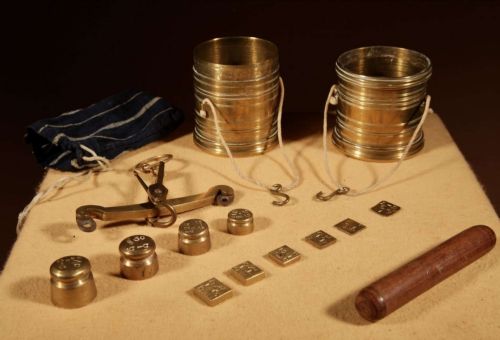
The versions most commonly met span the Victorian and Edwardian eras into the early twentieth century, incorporating hardwood bases in mahogany, walnut, or oak alongside fitted boxes for weights. Many survivors retain their original sets of brass troy, apothecary, or avoirdupois weights, often arranged neatly in wooden blocks or velvet-lined compartments.
Materials and construction
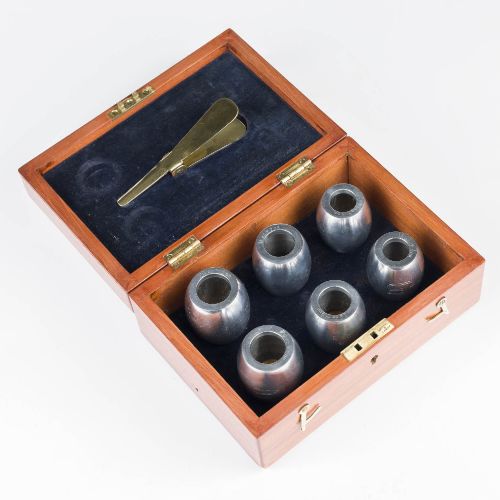
Maker workshops combined polished brass for beams, pans, and indicators with substantial hardwood bases fashioned from mahogany, walnut, or oak. Glass panels occasionally enclosed sensitive chemist balances, while textile and velvet lined the interior recesses of weight boxes to protect the calibrated brass pieces.
Casting and turning formed the structural brass elements, which were polished and hand-engraved with maker details or weight capacities. Wood bases were joined with traditional cabinetry techniques and fitted with brass mounts, postal plate platforms, and designated slots for matching weight sets.
Weights occasionally bear local government inspection stamps from past county authorities, proving they once settled disputes over Sunday groceries.
Quality and differentiation
Quality rests in the precision of the balance beam, the crispness of the maker inscriptions, and the completeness of the matching weight set. Finer examples exhibit substantial solid hardwood plinths, intricate cast brass ornamentation, and signed mechanisms by noted makers rather than plain utilitarian production.
The presence of original fitted boxes, complete weight sequences in brass, and undamaged glass indicators distinguish superior examples from partial or later-assembled sets. Retaining original surfaces on both the brass components and the wooden bases further elevates the standing of an individual set.
De Grave Short And Co·S Mordan And Co·Oertling·Avery
The Brass Balance Scale Set Glossary
- Beam scale
- A weighing device utilising a horizontal lever with arms of equal length hung from a central fulcrum. The pans suspend from each end to compare known weights against an object.
- Postal scales
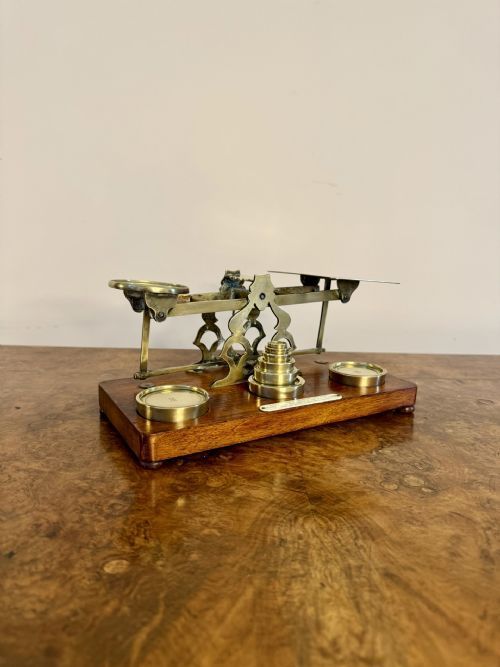
- Compact balance scales engineered specifically for weighing letters and parcels to calculate postage rates. They frequently feature a stepped mahogany or walnut base with a brass plate on top.
- Avoirdupois
- A system of weights based on a pound of sixteen ounces, commonly utilised for general merchandise and grocers scales. Sets often include bell-shaped brass weights.
- Troy ounce
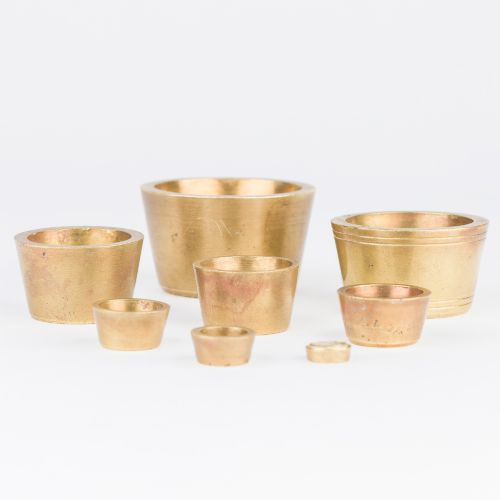
- A system of units of mass traditionally used for precious metals and apothecary goods. Sets appear as graduated cylindrical or stacked brass pieces.
- Fulcrum
- The central pivot point upon which the balancing beam rests and pivots. Its construction dictates the sensitivity and accuracy of the scale.
Brass Balance Scale Set: Frequently Asked Questions
How do these scales work?
A balance scale operates by placing an object on one pan and adding calibrated weights to the opposite pan until the central indicator pointer rests at the vertical centre. The equality of mass on both sides demonstrates the weight of the object.
Most domestic and postal sets rely on a fixed beam design where the pans sit above or hang below the fulcrum. Fine chemist and scientific balances utilise enclosed glass cases to prevent air currents from disrupting the precise measurements.
Were these used in homes?
Postal scales were common household objects in Victorian and Edwardian drawing rooms and studies for weighing daily correspondence. Heavier grocers, butcher, and sweetie scales belonged strictly to commercial shops and trade co-ops.
Chemist and apothecary sets served in dispensary pharmacies for compounding medical prescriptions. Smaller precision sets also found purpose in offices and institutional settings.
How do I date a set?
Dating relies upon stylistic clues in the wooden base, the shape of the brass casting, and any stamped maker marks or retailer inscriptions. Victorian postal scales often feature heavy mahogany plinths with applied brass fretwork, while Edwardian versions lean towards lighter oak or walnut.
Patent dates, postal rate changes stamped on brass pans, and maker records provide further chronological markers. Sets accompanied by original maker stamps on the beam offer the clearest confirmation of period.
How should I clean the brass?
Gentle dusting with a dry microfibre cloth is generally sufficient to remove surface particles without disturbing the aged patina. Aggressive chemical polishing can strip away historic character and erase faint engravings.
Wooden bases benefit from occasional waxing with appropriate furniture polish applied sparingly. Maintaining the natural metal finish preserves the historical integrity of the piece.