
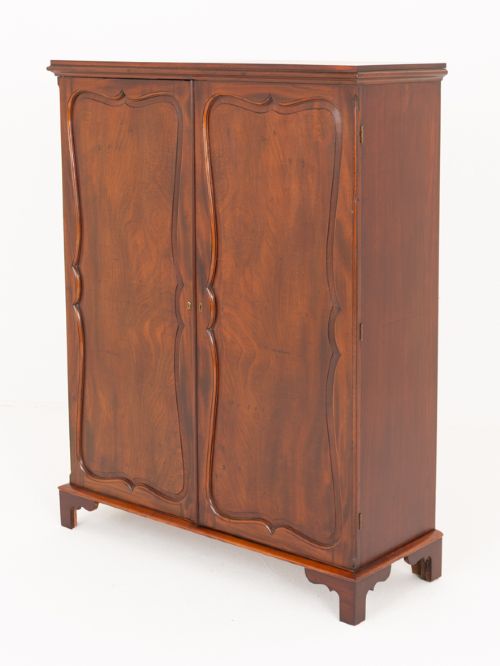
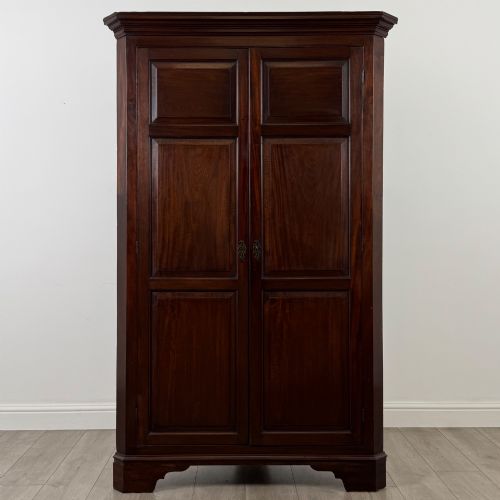
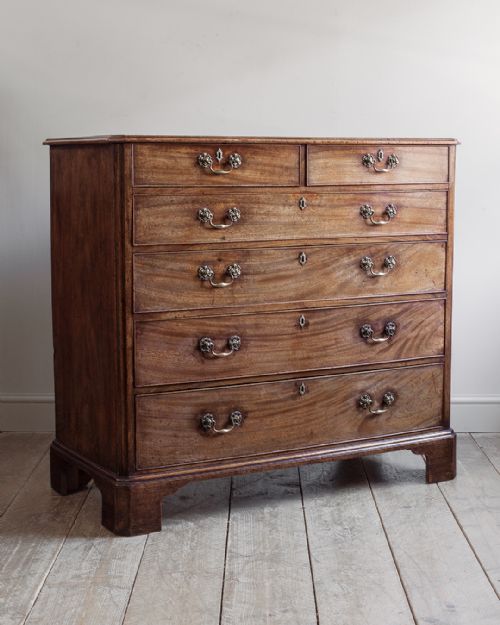
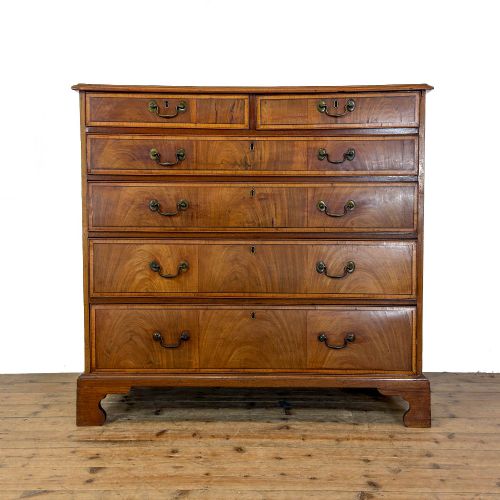
Bracket Feet Mahogany Cabinet
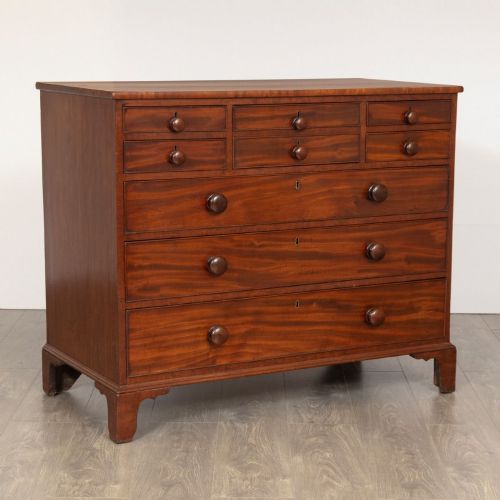
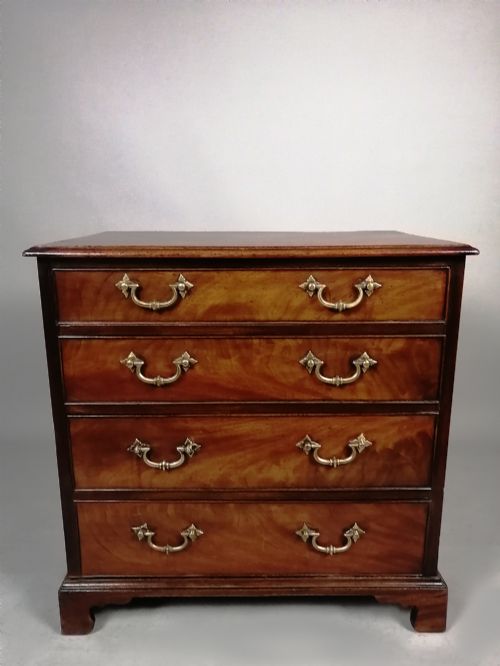
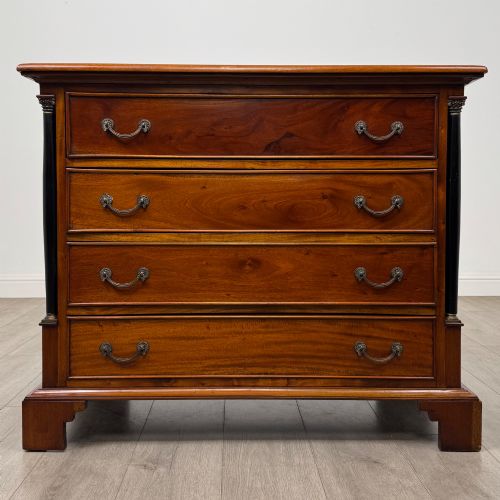
A bracket feet mahogany cabinet brings solid timber construction and period character to any room.
Bracket Feet Mahogany Cabinet
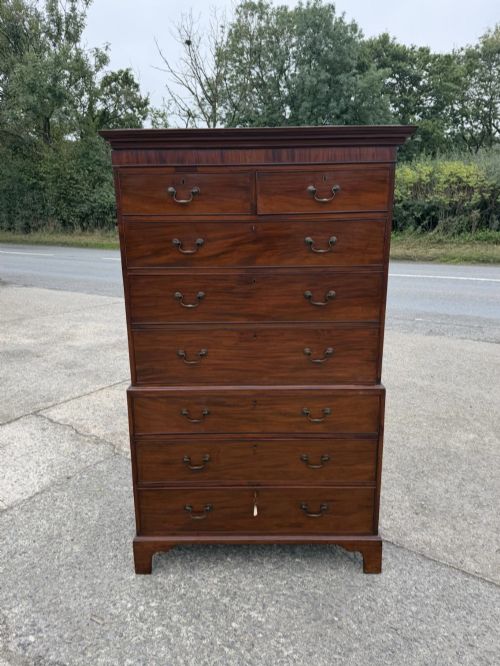
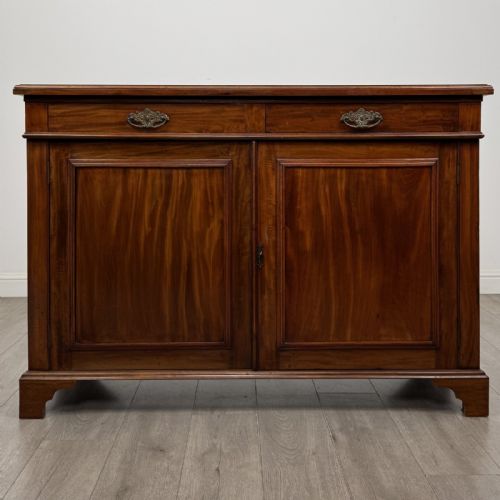
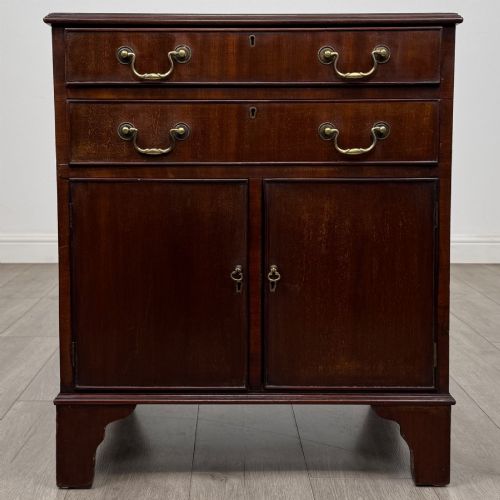
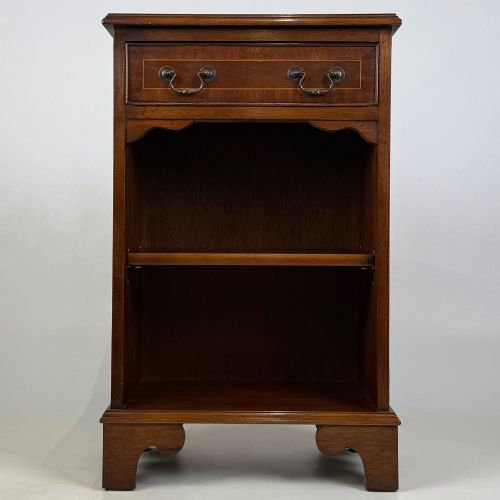
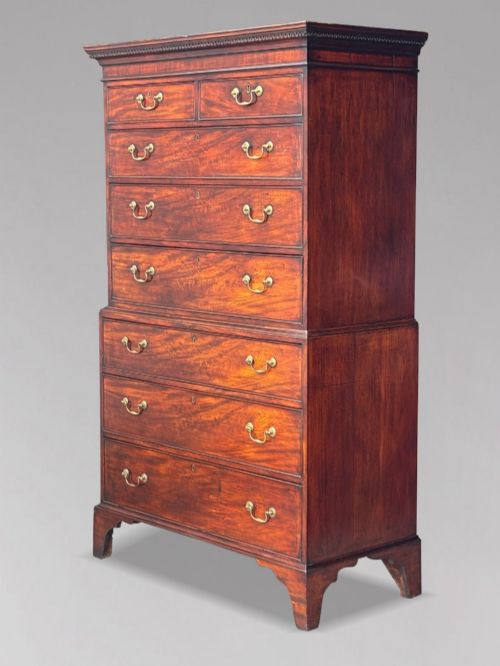
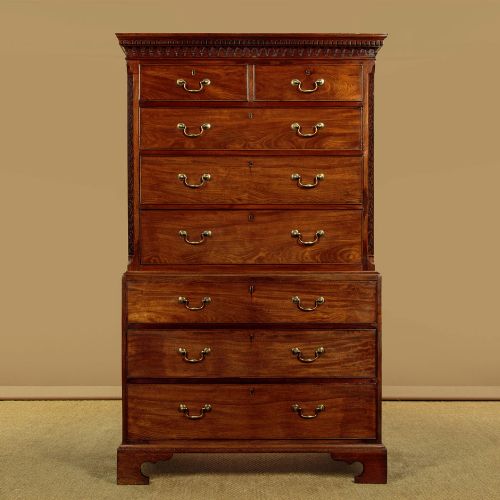
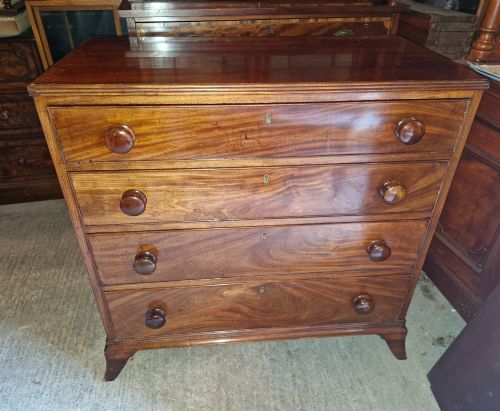
A bracket feet mahogany cabinet encompasses storage forms built from rich timber, including chests of drawers, chests on chests, side cupboards, and bookcases. These pieces frequently date from the Georgian, Regency, and Victorian eras, demonstrating the enduring appeal of traditional cabinet-making.
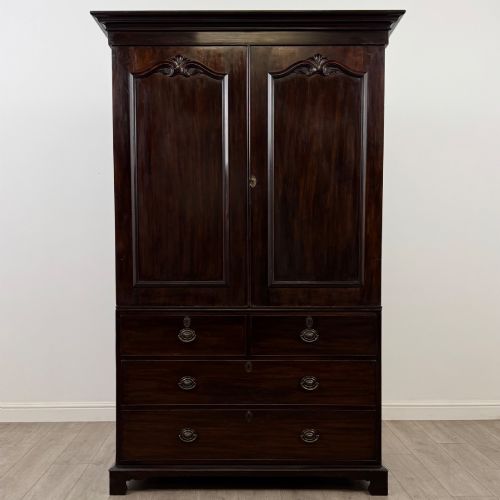
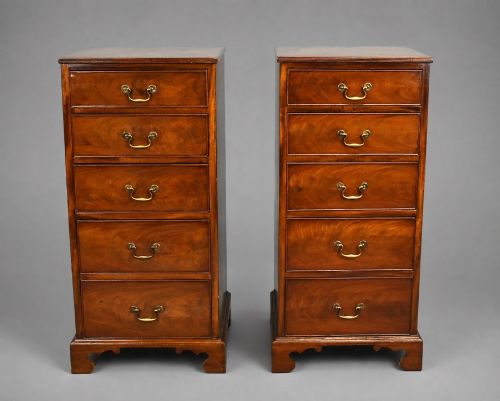
Buyers examining this selection will regularly encounter forms standing upon characteristic bracket feet, ranging from simple shaped supports to ogee profiles. The inventory spans standard domestic items, compact bedside chests, and larger linen presses or tall collectors' cabinets.
Origins stretch from eighteenth-century workshops through to Edwardian interpretations of Georgian styles. Each item utilises the warm tones and durable nature of mahogany, often accented with oak or walnut elements and brass hardware.
Materials and Technique
Cabinet-makers relied primarily on solid mahogany and Cuban mahogany, sometimes enhanced by flame veneer or cross-banded details, laid over secondary timbers like oak. Structural integrity was achieved through traditional joinery, ensuring drawers and frames withstood daily domestic use over centuries.
Metal components such as brass handles, escutcheons, and hinges played both a functional and decorative role, frequently surviving in their original form. Protective surfaces relied on traditional finishes that highlighted the natural grain and deep colour of the wood.
Listings feature eighteenth and nineteenth-century forms, predominantly constructed in mahogany with occasional oak and walnut elements.
Distinctions in Quality
The degree of refinement in timber selection and cabinet construction dictates the distinction between standard items and exceptional examples. Finer pieces display carefully matched mahogany grains, sophisticated serpentine or bureau fronts, and undisturbed original brasses.
Proportion and execution of detail set superior works apart, particularly in the shaping of the bracket feet and the precision of internal fittings such as dressing slides or tailored drawers. Survival of original surfaces without extensive modern intervention also defines the upper tier.
Francis Brodie·William Gomm
The Bracket Feet Mahogany Cabinet Glossary
- Bracket foot
- A simple, corner-bracket support for case furniture, shaped like a small foot mitred at the corner. It provides a stable and understated base for chests and cabinets.
- Cuban mahogany
- A dense, highly figured variety of timber harvested in the Caribbean, prized for its rich dark colour and exceptional hardness. Eighteenth-century makers frequently utilised this material for high-status furniture.
- Chest on chest
- A tall storage unit comprising one upper chest resting directly upon a larger lower chest, often providing numerous deep drawers. This form maximised vertical storage space in period bedrooms.
- Ogee
- An 'S'-shaped moulding curve combining a concave and a convex arc, often seen on superior bracket feet and cornice details. It added a fluid sculptural element to rectilinear furniture.
- Press
- A tall cabinet or cupboard traditionally used for storing linen or clothing, sometimes fitted with sliding shelves or internal drawers. Examples may feature panelled doors enclosing the upper storage section.
Bracket Feet Mahogany Cabinet: Frequently Asked Questions
What is a bracket feet mahogany cabinet used for?
These cabinets and chests provide substantial enclosed storage for household goods, clothing, and documents. Their traditional form allows them to function effectively in bedrooms, living rooms, and hallways.
The sturdy timber construction ensures they handle everyday storage requirements while serving as decorative furniture pieces.
How do I identify a Georgian piece?
Georgian furniture typically displays proportion, classical restraint, and construction methods appropriate to the eighteenth or early nineteenth century. Examination of the timber, drawer linings, and internal construction generally confirms the period.
Matching the design characteristics with documented styles from the reigns of George II and George III helps narrow down the date.
Are these cabinets made from solid mahogany?
Most pieces feature solid mahogany primary timbers, often combined with secondary woods like oak for drawer linings and internal framing. Finer examples may also incorporate mahogany veneers over sturdy base timbers.
Cabinet-makers selected these materials for strength, stability, and the ability to take a smooth, polished finish.
How should I care for antique mahogany?
Keep wooden furniture away from direct sunlight and sudden temperature changes to prevent the timber from drying out or splitting. Regular dusting with a soft, dry cloth preserves the finish without building up heavy wax residues.
Applying a light coat of quality beeswax periodically helps maintain the natural lustre and nourishment of the antique surface.