


Boxed Napkin Ring Set
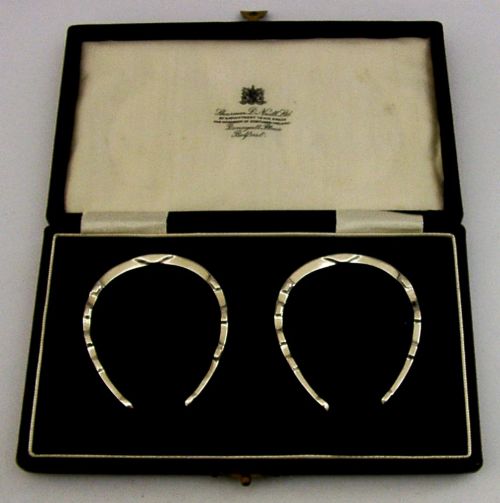
When you handle a boxed napkin ring set, you hold matched silver housed in fitted velvet, satin, and leatherette for the dining table.
Boxed Napkin Ring Set
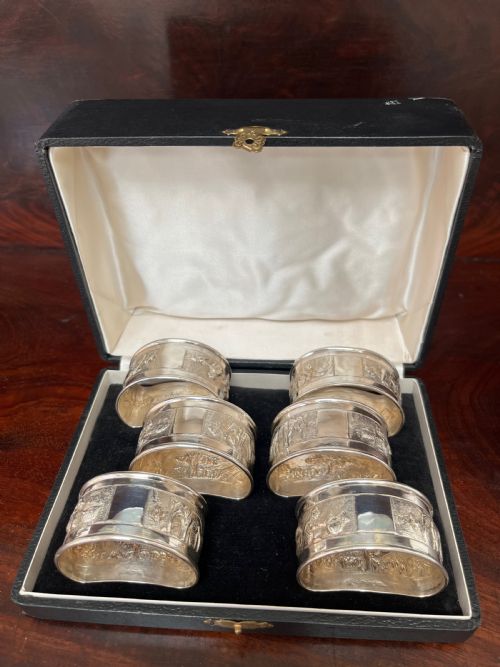
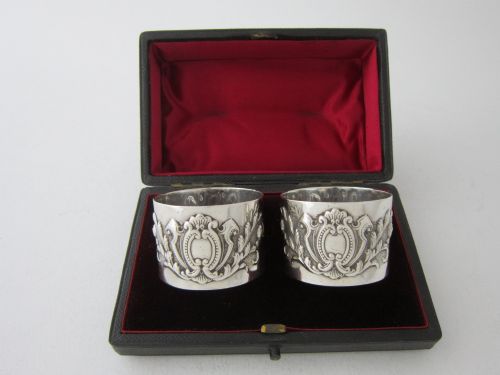
A boxed napkin ring set comprises matching silver or silver-plated bands supplied in a fitted presentation case lined with silk, satin, or velvet. These matched collections emerge frequently from the Victorian, Edwardian, and Art Deco periods, often housing four, six, or more individual rings.
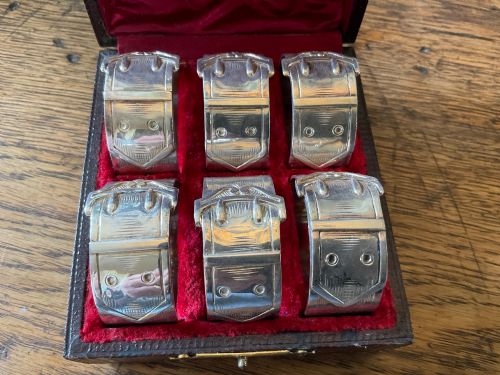
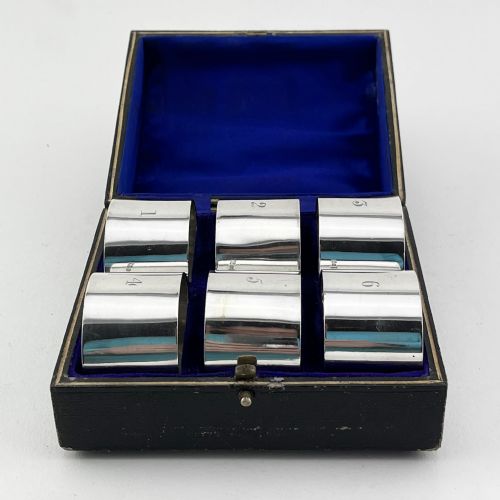
Many examples arrive with specific numbering corresponding to seats at the dining table, while others incorporate christening sets combining rings with forks and spoons. The fitted boxes often use materials like leatherette, leather, and inlaid wood to protect the metal within.
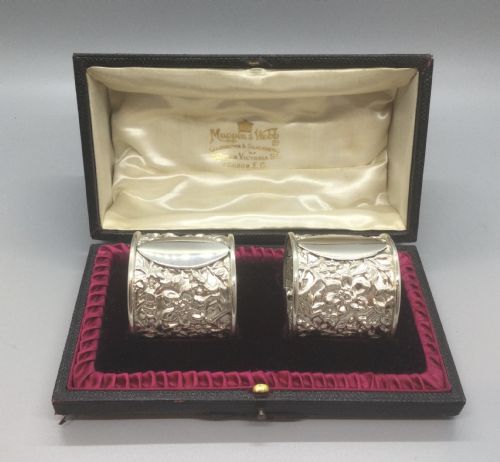
The dominant forms span plain Edwardian cylinders, ornate late Victorian pierced designs, and geometric Art Deco shapes. Buyers searching for a boxed napkin ring set encounter various configurations, from pairs to large sets of twelve housed in original cases.
Materials and construction
Makers fashioned the rings from solid sterling silver or applied a silver plate over base metals, stamping hallmarks on the solid pieces to record assay offices, dates, and makers. Workshops constructed the presentation boxes using sturdy woods or card wrapped in leatherette, lining the interiors with fitted recesses of silk, velvet, or satin.
Surface decoration relied on hand engraving, repoussé work, and applied cast borders such as Chippendale styles or belt buckle motifs. The internal beds of the cases were tailored precisely to secure each ring, preventing friction and wear during storage.
The archive records pieces spanning the Victorian, Edwardian, and Art Deco periods.
Assessing quality and preservation
Quality rests upon the preservation of the original fitted box and the crispness of the hallmarks or surface ornamentation. Sets retaining their matching numbered sequence and undamaged silk or velvet linings command distinct attention from collectors.
The gauge of the silver dictates substance and durability, separating heavier solid sterling pieces from lighter plated alternatives. Finer sets display precise hinge work on cases, intact clasps, and unpolished hallmarks that remain deep and legible.
C.T. Burrows & Sons·Tiffany & Co·Cartier·George Unite
The Boxed Napkin Ring Set Glossary
- Hallmark
- Official marks stamped into precious metals indicating the assay office, standard of purity, and year of manufacture. These symbols provide the definitive history of solid silver pieces.
- Repoussé
- A metalworking technique where the artisan hammers the design from the reverse side to form raised ornamentation on the surface. This method creates the tactile floral and scroll patterns seen on Victorian examples.
- Leatherette
- A simulated leather material used to cover presentation boxes, offering a durable exterior finish. It mimics the appearance of genuine leather while protecting the interior linings.
- Aesthetic Movement
- A late nineteenth-century design style emphasising visual beauty over narrative content. Pieces from this movement often display stylised natural motifs and distinct geometric balance.
- Christening Set
- A presentation collection typically comprising a napkin ring alongside matching cutlery pieces given to mark an infant's baptism. These sets often share a fitted box with dedicated slots for each item.
Boxed Napkin Ring Set: Frequently Asked Questions
What is a boxed napkin ring set?
A boxed napkin ring set is a matched collection of silver or silver-plated table rings housed in a custom presentation case.
These sets were traditionally given as wedding, anniversary, or christening gifts, keeping the table silver organised and protected when not in use.
How do I date a boxed napkin ring set?
Dating relies primarily on the hallmarks stamped into solid silver pieces, which indicate the exact year and assay office. The style of the box, the font of any monograms, and the overall design aesthetic also point to specific periods like the Victorian or Edwardian eras.
Silver-plated sets lack date letters, so collectors date them through the construction style of the box and the decorative motifs on the metal.
Why are some napkin rings numbered?
Numbered rings allowed Victorian and Edwardian hosts to assign specific seats at formal dinner parties. Each guest used their designated ring throughout a series of meals before the silver was cleaned and stored.
This practice ensured guests kept the same napkin and ring across multi-course dining occasions or extended visits.
How should I clean silver napkin rings?
Cleaning requires a soft cloth and a reputable silver polish, applied gently to avoid wearing down hallmarks or fine engravings. Wash away residue with warm soapy water and dry thoroughly before returning the rings to their velvet-lined box.
Harsh dips can strip the natural patina and damage applied finishes, particularly on silver-plated pieces.