


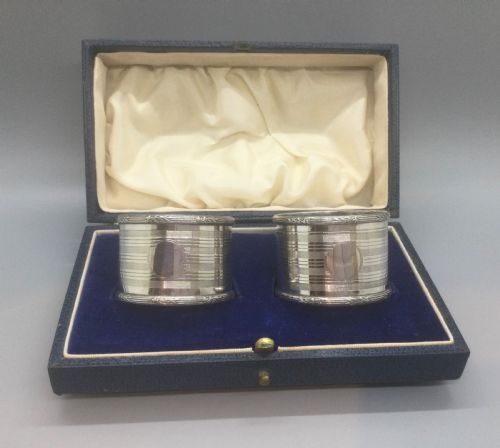

Boxed Serviette Rings
Boxed serviette rings are matching sets of table linen bands housed in fitted cases, offering a complete and preserved presentation for formal dining.
Boxed Serviette Rings
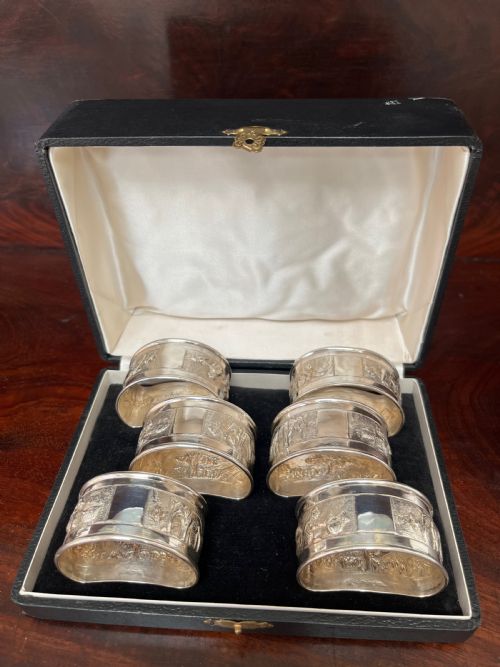
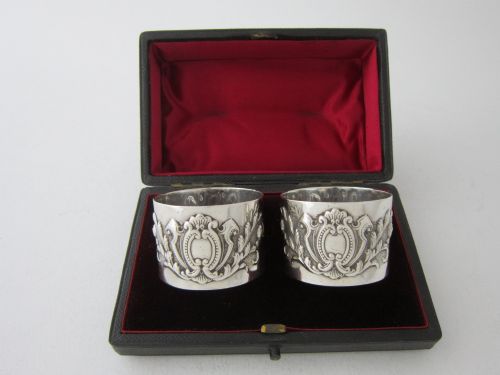
When you search for boxed serviette rings, you find matching sets of napkin holders presented in fitted storage cases dating from the late nineteenth century through to the mid twentieth century. These dining accessories appear in configurations ranging in size from pairs up to sets of six, reflecting formal dining habits of past eras.
The styles span Victorian, Edwardian, George V, and Art Deco periods, capturing shifts in design from ornate ornamentation to clean geometric forms. Most examples encountered on this page originate from British silversmiths and provincial assay offices, preserved alongside their original containers.
How they were made
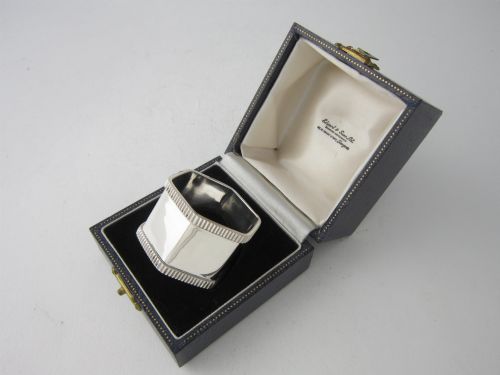
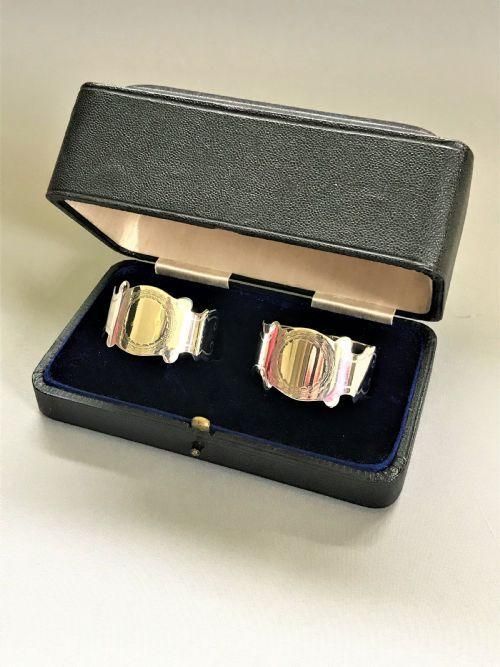
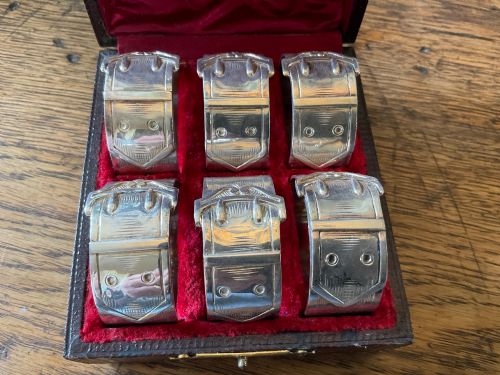
Makers utilised sterling silver and silver plate as the primary metallic mediums for the rings themselves, shaping them into simple bands or casting them into decorative forms such as belt buckles. Surface treatments include plain polished finishes alongside gilt highlights.
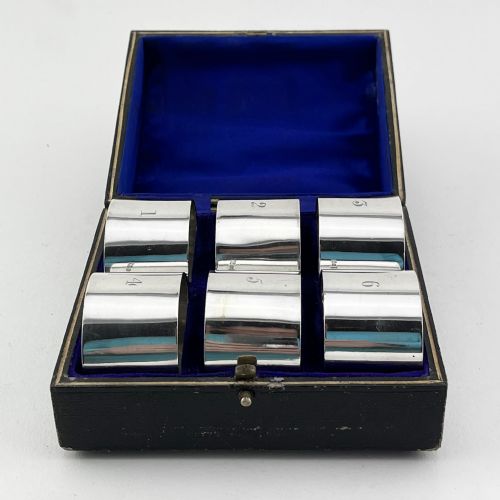
The protective containers utilise wood carcasses lined with fitted interiors of silk and velvet, covered externally in materials such as leather or textured leatherette to secure the pieces safely.
Listings span periods from the nineteenth century through to 1950, encompassing Victorian, Edwardian, George V, and Art Deco styles.
What varies in quality
The standard of a set rests upon the integrity of the fitted case in relation to the metal rings inside, with original silk and velvet linings providing superior provenance. Complete sets matching the exact count intended by the original maker command greater interest than assembled groups.
The weight of the silver and the crispness of the hallmarks stamped by provincial assay offices indicate the original grade of manufacture. Sets retaining makers marks from notable firms show superior attention to detail in both the metalwork and the box construction.
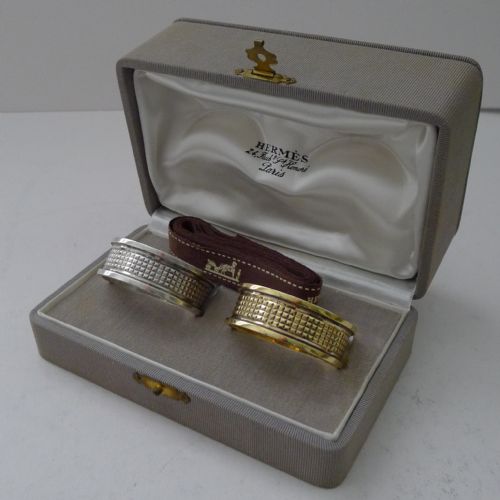
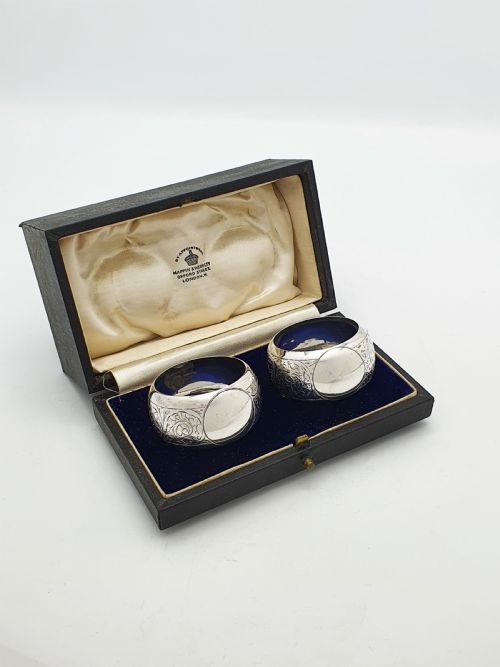
Hermes, Paris·C.T. Burrows & Sons·Mappin & Webb
The Boxed Serviette Rings Glossary
- Serviette ring
- A small band used to roll and store an individual dining napkin between meals. These items appeared in matched sets during the nineteenth and twentieth centuries.
- Sterling silver
- A silver alloy containing 92.5 percent pure silver by mass, frequently stamped with official assay office marks denoting the place and year of testing.
- Silver plate
- A base metal substrate covered with a thin layer of pure silver, offering the visual appearance of solid silver at a more accessible tier.
- Assay office
- A statutory body that tests the purity of precious metals and stamps corresponding hallmarks onto items. Cities such as Birmingham, Chester, and London operated these offices.
- Leatherette
- A synthetic material designed to imitate leather, commonly utilised to cover the exterior of protective storage boxes during the twentieth century.
Boxed Serviette Rings: Frequently Asked Questions
How do I store silver napkin rings?
Keep the rings inside their original fitted cases when not in use to protect the surfaces from airborne tarnishing agents and physical knocks.
Store the boxes in a stable environment away from direct sunlight and damp conditions to preserve the integrity of the internal silk and velvet linings.
Are these napkin rings safe to use?
These silver and silver-plated bands function reliably for regular dining provided they receive gentle cleaning with appropriate silver care products after contact with food acids.
Avoid abrasive cleaners that wear down thin silver plating or remove crisp hallmark stamps from the metal surfaces.
How can I date my napkin rings?
Inspect the inner or outer surfaces for stamped hallmarks that indicate the assay office, standard mark, and a specific date letter corresponding to the year of manufacture.
The style of the fitted box and the decorative motifs on the metal provide additional clues to whether a set belongs to the Victorian, Edwardian, or George V periods.
Why are some sets incomplete?
Over long periods of domestic use, individual rings from larger sets of four or six frequently became misplaced or separated from their companions during dining.
Finding a complete set housed within its original silk-lined case is less common because sets were actively utilised across generations.